Army Men: Air Tactics was my first introduction to airborne Army Men growing up. As a kid, my mom got me this four-pack CD-ROM set from Sam's with Army Men, Army Men II, Army Men: Toys in Space, and Army Men: Air Tactics. I always spent most of my time playing Army Men II and Army Men: Toys in Space, but I do remember Air Tactics fondly. Unfortunately, it was a lot easier to play 20 years ago. I genuinely spent three or four hours finding it online (thank you, www.myabandonware.com), fiddling with the compatibility settings, giving up entirely on getting it to work on Windows 11, teaching myself how to set up a virtual machine, finding an ISO and CD key for Windows 95, installing that, and THEN installing Air Tactics on the virtual machine. A game designed for Windows 95 just does not like Windows 11. Was it worth all that effort? Ehh....maybe? 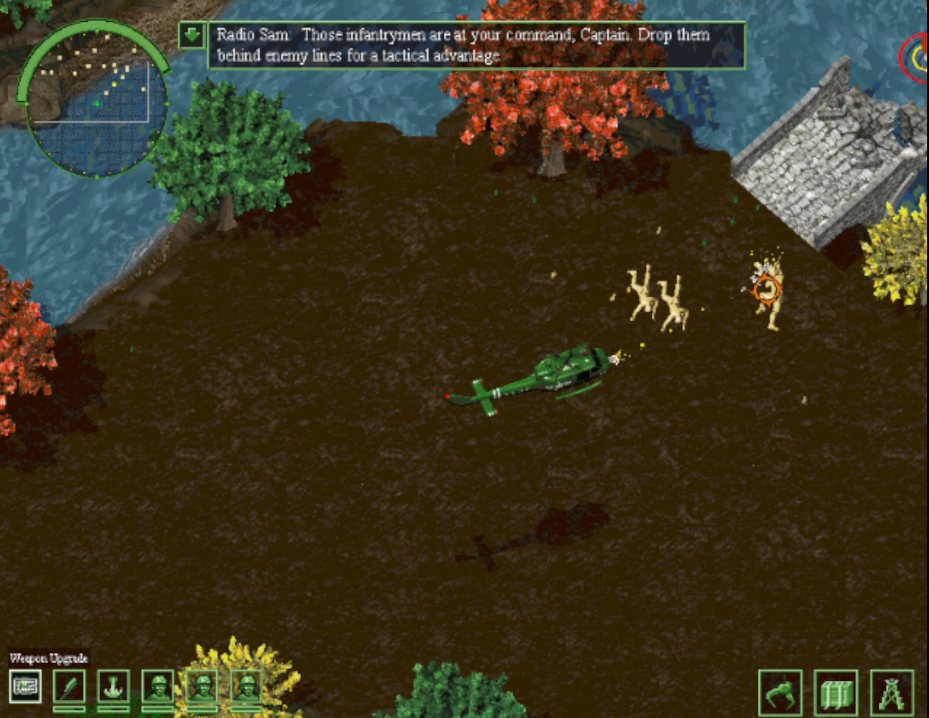 The Army Men "Air" games have an exceptionally convoluted history as far as naming goes, so to avoid the confusion I had in one of the Army Men Discord servers, I'll try to explain it all here. The first Air game released which also introduce Captain William Blade as a Green protagonist was Army Men: Air Combat on PlayStation in late 1999. Then in March, 2000, Army Men: Air Tactics releases on Windows. In July, 2000, Air Attack is released on Nintendo 64 but under the title of Army Men: Air Combat; a Game Boy Color game with the same title would be released in November of 2000. Also in November of 2000, Army Men: Air Attack 2 would release on PlayStation. Then in March, 2001, Air Attack 2 released on PlayStation 2 but would inexplicably have the title changed to Army Men: Air Attack - Blade's Revenge in Europe, but only for the PlayStation 2 version; the PlayStation 1 version is still called Army Men: Air Attack 2 in Europe. Later that year in June, 2001, Army Men: Air Attack would release on Windows (it did not carry the Air Combat title; for some reason, that was just for Nintendo). Lastly, in March of 2003, Air Attack 2 released on Gamecube with the title Army Men: Air Combat - The Elite Missions. So, as you can see, it's a confusing release history. The tl;dr is that Air Attack/Air Combat came first, and they're the same game; then came Air Tactics; then came Air Attack 2/Blade's Revenge/The Elite Missions which are all the same game. Why they couldn't just pick one title and stick with it across regions and console manufacturers, I don't know, but it is what it is. 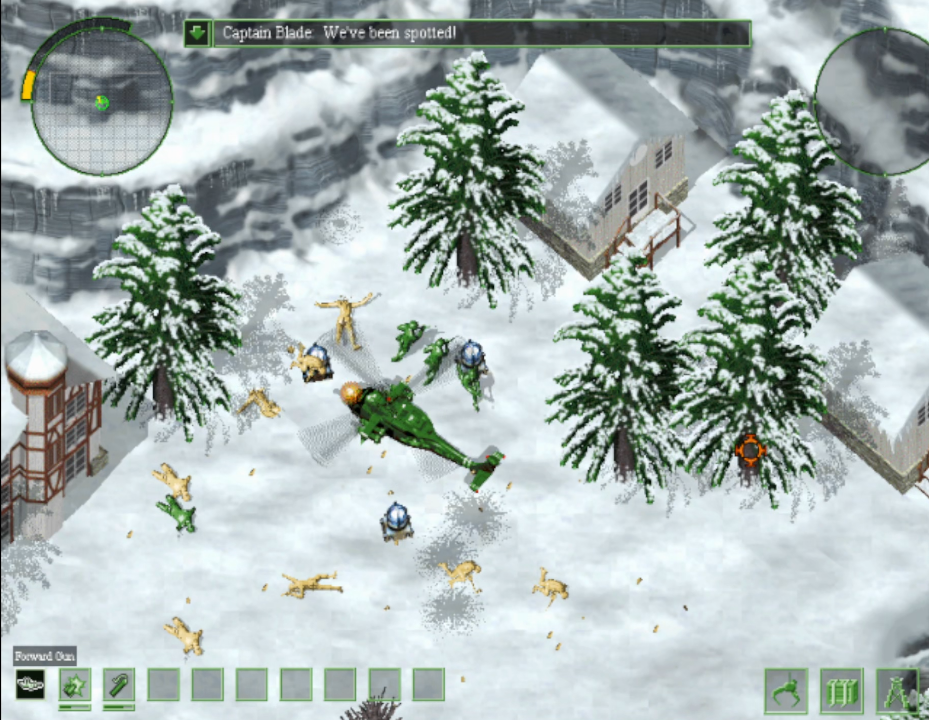 Air Tactics isn't a 3D game like Air Attack; instead, it uses a modified version of the Army Men II engine to produce a 2D overhead view game. While you normally think of helicopter combat as taking place in a three-dimensional space - and it does, in a way - the 2D perspective works well here. I guess it's more accurate to call it a sort of pseudo-2.5D because you do move along the Z axis, but only in certain places that have ramp-like environmental features, and only up to a certain height; basically, you maintain a static hover above the ground, so the only way to "ascend" is to go somewhere with a gradually increasing elevation. Like in Air Combat, you follow Captain William Blade of Alpha Wolf Squadron. Most of his missions are a support role for Sergeant Hawk, but you do get to take on some pretty fierce Tan opposition as you're ferrying Hawk and his men around or softening up a beachhead for an assault. The story revolves around the Green Army's attempt to establish and maintain air supremacy and stop the Tan from developing some kind of chemical weapon of mass destruction. 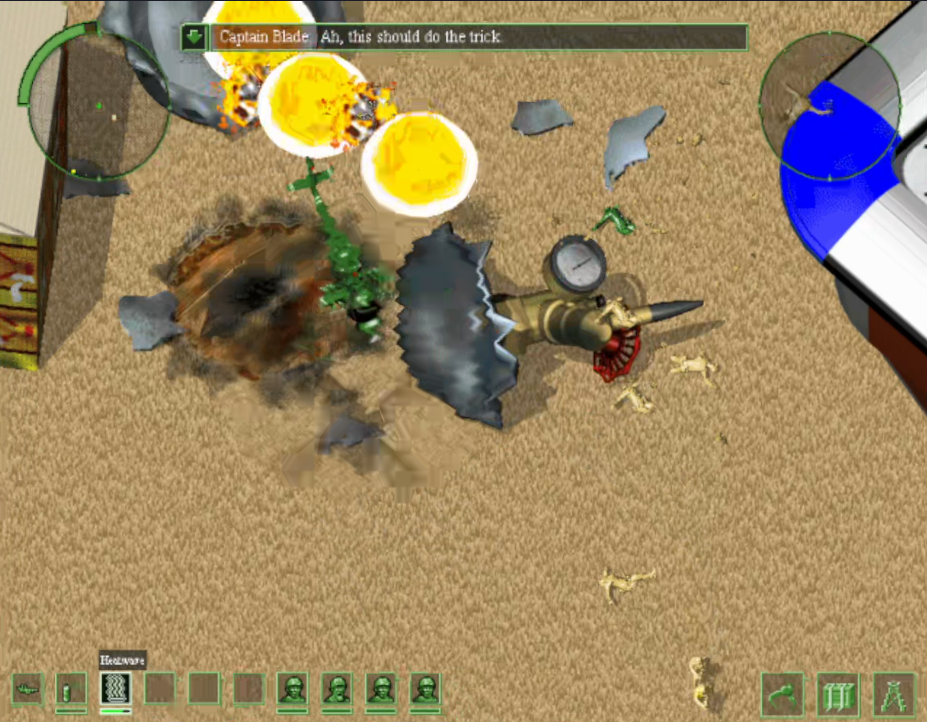 Visually, the game is pretty much identical to Army Men II. Some elements here and there look a touch improved, but overall, it's basically Army Men II with a helicopter. The visuals are honestly the highlight of the game; this era of advanced 2D in lieu of primitive 3D graphics is sorely underappreciated in my opinion. The sound design is...well, I honestly have no idea. Despite the fact that the sound worked normally on the desktop of my Windows 95 virtual machine, nothing I did made the sound work in game. From what I can remember from playing it over 20 years ago, it sounded great, but that could be the rose tinted headphones talking. What I can definitely speak to is the control, and it's not great. The helicopter feels SUPER floaty and imprecise with its controls. Granted, I'm using a modern mouse instead of an old school trackball this game would have been designed to use, so the oversensitivity of my mouse could be affected me here as it did in Army Men II and Army Men: Toys in Space, although considering that most reviews I've read also lament the controls - "driving a car on a field of Crisco," I believe, is how IGN's reviewer worded - I'm inclined to believe that the controls really are just bad. What I know for a fact isn't a problem caused by my modern mouse, though, is the hit detection. It was seemingly random whether my shots would hit a Tan soldier or harmlessly hit the area beside his feet. There would be bullets you can clearly see hitting him - bullet pixel on body pixel contact - but no damage, and then sometimes a bullet would clearly miss him, but you'd still see flakes of Tan plastic break off as he takes damage. No rhyme or reason whatsoever. 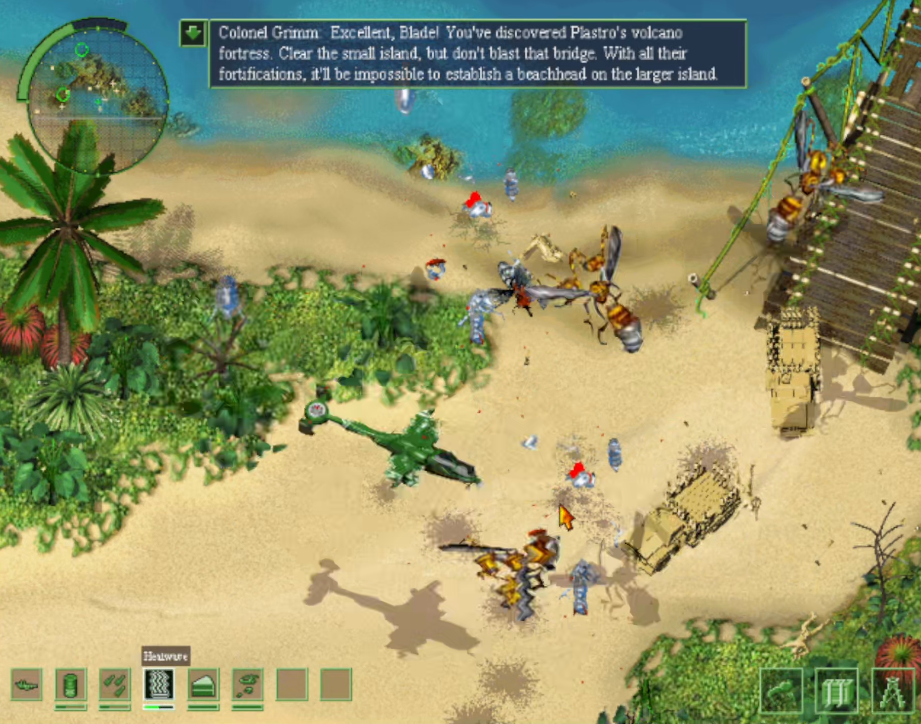 Despite the horrific controls, the garbage hit detection, and the inexplicably absent sound during my playthrough, I have to admit that I did enjoy revisiting Air Tactics. It's definitely not what I'd call a high point for the series, but it's also not Major Malfunction, so it's at least not the worst game in the series. If you want to give this one a play these days, good luck; you'll either need a computer running Windows XP or earlier - maybe Vista at the absolute newest - or a virtual machine running ideally Windows 95 or Windows 98. I know that for most tech savvy people, virtual machines or dual boot PCs are no big deal, but it was a pain in the ass to teach myself how to set one up for literally the sole purpose of playing this one game. Do I regret that massive time investment? Not even a little; no Army Men game left behind. Would I recommend anyone else who doesn't already know how to set up a virtual machine go through the hassle just to play this game? Absolutely not. My Rating - D
The PS1 Army Men: World War subseries always needs to have some sort of gimmick. With the first game, it was "You're not Sarge anymore! Now you're a random Green soldier!" With Land Sea Air, it was "You're a random Green soldier BUT WITH MORE VEHICLE MISSIONS!" With Final Front, it was "You're a random Green soldier with vehicle combat INCLUDING SUBMARINES!" Here with Team Assault, it's "You're a specific commando who isn't Sarge, and there's vehicle and submarine combat, but now there's TWO OF YOU!" 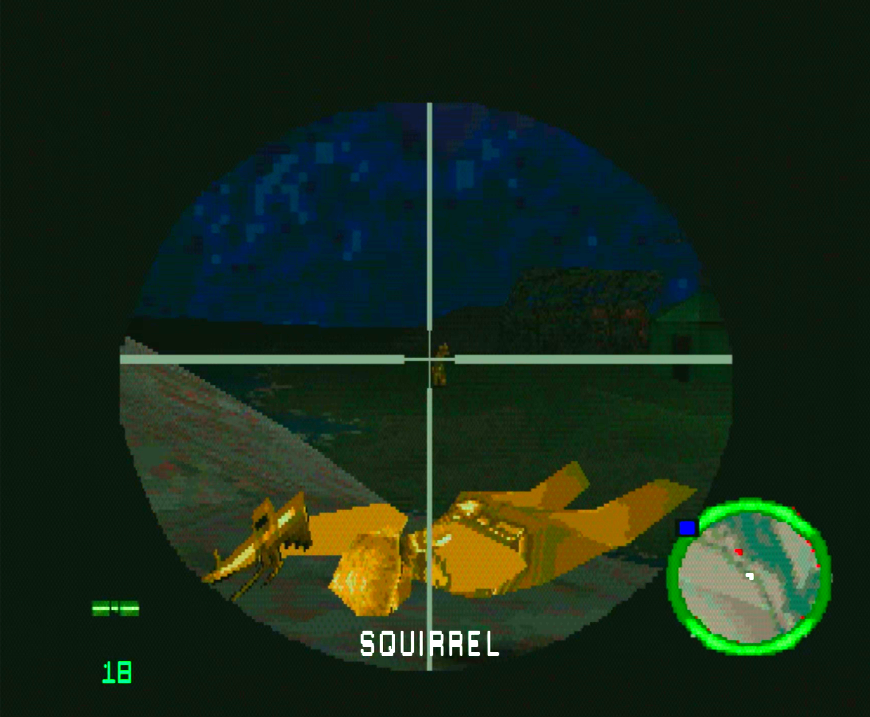 Team Assault follows a team of Green soldiers on a mission that starts with their escape from a Tan POW camp and culminates in the infiltration and destruction of a Tan ballistic missile base. For each mission, you must pick two soldiers from your pool of six. Each of these soldiers have two skills and unique stats. Squirrel, for example, is my favorite and has the Sniper and Communications skills, so he can use radio equipment (required for some missions) and sniper rifles. He's also not very stealthy but has by far the fastest movement speed. I liked pairing him with is Tyke who is super slow, not stealthy at all, but has a ton of hit points and the Heavy Weapons and Linguistics skills meaning that he can use bazookas and mortars as well as Tan disguises. The mixing and matching of soldiers gives your strategy some real depth and variation. It does feel a bit clunky and obnoxious to have to switch between your two soldiers and move them independently, but you get used to it, and once you do, it's not so bad. 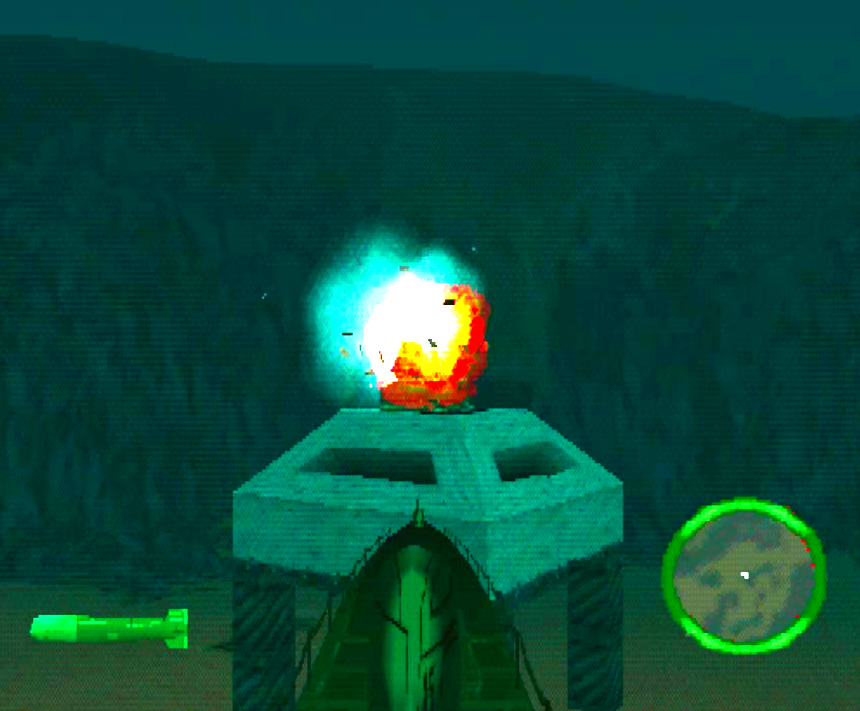 Visuals and sound are overall on par with the previous World War games on PlayStation, but the gameplay and controls feel tighter here than in the previous entries. The auto-aim feature felt a lot more polished and a lot smoother, and that definitely helps mitigate some of the more frustrating aspects of combat in the previous games. It's not perfect - you'll still routinely shoot to the left of an enemy, then to the right, then back to the left, and THEN actually shoot him - but it's a huge step up. I thought World War was a pretty good length as it is, and I thought Land Sea Air was too long given how brutally difficult it is, but with Team Assault, I actually found myself wishing there were more there. The game consists of 16 missions, and even with dying and restarting, it took me under three hours to clear. 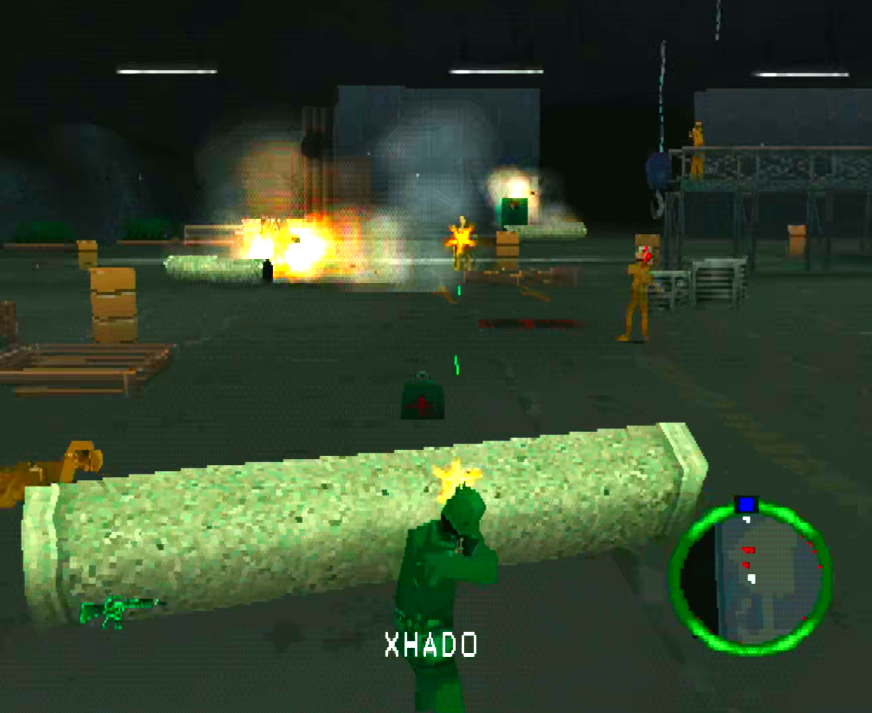 Army Men: World War - Team Assault is, in my opinion, the best of the four World War subseries games on Playstation. Honestly, the only thing keeping me from scoring it higher is the lack of friendly AI for the soldier you're not controlling; they'll fire at the enemy if they come close enough, but otherwise, they just stand there. It would have been nice for them to follow you and shoot at enemies you come across instead of standing still wherever you left them. On the one hand, that does let you strategize a bit by leaving a sniper on a high elevation position to provide overwatch, but that's mitigated by the fact that you then have to switch back and walk them all the way to wherever you got with the other soldier as well as the fact that what AI the ally soldier does have isn't good enough to provide any truly effective cover fire. Still, though, I had a blast with this game, and I definitely recommend it any Army Men fan or PlayStation enthusiast check it out. It's not an amazing game or a hidden gem or anything, but it's fun plastic-on-plastic violence. My Rating - C
Army Men: World War - Final Front (or Lock 'n' Load as it's called in Europe) is the third game in the Army Men: World War subseries on Playstation. Like Land, Sea, Air before it, Final Front doesn't do a lot to change the formula here. It looks, sounds, and plays almost exactly like the two previous games. Visuals are still mediocre, controls are still a bit clunky, but it's an overall decent Army Men experience. Unfortunately, though, it does fall short of its predecessors in my opinion. 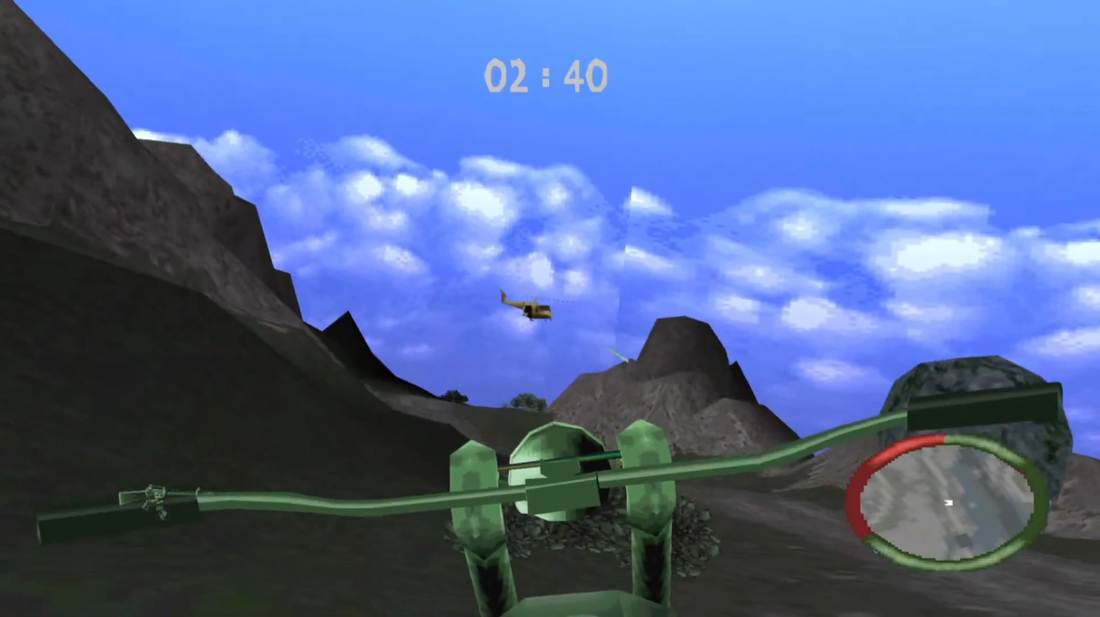 One of the things that Final Front gets very right is the vehicle combat; there are more vehicles to fight in than in Land, Sea, Air with the addition of the motorcycle and the submarine. The submarine is definitely the cooler addition with battles underwater taking place in three dimensions, but the motorcycle was more fun to use purely because of how fast you can move and run over Tan soldiers. These vehicle missions have also lost the rails they tended to have in World War and Land, Sea, Air, giving the player more freedom to use the vehicles to traverse the level. Unfortunately, controlling your actual soldier - which is how the majority of the game is played - is still a slow and cumbersome experience. It's still a fun game in spite of that, as the previous games were, but I had hoped by their fourth PlayStation game and the third game in this subseries, we'd have progressed a bit with the player movement. 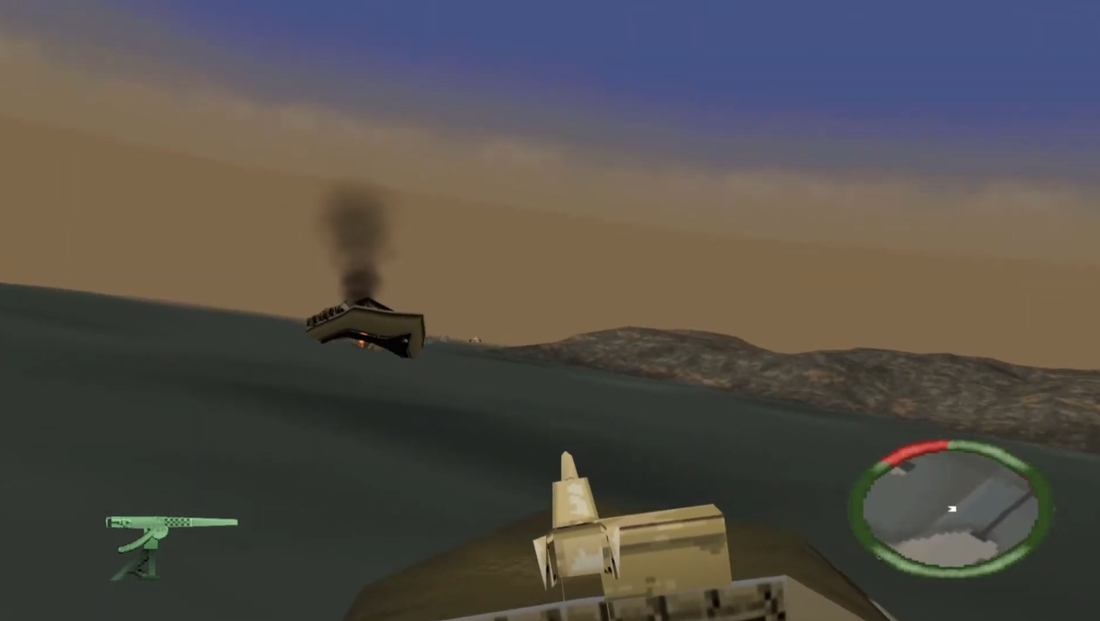 As with the other Army Men games on the system, the visuals here are not impressive and do not push the PS1 to its limit. I wouldn't say they're bad, but I do think "sub-par" is a fair descriptor. Like Red Steel was on the Wii; it looked okay, but the Wii hardware was capable of significantly better visuals as we'd see later in its lifespan. However, this game came out a year into its console's successor's lifespan; there's little real excuse for the game to look this meh. Graphics aside, the sound design is a solidly mixed bag. On the one hand, the music is a definite step down from the two previous games. On the other hand, the sound effects are actually fairly impressive with the engine noise sounding appropriate and the crack of rifle fire having a good meaty feel to it. It's a shame, then, that the soldier controls, as I mentioned earlier, are still such garbage. I've heard the game supports Dual Shock controllers though I haven't confirmed that myself and that they make controlling your soldier a lot easier, but with the original PS1 controller, it takes what feels like forever to turn around which makes it hard to respond quickly to enemy fire. 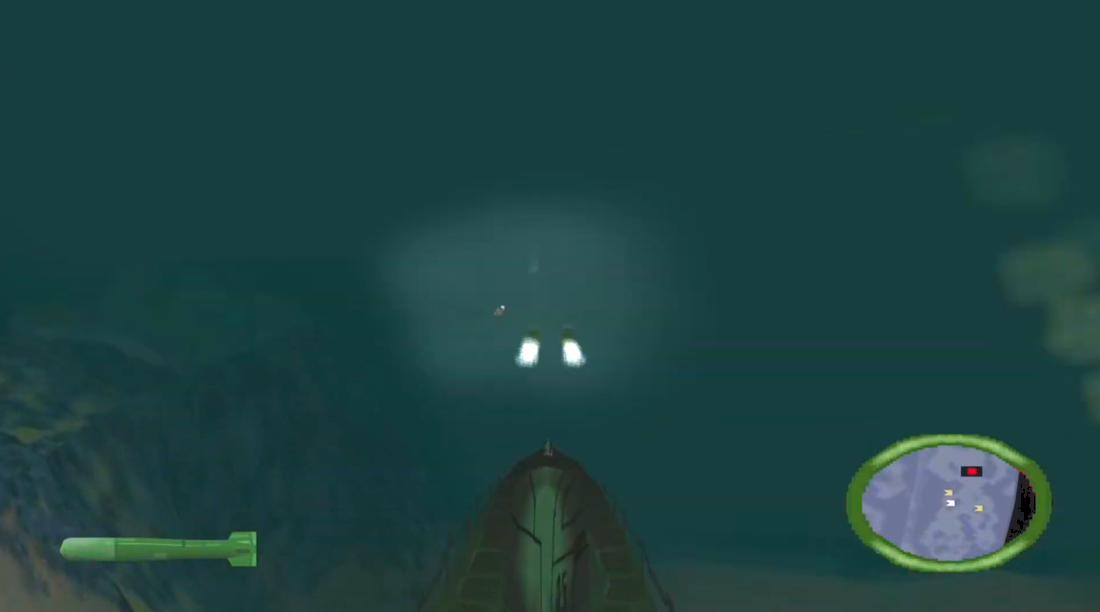 Like most of the Army Men series, World War - Final Front is a middling piece of the PlayStation's library. The visuals sub-par, the controls are outright bad, but the sound and actual gameplay are pretty solid. As I've said with most of the Army Men series, if you're a big fan of the franchise or a passionate collector of PlayStation exclusive games, this one is worth picking up if you can find it fairly inexpensively. It's not going to wow you, and it's definitely not a hidden gem by any stretch of the imagination, but it is a fairly enjoyable war game. My Rating - C
Army Men, as a series, is almost always a bit rough around the edges. That was certainly true of the first game in the series, and it was true of the first game on the PlayStation, and it's still true for the second game in the Army Men: World War subseries - Land, Sea, Air. If you played Army Men: World War, then you basically know what to expect as this game is largely more of the same. The main difference is the difficulty; this game is genuinely probably the most brutally difficult game in the entire series. 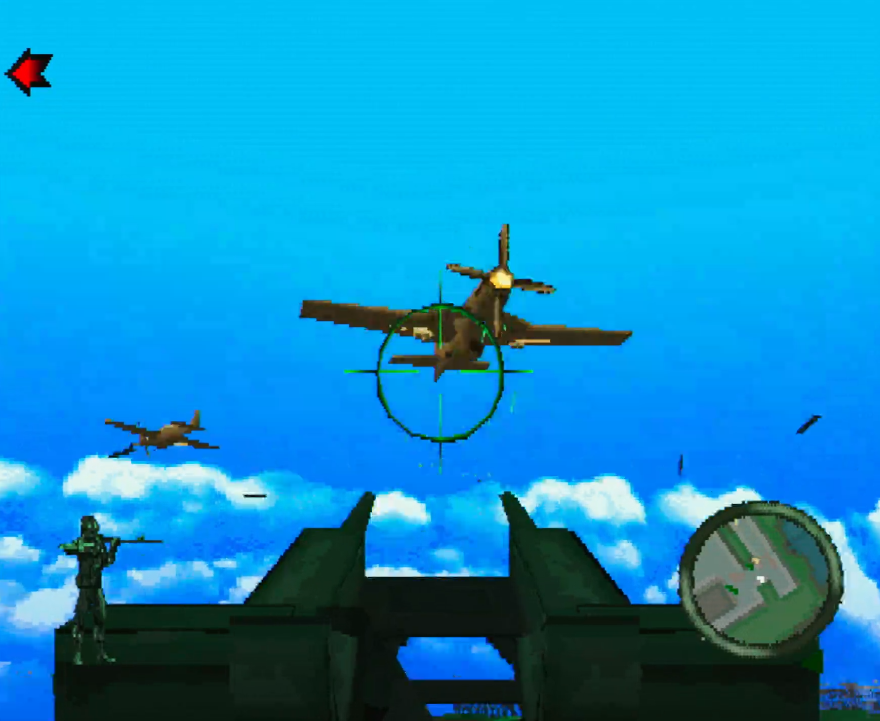 Visually, Land Sea Air is indistinguishable from World War, and that's not entirely a bad thing. It doesn't look great, even by Playstation standards, but I think there's a certain charm in the budget vibe Army Men games have. For the most part, this is more an expansion or continuation of Army Men: World War than anything else. You fight through five operations with three missions each, and as the title suggests, the biggest difference between World War and Land Sea Air is a larger focus on vehicle missions here. One mission, you're manning the guns on a bomber fighting off enemy fighters on the way to drop bombs on a Tan target; in another mission, you man the guns on a tank that rolls through a bombed out city on rails and have to eliminate anti-tank crews before they destroy your vehicle. Those missions are similar to the train mission in the first Army Men: World War game on Playstation, but instead of a fun little diversion from the norm, these missions are really where things start to go downhill. The beginning of the game feels tough but fair - nothing you haven't seen in other Army Men games. Once you reach that God forsaken bomber mission, though, it goes full Dark Souls. The bomber mission nearly had me involuntarily committed. It sounds easy enough - shoot down enemy fighters as they approach, aiming wherever your pilot tells you to (11 o'clock, 4 o'clock, etc) - but the game makes it unreasonably difficult. It requires absolute perfection to a degree only obtainable by repeating the level DOZENS of times and just memorizing where planes appear when. Even if you shoot down every plane before they get to you - something I was able to do after a couple of tries - you'll still die before the end of this unnecessarily long mission simply by the accumulation of small bits of damage; the only way to avoid that is to be shooting at the planes before they even spawn, hence the need for memorization. 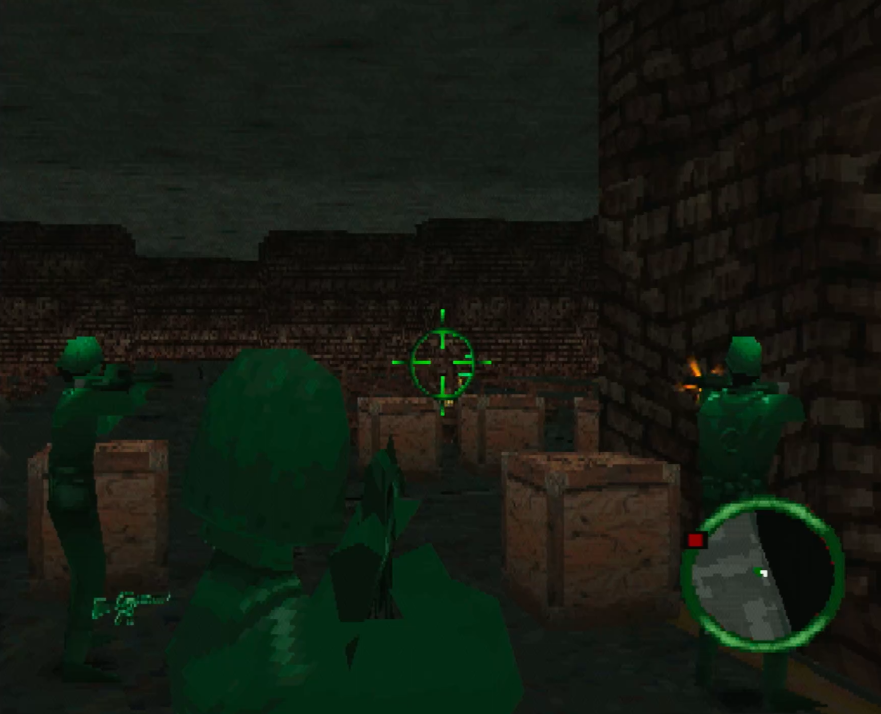 It's not just the vehicle levels that are brutal, either; the whole game is unusually tough. The general rule of thumb in war games is that the faster the rate of fire, the lower the accuracy. 3DO apparently forgot about that here; Tan soldiers can pretty much snipe you from the maximum draw distance with a machine gun. If you've ever played Battlefield 2042 against bots, think about the AI sniping you with a PKP in that game; it's the same concept except you're plastic and playing in 240p. That's a shame, too, because the controls are pretty good, at least compared to Army Men 3D. The level variety, too, with the array of different vehicle-based missions really mixes up the experience in a way that Army Men 3D didn't and Army Men: World War didn't do often enough. The game would be a ton of fun to play if it weren't so frustratingly difficult. Maybe in late 90s and early 2000s when I was a kid, I would have been more tolerant of this degree of difficulty since not nearly as many games were releasing and we were still in the days where most games were padded with high difficulty to lengthen the game artifically, but in 2024 at age 32 with a full time job, I just do not have the patience for that. I mean, I clearly pushed through for the sake of my review, but I only managed it because my superpowers are pig headed stubbornness and autism. 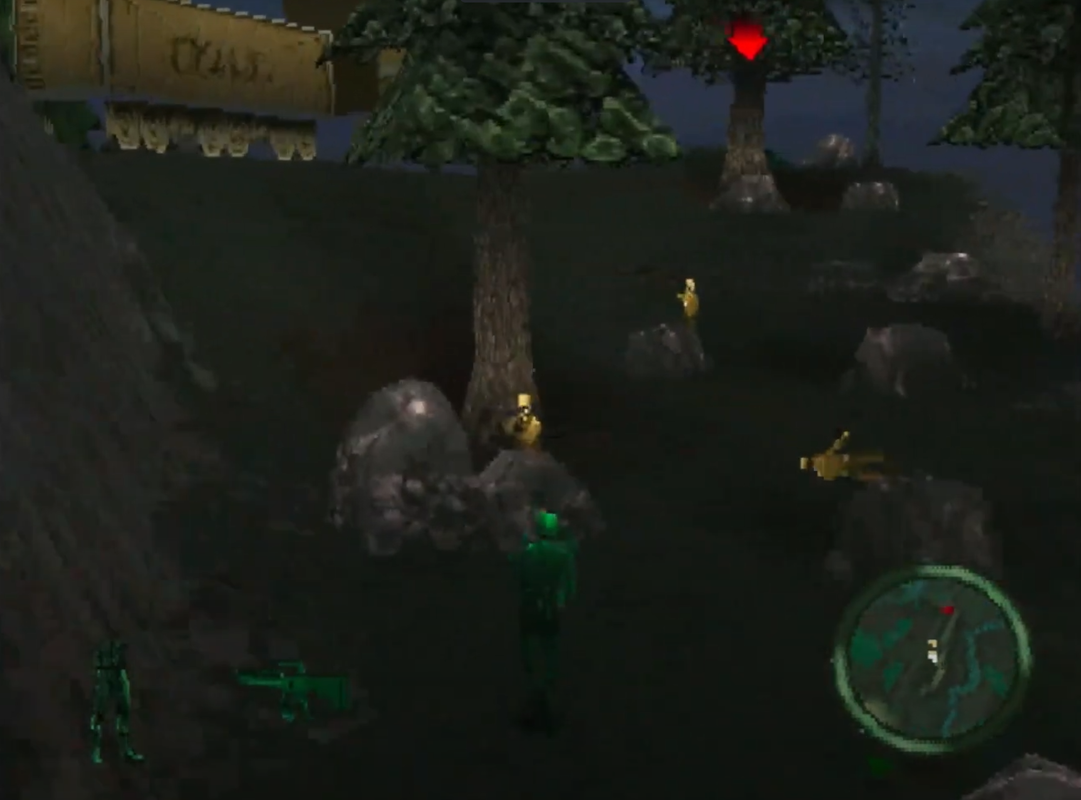 Army Men: World War - Land, Sea, Air is, at its core, a pretty decent game. It's not an amazing game - this is Army Men we're talking about - but it's really not bad at its core, and I feel compelled to have my score reflect that. Unfortunately, that core is buried beneath an AI endowed with god-like aim and omniscience and a degree of difficulty that I'm pretty sure violates some part of the Geneva Conventions. If someone could make a ROM hack that just tweaks the difficulty - maybe double the amount of health you have or halve enemy bullet damage - this would be a dope game. As it is, though, it's tragically more frustrating than it is fun, and that's a real bummer since the gameplay isn't what holds it down like the first Army Men and some of the Gold Star Software era games. If you're a big Army Men fan or a Playstation enthusiast, this is a neat system exclusive to try out, but for anyone else, steer clear if you value your sanity and time. My Rating - C
Technically, Army Men III doesn't actually exist as a commercial game. It's an abandoned fan-made game done in Unreal Engine 4 that takes place after the events of Army Men II but seems to exclude the events of Army Men: Toys in Space. Unfortunately, having been abandoned, the game will probably never be finished and stay in a rough beta state forever. That's a shame, too, because this beta is the foundations of a REALLY good game. Certainly better than the garbage that Global Star Software or Take Two Interactive released. 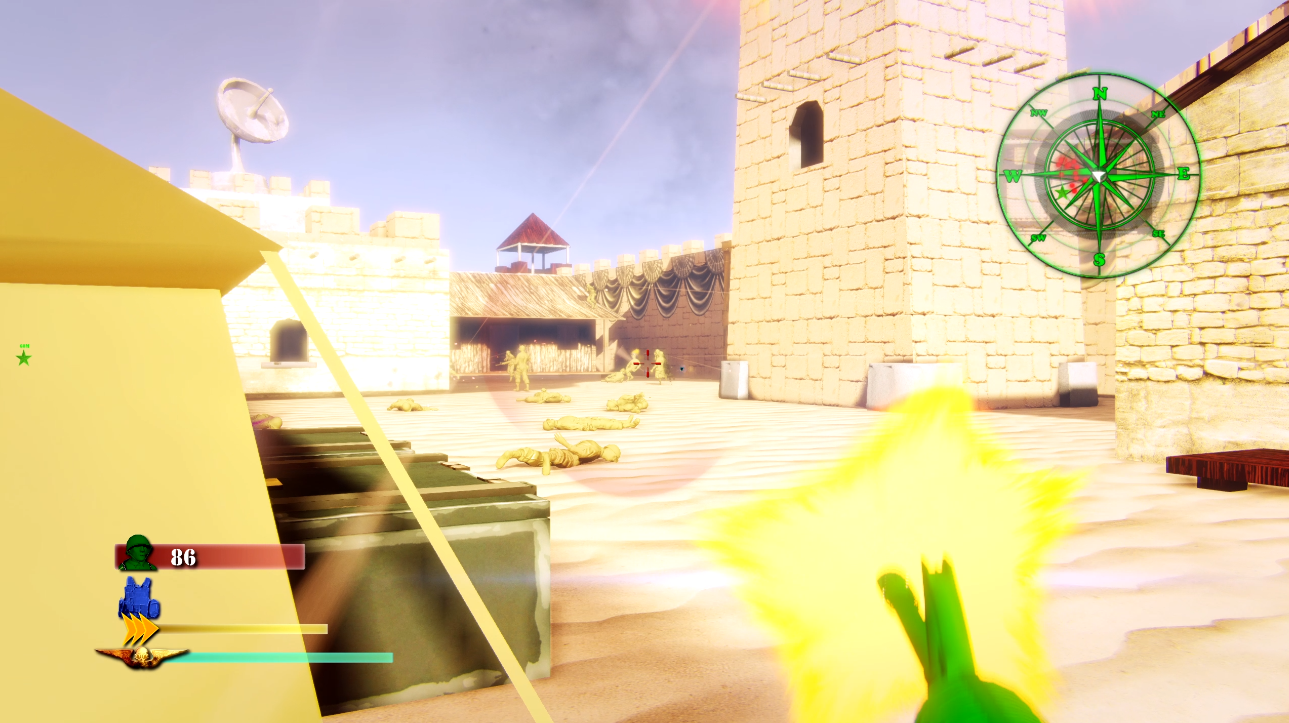 Picking up after Major Mylar's defeat at the end of Army Men II, this is the fan-made conclusion to what was originally intended to be a trilogy following Sarge's exploits and culminating with a showdown with the mad Grey doctor who created the zombie experiments. Unfortunately, 3DO never finished that story opting to pivot to Army Men: Toys in Space and Army Men: Air Tactics before shifting their focus to the Nintendo 64 and especially the PlayStation. Unlike the overhead tactics-esque gameplay of Army Men and Army Men II, Army Men III takes a third person shooter perspective somewhat akin to Sarge's Heroes but with a faster paced feel. Think Gears of War rather than Uncharted. While the game does follow Sarge's battles, you don't actually play as Sarge. Instead, you play as a Green corporal named Wallace Niles who assists Sarge on his missions, sometimes on the same battlefield and sometimes in a support role by handling a task that frees Sarge up to handle the war's main objectives. 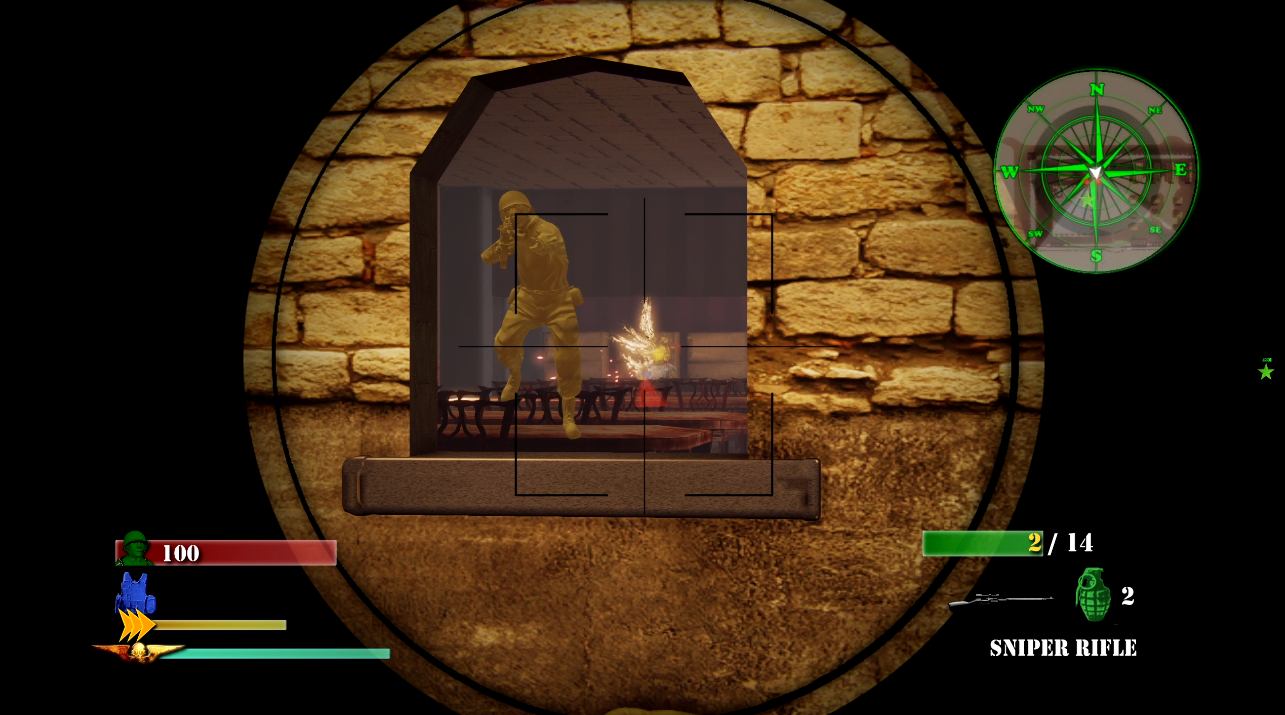 The game was in an alpha or beta state when it was abandoned, so unfortunately, only a quarter of the intended campaign is playable - four, I think, of the intended 16 levels - and what's there, while completely playable and a lot of fun, is pretty buggy. The physics feel weird with bizarre ragdoll effects that would be at home in a Bethesda RPG, and sometimes it takes the game fifteen or twenty seconds to realize you've died before giving you the option to quit or reload. It took me about an hour and a half to get through what of the game was made, so it's not a terribly long demo, but as is the case with the best games in my opinion, what it lacks in quantity of gameplay, it makes up for in quality. This is one of the most addicting non-commercial fan-games I've ever played. I've seen some on ModDB claim this is the "best Army Men game ever," and I'm not prepared to go quite that far - Army Men II and Sarge's Heroes 2 still exist - it is a DAMN good game. 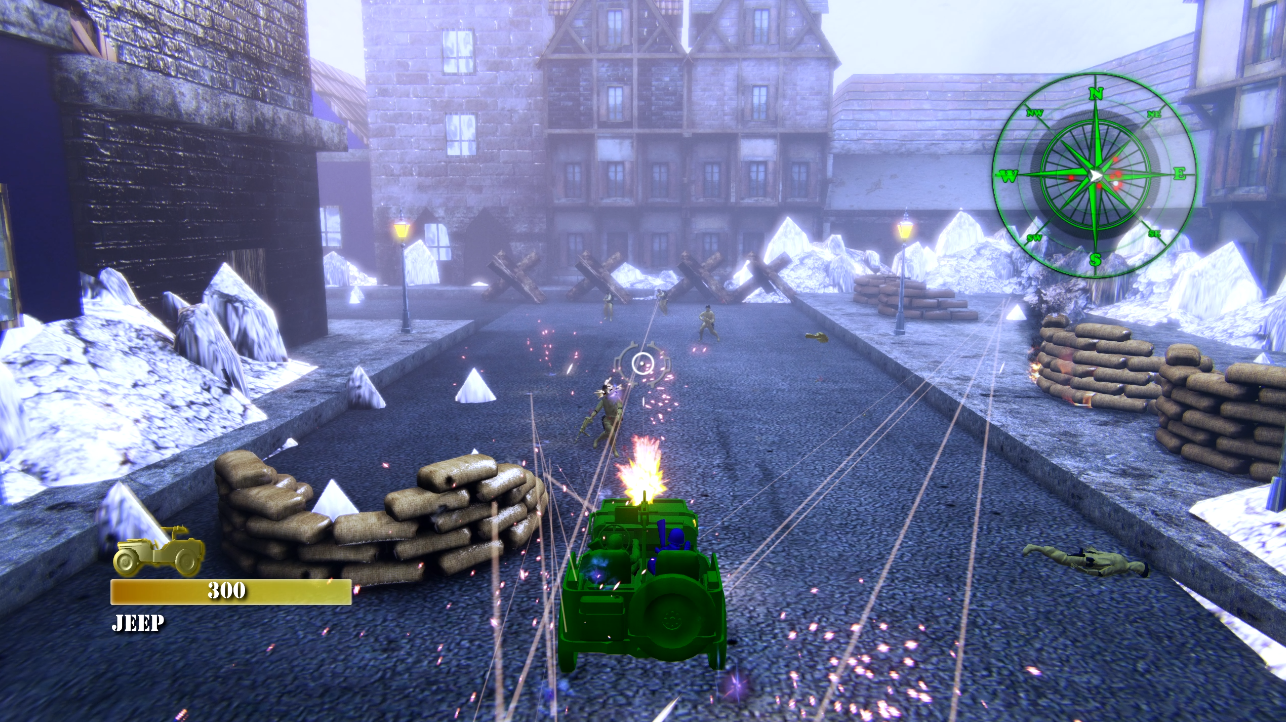 Sound design is a bit wonky, but it's a fan-made game that never got finished and features full voice acting; wonk is part of the deal. Visually, the game looks pretty good for the most part, but there are some visual and performance issues that crop up here and there. Some of the textures look great while others look a bit muddy and blurred. I imagine a lot of that would have been worked out before a final release if the game had gotten one, but as it is, the game is a bit of a mixed bag visually. As for performance, a lot of the game runs extremely smoothly, but there are times where it gets super choppy and chugs for a second or two. I'm running a RTX 4090 and a 13th gen i9, so I know it isn't a hardware issue. Despite that, though, there's a ton of fun to be had here, and the missions give you some solid variety of objectives and a huge array of vehicles and weapons to use to shoot, blow up, or melt your Tan foes. In addition to the campaign, there's also a skirmish mode that lets you battle in some pretty cool and varied environments that you don't get to see in the short available campaign missions. 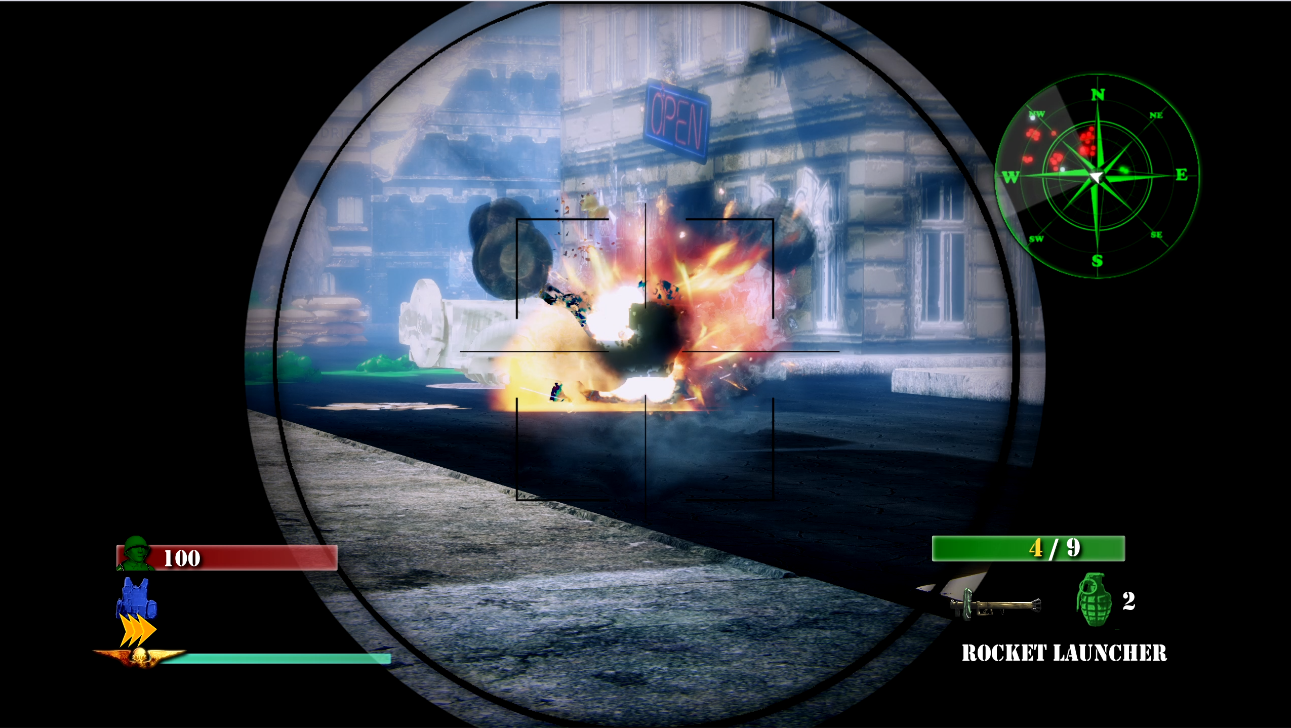 Army Men III is an interesting experience. As a fan-made game, it's an exceptional foundation, but as the project was abandoned years ago, it will never live up to its full - and undoubtedly awesome - potential. It's got, in my opinion, the most fast paced combat of any Army Men game, and it's a shame that we didn't get to see that fleshed out. If Take-Two would actually DO something with the IP, they could look to Army Men III for inspiration and make an awesome budget game to reboot the series, but as that's unlikely, this unfinished and rough around the edges demo is sadly going to have to suffice for a "modern" Army Men experience. Still, though it's unfinished, it's also free, so there's no reason not to give it a download and try it out. My Rating - C
Back in the days before smartphones were a thing, mobile gaming was done with Java based games. Army Men's foray into the Java mobile game space was Mobile Ops, a solidly okay at best game. For a 2010 Java mobile game, it's not horrendous, but it's awkward, clunky, and just...not a great experience. I make a sincere effort to play every game I review on original hardware, but that's sadly just not possible for this one, so I had to use a Windows emulator. 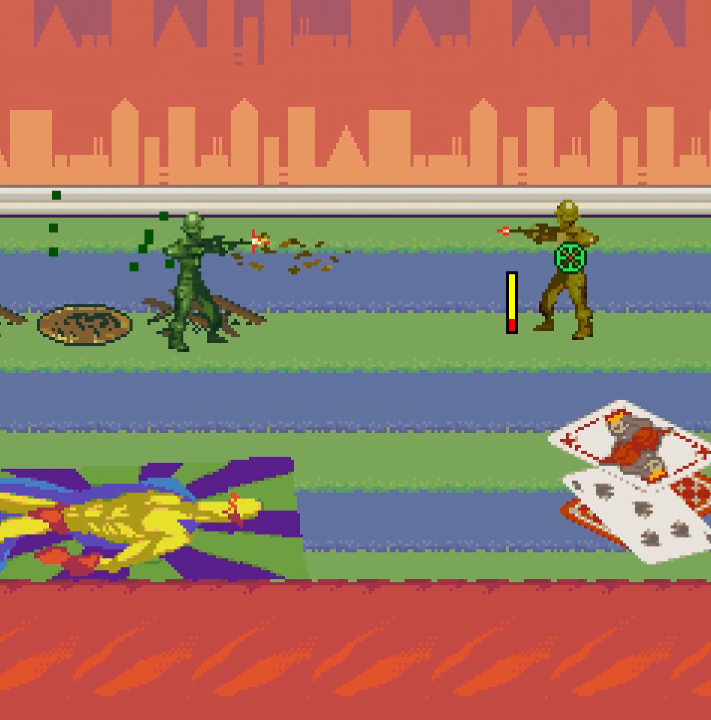 The game's narrative premise is...simple. You're a Green Army recruit who's thrust into his first mission right out of boot camp. That's about it. You do things like save Green POWs, escape a Tan base, etc. Basic Army Men objectives that could fit into literally any game in the series. As it's an old school mobile phone game, the controls are a bit awkward. I mapped the controls to an Xbox One controller to be as comfortable and intuitive as possible, and I still found it pretty awkward. The gameplay itself isn't bad, though. You assemble a squad of three soldiers from the Rifle, Bazooka, Grenade, and Minesweeper classes. Because all damage all day is the way I play literally every game, I went with Rifle, Bazooka, and Grenade for every mission. You can change between them at will, but when one soldier dies, he becomes unavailable and you have to make due with the others. There's also a limited amount of ammo, but due to the weird dimensions of the emulator and the inability to just stretch the screen to fit, I was never able to see my ammo count or even my health. I ended up just shooting until suddenly I couldn't shoot anymore, and I would run around getting shot until I abruptly died. Not ideal, but for a mediocre game on old mobile phones being run through an emulator a decade and a half later, it's passable. 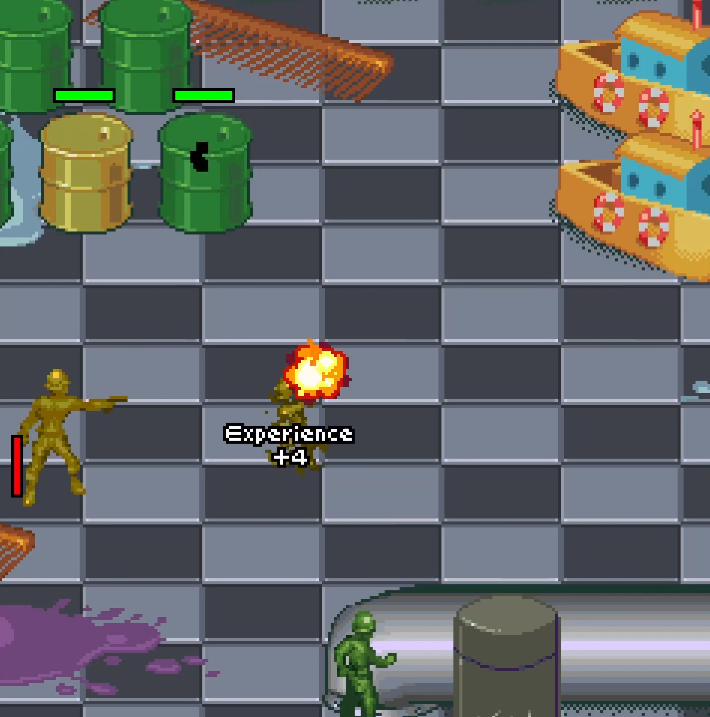 Considering the type of hardware it was made for, the game actually looks pretty good. I thought it looked good blown up on my PC monitor, and with how tiny the screen on an old Nokia phone is, it probably would have looked pretty great on original hardware. Unfortunately, that's about where my praise stops. Gameplay, as I said, is decent but not great. Controls are just awkward and cumbersome, although that's somewhat to be expected on an old cell phone game. The sound is...just terrible. In that regard, it fits right in with the Game Boy Color and Game Boy Advance games from a decade earlier. Sadly, there's just not a whole lot of positive here aside from "It exists and is, in fact, a game." With how difficult it is to get this running on real hardware and how cumbersome and obnoxious Java emulators are for PC and modern smartphones, I honestly do not recommend anyone go out and find a way to play this game. I don't even recommend this to devoted Army Men fans unless you're the most hardcore of the hardcore fans. If it were easily accessible, then I'd definitely recommend checking it out, but with the annoying barriers to entry in the modern day, it's just not worth the hassle. My Rating - D
Army Men: World War - not to be confused with the PS1 game that has the exact same title and the exact same box art but is a completely different game - is the fourth PC game in the series coming after Toys in Space. On PlayStation, there are four different “Army Men: World War" games making it a sub-series of sorts, and they’re considered to be a separate timeline from Army Men 1, 2, and Toys in Space. I’m not sure if World War on PC is also a different timeline or if it takes place at the same time as the first game, but honestly, it doesn’t really matter; deep storylines have never been Army Men’s cup of tea. 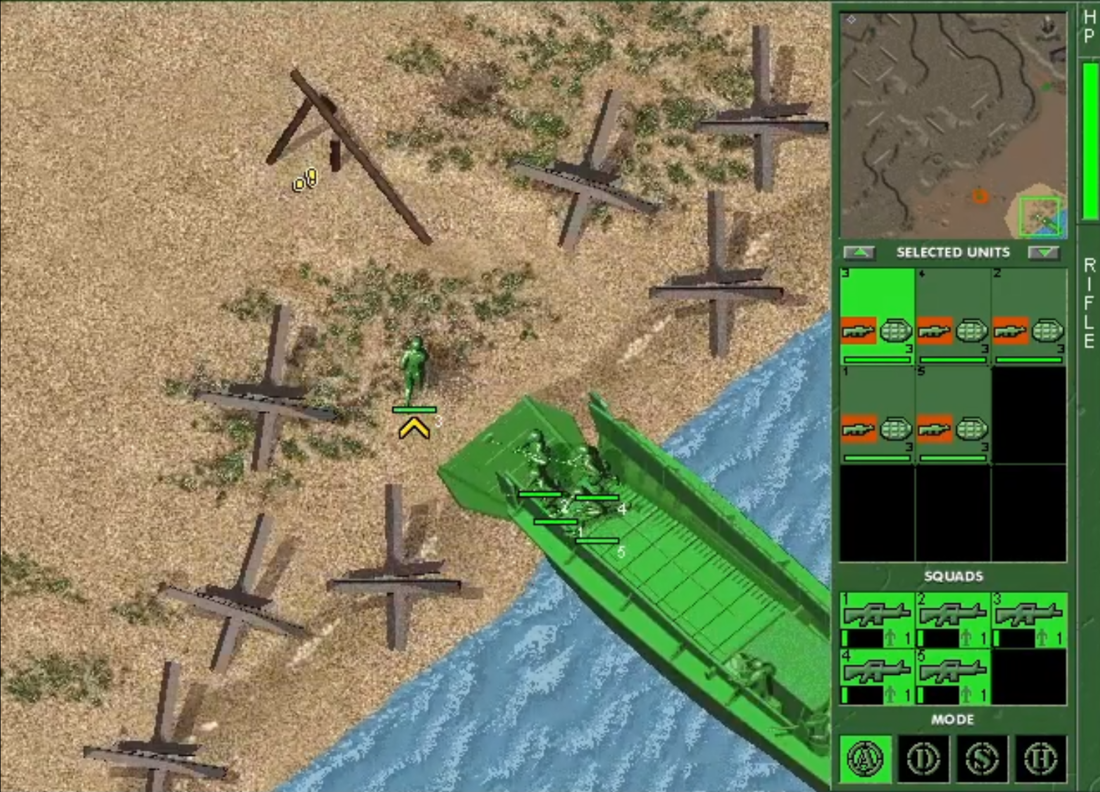 Unlike the other games in the series, there is not “protagonist;” you play as random Green soldiers. When the soldier you’re controlling dies, you move to control another soldier under your command. As you progress through the levels of the game, you gain more soldiers under your command that follow you from level to level. You can even have soldiers enter tanks that follow you to the next level. The lack of a protagonist means that there’s not as cohesive a story, but there is a story there, and while it’s not great, it’s okay and serves nicely as a narrative backdrop for the action. The game looks nice, too, although it is worth noting that the item icons aren’t quite the same as they were in Army Men II and Toys in Space. I’ve seen a lot of complaints about the visuals online, but I was pretty happy with the way the game looked. It did feel like it was rushed a bit more than II and Toys in Space but not to the point where it’s a true detriment to the game; there’s just a noticeable drop in polish. 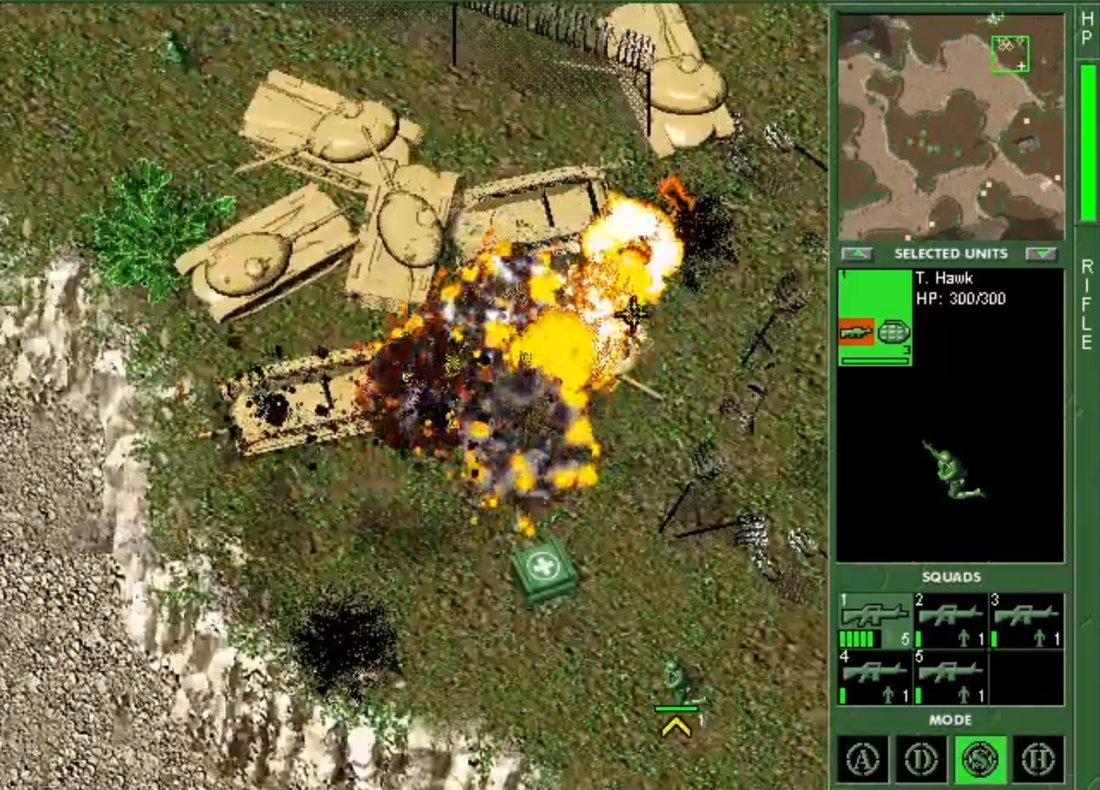 The story may suffer for lack of a single protagonist, but the level design is fantastic. The game opens with a D-Day style beach invasion against Tan defenses. The first level starts off fairly easy, naturally, to get you acclimated to the game, but it’s an awesome opening engagement. As the game progresses, you’ll have a variety of missions like destroying Tan artillery, blowing up a Tan tank depot, shutting down Tan AA guns to allow for air strikes, etc. The game’s first 14 levels culminate in the final mission in the Tan capital where you fight your way through the city and destroy their capitol building. That last mission is TOUGH. It’s not quite as tough as Toys in Space was in its last couple of missions, but you’d better have a large and strong force to make it through the Tan defenders and manage to destroy their capitol. 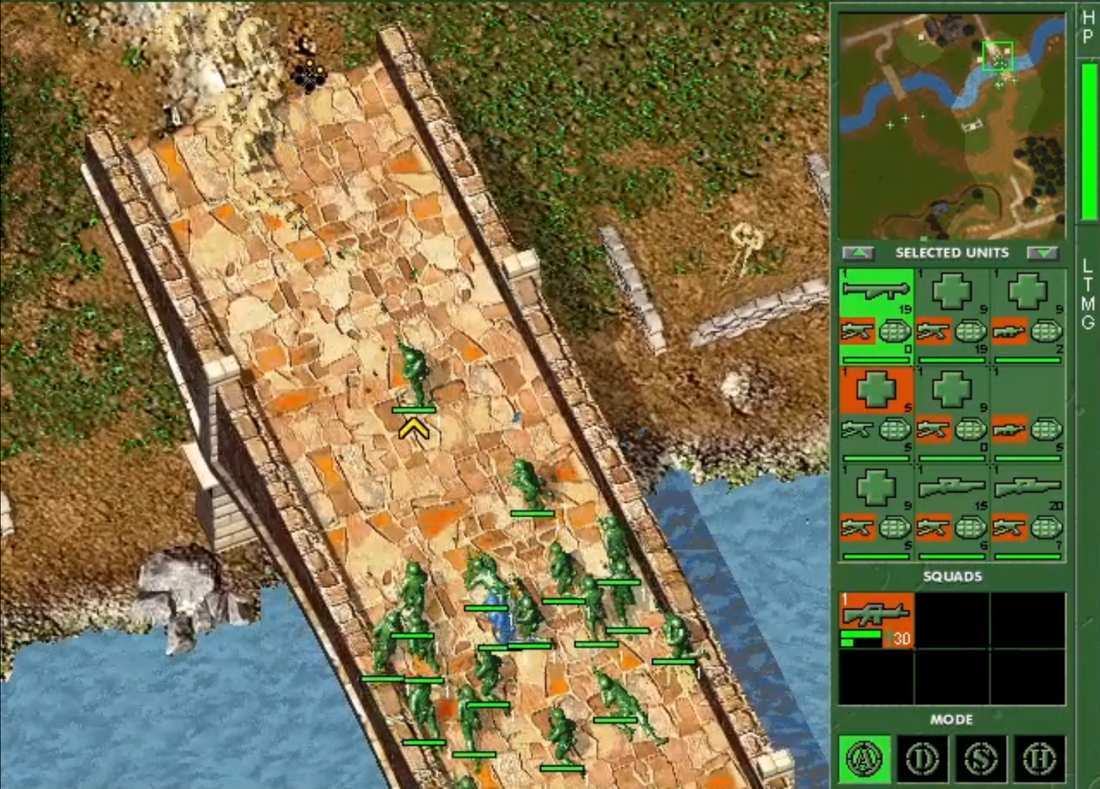 The sound design is...fine. It’s not as good as Toys in Space, and it’s nowhere near as good as Army Men II, but at least it’s still leagues better than the first Army Men game. The weapon sound effects are solid, and music, while forgettable, is fine and fits the setting and tone of the game. There’s a random battle mode like with the previous games, and while I didn’t find it to be quite as good as Army Men II or Army Men: Toys in Space, it was still a lot of fun and can add some lasting power for those who give this game a download. Unfortunately, there’s an issue with modern computer mouses. I don’t know if it’s the lack of trackball or modern mouses are just too sensitive and it freaks out, but the cursor will get stuck now and then or jump around. It’s manageable, but it does get really obnoxious and make controlling the game take a little bit of practice. 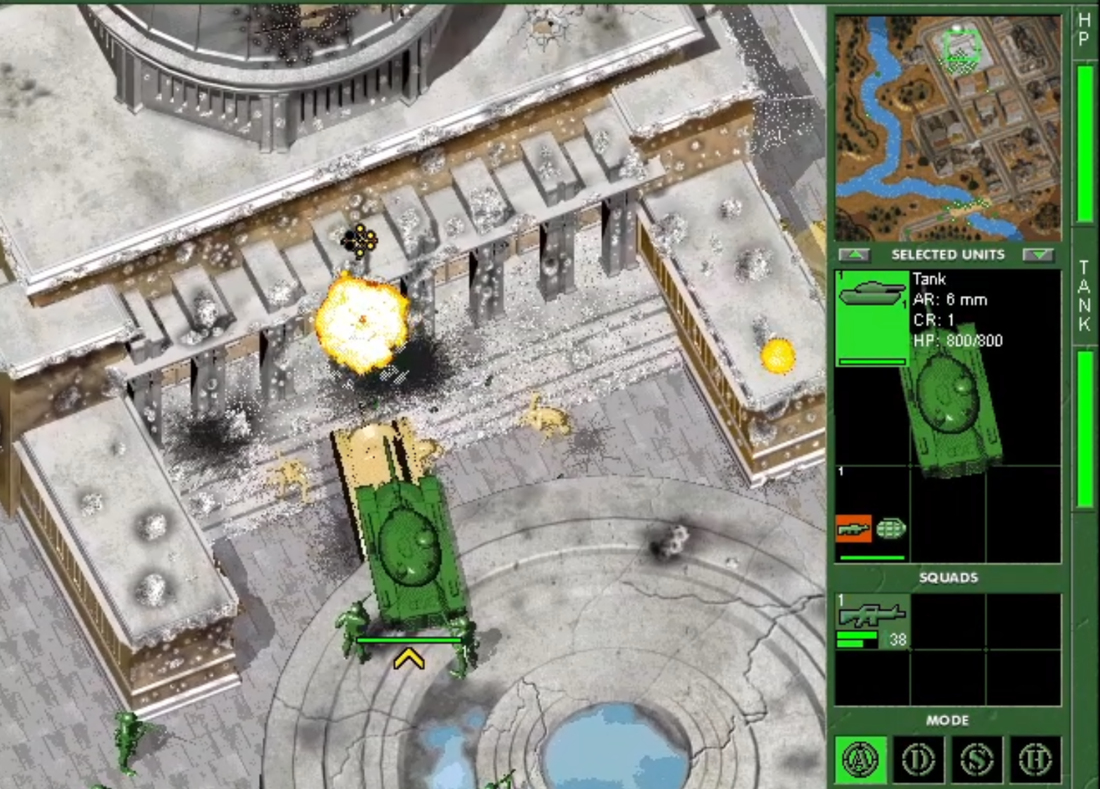 Army Men: World War may be a step down from Toys in Space and a decent drop from Army Men II, but it’s still a competent entry in the series and a fun game that’s absolutely worth playing. The music may be forgettable and the visuals so-so, but the missions and action are a ton of fun. If you just plan to play random battles instead of the campaign, I can’t really recommend World War when Toys in Space and II do the battle mode better. If you play the game for the campaigns, though, and like the series, that’s a different story. In that case, I absolutely recommend this game. Like the other old Army Men PC games, it’s dirt cheap on Steam and GOG, so give it a download and push back the fascist Tan advance into the liberty-loving Green Nation. My Rating - C
After Army Men II, I kind of thought 3DO perfected the Army Men formula. Where could they possibly go up from there? Like Jeff Bezos and Elon Musk, they answered that question with "Space!" Adding aliens is when most series jump the shark. Army Men's advantage, however, is that it started off in mid-air over the shark, so this pretty much just ends up feeling like "Eh, okay. Aliens. Why not?" 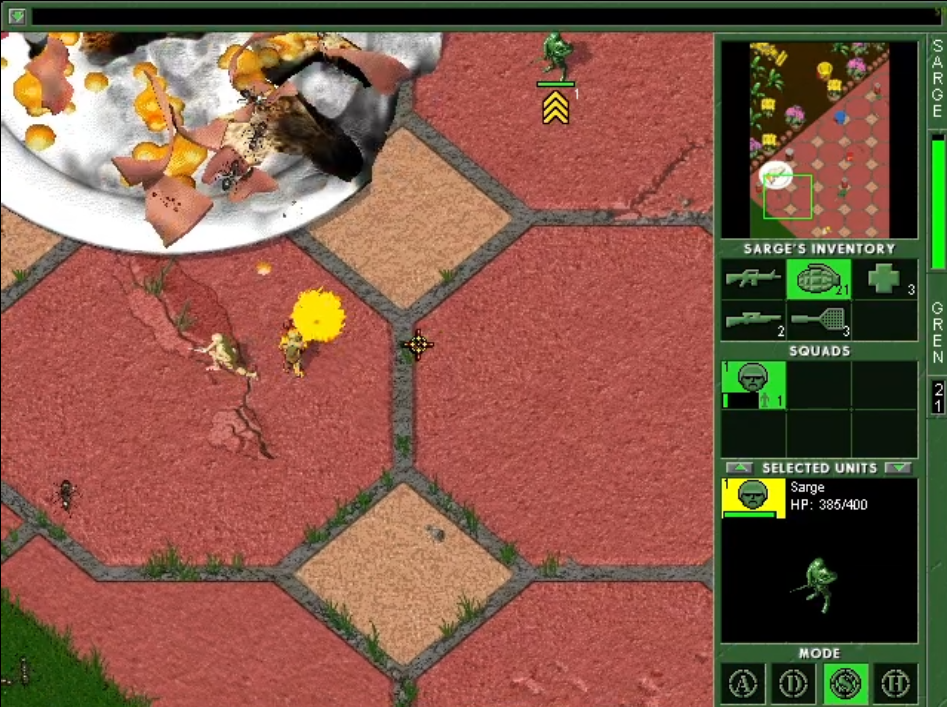 The story takes place after the events of Army Men II. As the Green and Tan armies continue to clash, a flying saucer descends from orbit and crash lands in Tan territory. General Plastro of the Tan Army manages to strike up an alliance with the Aliens to crush the Green Army. In exchange, the Tan agree to aid the Aliens in their war against the Galactic Army. Naturally, the Galactic Army and its leader, Tina Tomorrow, ally with the Green Army. While this pretty much just ends up being more of the same gameplay but with sci-fi units thrown into the mix, when you're getting more of something that's fantastic like Army Men II's gameplay, that's nothing but a good thing. 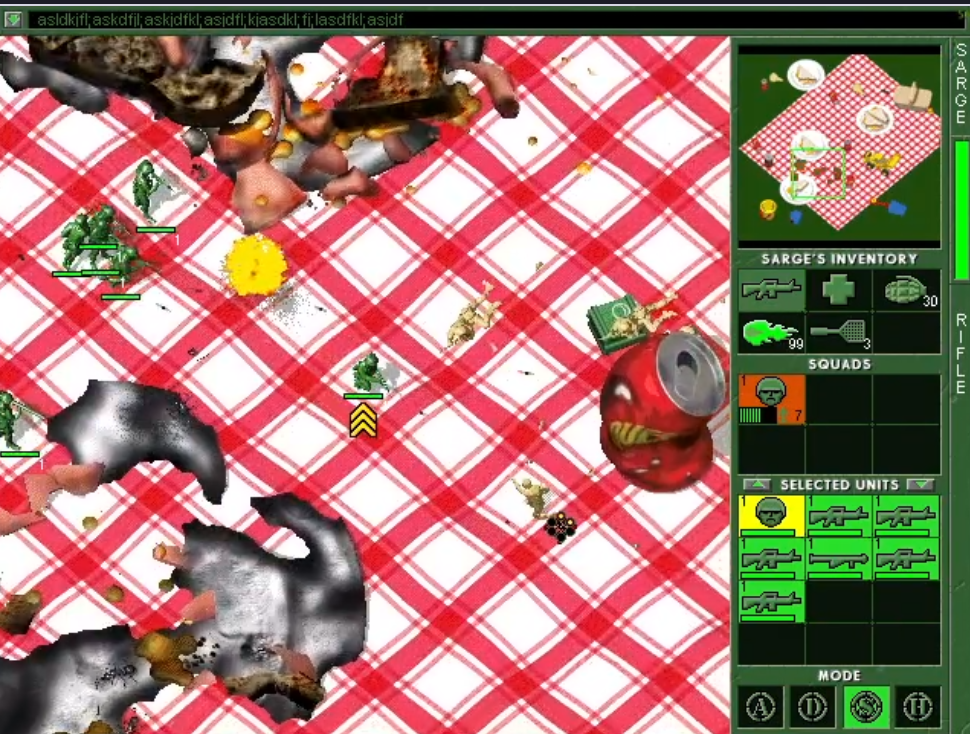 Graphically, it's a little bit better than Army Men II. The colors are a bit more saturated, and the visuals look a bit sharper, but it's generally what you would expect from an Army Men II sequel. I don't think the music is quite as good, but the sound effects are either the same or slightly improved depending on the specific sound effect. The new sound effects, though, like the lasers and the alien death noises, are awesome. The laser weapons have a deep, meaty sound to them. 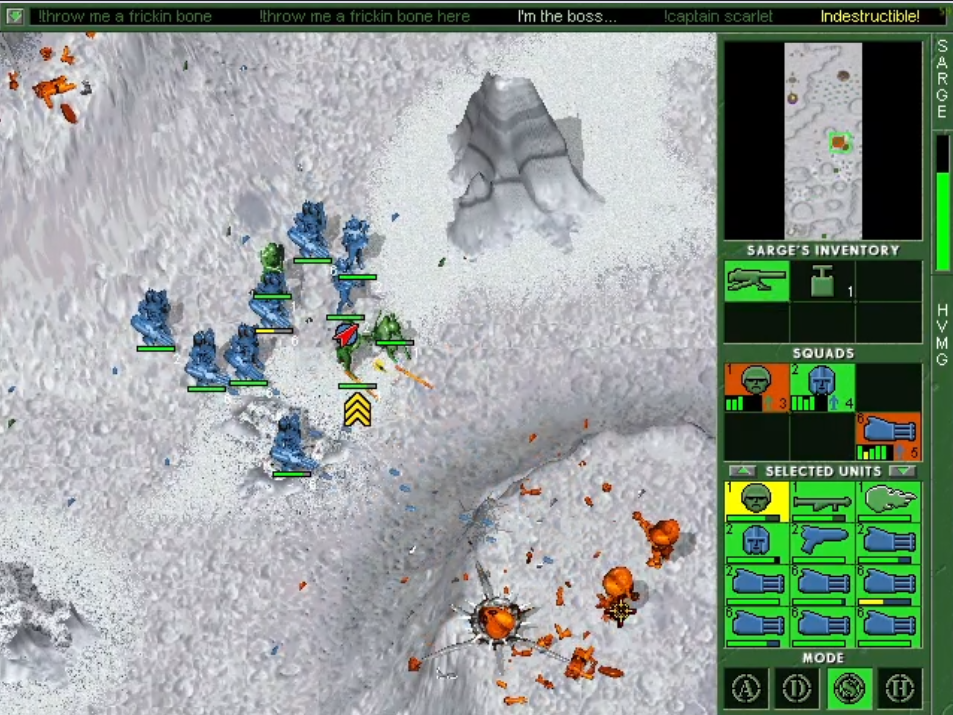 There are some awesome new weapons here. You can upgrade the vulcan gun to a laser rifle, you can get napalm mortars and air strikes, and you can call in a spacecraft to beam down Galactic Army troops the same way you can call in a plane to drop Green paratroopers in. The AI is honestly my biggest complaint about the game. The enemy AI will usually put up a good, stiff challenge, but the AI for your troops? Dumb as a sack of rocks. Doorways and small rocks are the bane of the Green Army. 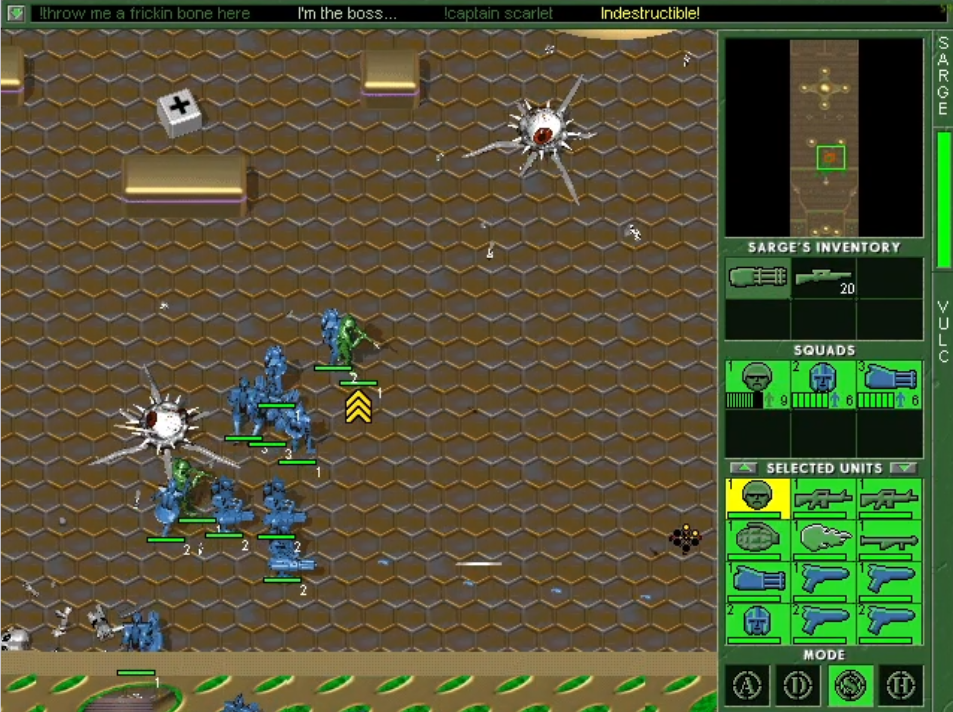 Army Men: Toys in Space is a weird follow-up to Army Men II, but it's definitely a good one. It's got a custom battle mode very similar to Army Men II's, and that's where you'll probably spend the majority of your time. I played through the campaign in like once or twice as a kid and then dumped a few hundred hours into the custom battles. I'm not sure I'd call this a "must play" if you just want the random custom battles - stick with Army Men II - but if you want a new experience of the same style, then Toys in Space is exactly what you want. The campaign falls far short of Army Men II's campaign in my opinion, but it's still a fun playthrough. My Rating - C
To say the original Army Men game is a bit rough is an understatement. You hope games like that get a sequel that turns the series around, but a lot of the time, the sequel is just more of the same. Thankfully, Army Men II is an example of the former. The first game may have been somewhere between hot garbage and painfully okay, but Army Men II took that, fixed virtually everything that the first game did wrong, and produced a product that's not just much better but genuinely great. Just like how a lot of people ignore Wolfenstein and Duke Nukem until the 3D games, a lot of people don't bother with the original Army Men and just pick up at II, and I honestly can't blame them; after all, this was my first Army Men game. 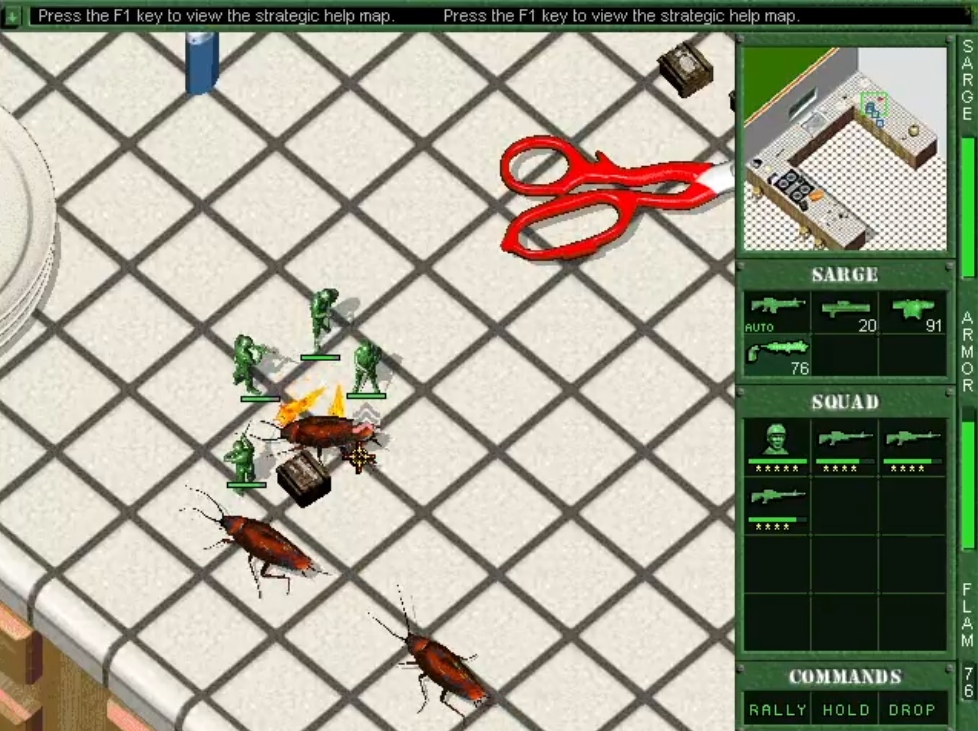 Army Men II picks up immediately after the end of the first game. Sarge has largely foiled the Tan plot to utilize their "super weapon" against the Green, but not completely; portals between the Plastic World and the Real World are now open, creating an entirely new front in the Green vs Tan war. The first level drops you out of a portal and on to a kitchen counter. You have to fight your way around to the other side of the U shaped counter to find the portal and return to the Plastic World. Once there, you fight your way through to a radio station to stop a Tan sabotage plot. That's largely how the campaign goes - a couple of mission in the Plastic World, a couple of missions in the Real World, a couple more in the Plastic World, etc. Between the switch between worlds and the varied environments within those worlds, that makes sure that the game never begins to feel stale. The campaign isn't super long anyway - it took me about four and a half hours - but what it lacks in quantity of hours, it makes up for in quality. 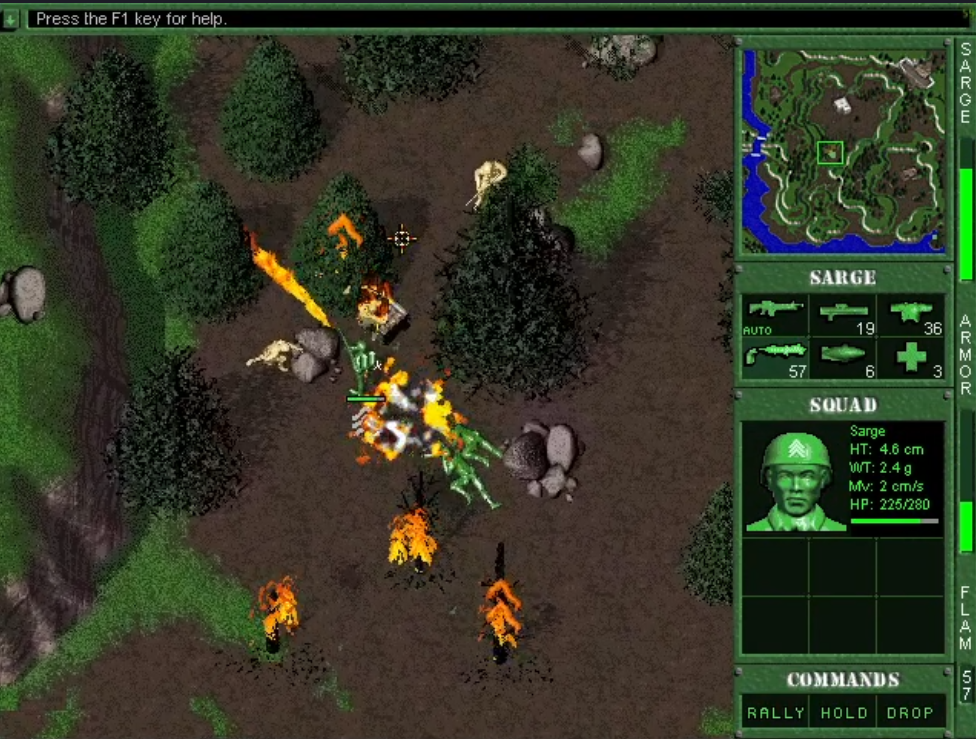 About halfway through the game, you discover one of the Tan super weapons in this game; with the help of an insane Grey scientist, they have constructed a machine that takes the plastic pieces of dead soldiers and reanimates them into plastic zombies. These zombies are extremely tough to kill, and if you want a little more challenge (and a lot more chaos), there's a cheat you can enable that spawn a zombie every time a soldier dies. Personally, I love it, and because these guys are made entirely of plastic, it's not quite as left field as if you were playing through Battlefield and Russian corpses started reanimating and trying to eat you. 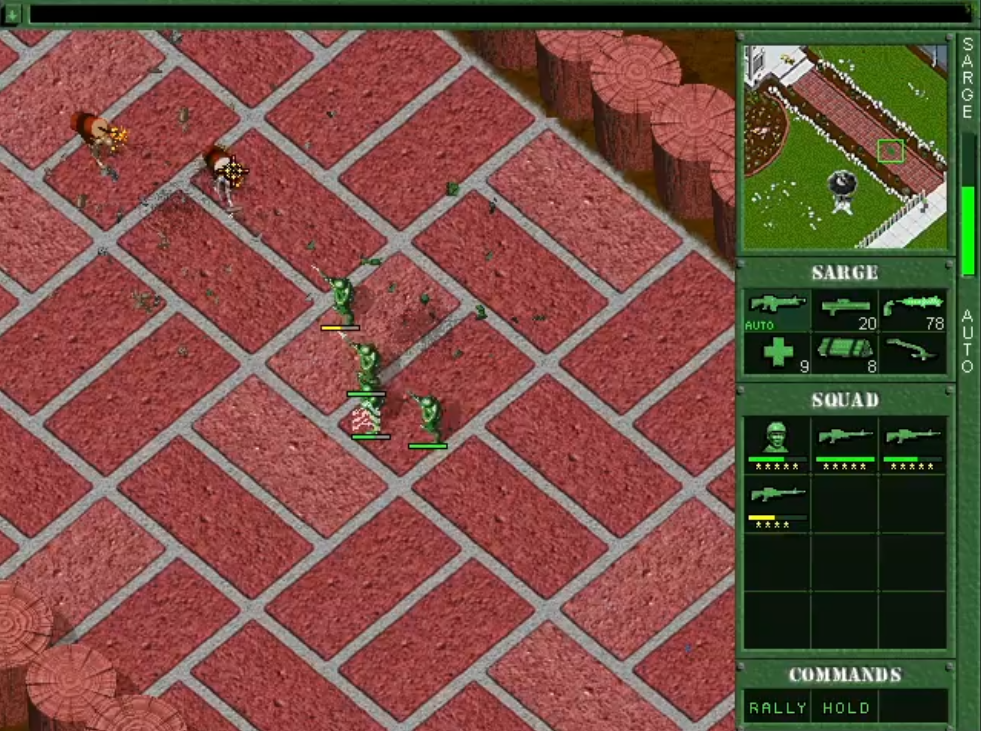 In addition to the short but extremely fun campaign, there's also a multiplayer mode. I'm not sure if this still works online - I honestly never checked - but what I always do is set up a game against AI bots and have a huge Green vs Tan vs Grey vs Blue fight. You can select your map, select a certain number of units to start with - including vehicles - and have a bathtub meat grinder. This is one of the most important improvements over the first game, at least to me. The campaign is significantly better, but it's very short - shorter than the original game's. The multiplayer, however, is several orders of magnitude better, and it could keep me entertained for a whole day sun up to sun down. 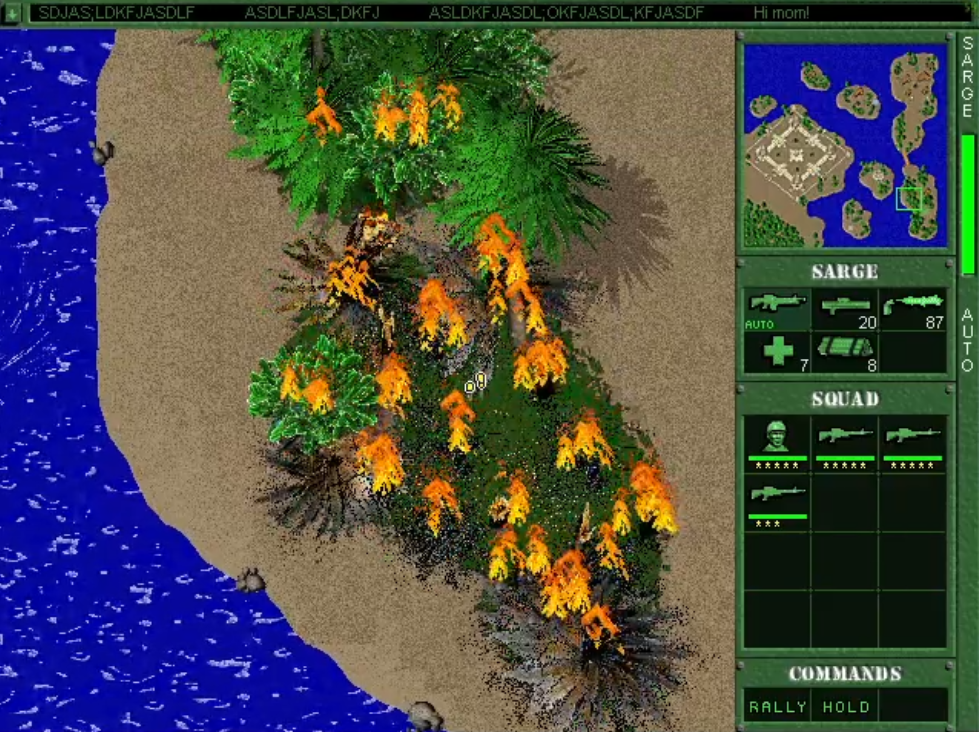 Aside from gameplay and controls, everything else about the game is superior, as well. Visually, it still looks like a game from a quarter century ago, but it looks much better than the previous game. Sound design doesn't even feel like the same series. Whereas the original game's sound design and music were downright painful after a level or two, the weapon sound effects are much improved here, and the soundtrack is not only tolerable but legitimately good and fits the tone of the game to a T. The voice acting, while still turn of the century gives-English-dubs-a-bad-name quality, is also much improved over the first game. 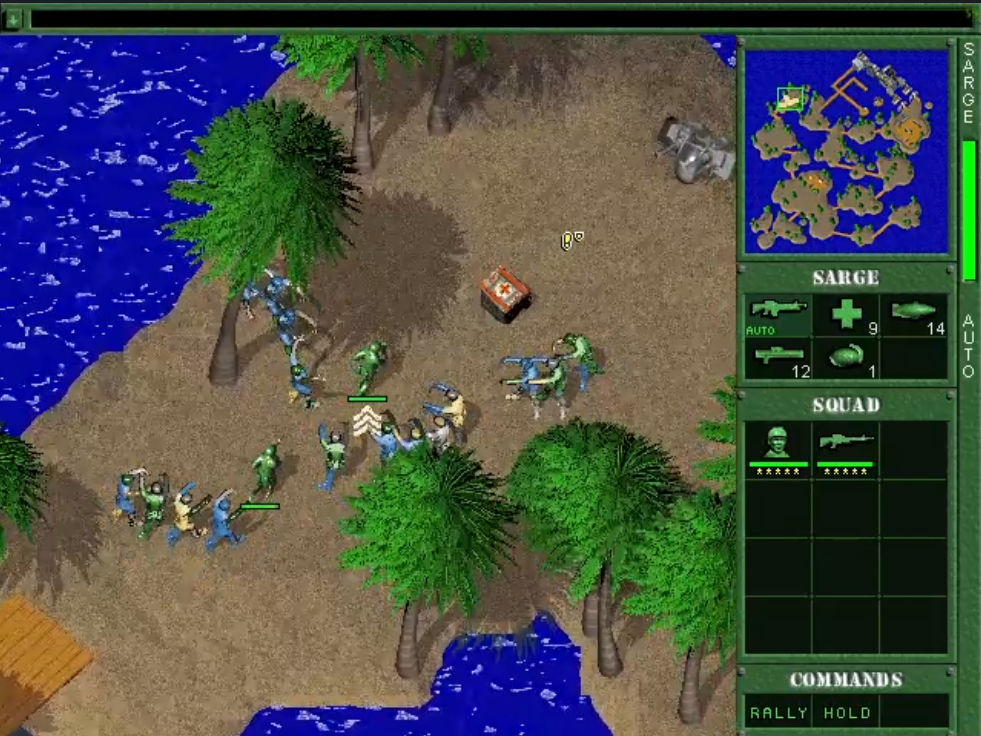 Army Men II is one of the single most nostalgic games for me, and it reminds me of my early childhood. Back before cliques, back before we started liking girls and/or boys, back when my friend Richard and I were just military obsessed eight-year-olds before he went off to the Navy and I went off to become a teacher, there was Army Men, and it was our prepubescent boyhood daydreams come to life. Army Men II isn't the best PC game, it's not the best turn of the century game, and it's not even the best Army Men game, but it IS my favorite Army Men game because of the period of my life of which it evokes memories. Even aside from nostalgia, it's a seriously fun game, and like the first game, it's dirt cheap on GOG, so go download it asap. My Rating - B
Jerrel Dulay, the utter madman of a developer behind one-man studio Sungrand, continues to surprise by releasing free homebrew games in addition to his commercial game releases. He’s recently released his first PSP game, Silver Falls: Battle Fever - Galaxy Bound Curse. There’s very minimal story here as it’s an all gameplay focused score chaser, but it uses the aesthetic and setting of Galaxy Bound Curse, hence the subtitle. Obviously being on the PSP instead of the Game Boy, the sprites are a lot sharper with a lot more of the world on-screen at once, but it’s still unmistakably based on Galaxy Bound Curse. As it’s a PSP homebrew, you’ll need either a PSP with CFW, a PS3 with CFW, a Vita or PSTV with CFW and Adrenaline, or - the easiest option - an emulator like PPSSPP. 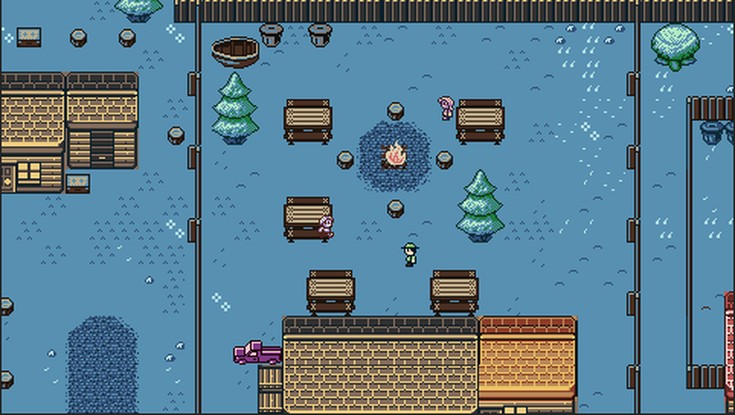 The gameplay is very simple. You run around in the woods by a small lake or large pond and kill all of the cryptids and mutated animals you see. Or at least kill as many as you can; they spawn endlessly. There’s a campfire on the south side of the pond that you can use to your advantage; lure enemies into it, and not only will it delay them as they have to go around, but they’ll take heavy damage when they hit the fire. You play as Sheriff Fred, so your primary weapon is his gun, but you can pick up secondary weapons that you find as you run around the map. My personal favorite is the bear trap that you can place in front of approaching enemies for some extra damage, but there are several options. I’m absolutely terrible at the game - my score has yet to break 1000 - but it’s a lot of fun and perfect for pick-up-and-play when you have five or ten minutes to kill. On the subway or pooping at work? Whip out your PSP and take a little Silver Falls break. 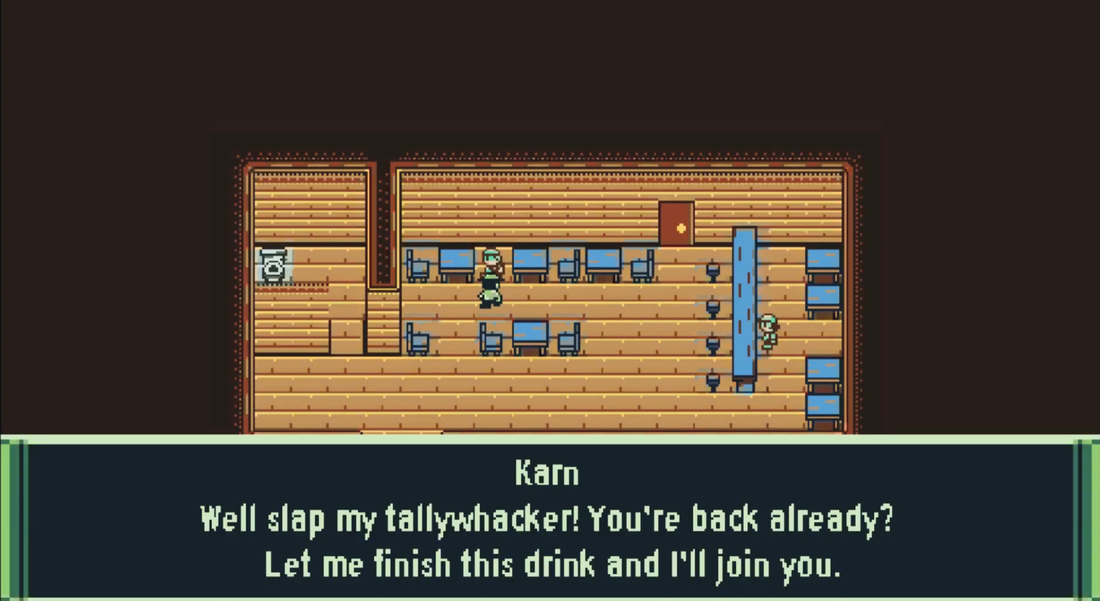 Because of the higher resolution and sharper image of the PSP compared to the Game Boy, the game looks fantastic. It retains the style of Galaxy Bound Curse, so you’ve still got the limited colors and sprites, but everything just looks so sharp and crisp. The sound design is classic Silver Falls and feels very much like what a Frontier game mode in Galaxy Bound Curse would have been like. Between rounds, you spawn at the campground behind the bar in town, and there are people you can talk to both inside and outside of the bar. This is the only real bit of story in this game. The characters that spawn seem to be random, and their dialog is mostly references to other games - some released, some still in the work - that sound like regular lore drops to the uninitiated but are clear and apparent allusions to long-time Silver Falls fans. 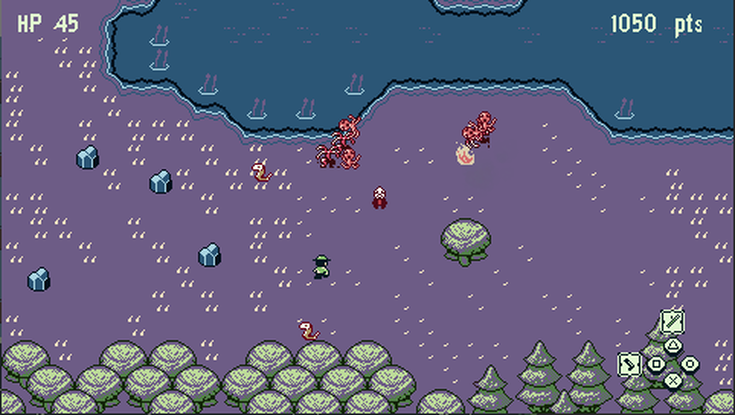 Silver Falls: Battle Fever - Galaxy Bound Curse is not only the first Silver Falls game on PSP but also the first in a planned “Battle Fever” sub-series that Jerrel plans to expand to other games’ style. I don’t know when it will be ready for release, but I know he has one in the works based on 3 Down Stars, and I’m definitely excited for that. I’ve played games that I paid real world money for that were much shallower and less entertaining than this, and all this game costs you is...nothing. It’s a free download. With that in mind, you’ve got no reason not to download it and at least give it a try. Who knows? You may end up liking it and want to check out Galaxy Bound Curse (which is also a free download). My Rating - C
I'll be honest, as I have absolutely zero interest in the Pokemon Mini, I never thought I'd actually review a game for it. Then Jerrel from Sungrand went and made a damn Silver Falls game for the thing, and because I'm such a huge Silver Falls fan, I'm now morally and ethically obligated to review it. That said, I have to admit that I knew this was coming; I was the first person to back the Kickstarter for it when the campaign launched last year. So how is this Silver Falls homebrew title for the Pokemon Mini? Well, keep in mind that it IS the Pokemon Mini, but within that context, it's really not bad. 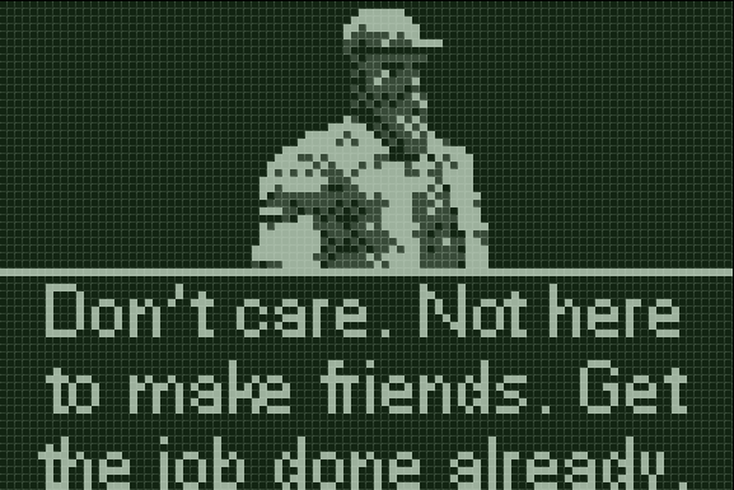 As usual for the series, the peaceful folks living in Silver Falls are just trying to get through their daily lives unimpeded by bloodthirsty cryptids. Unfortunately for them, monsters have appeared on the nearby North Island. It is up to some of Silver Falls's greatest heroes to clear the island of the monster infestation and make it safe again. You play as Wilma, a wise hunter; Bull, a burly lumberjack; Gold, a friendly carpenter; Hogan, a lively electrician; and Oxa, a starry-eyed dreamer. Setting up camp on North Island, this five-person dream team fights for the safety and security of their friends and family back in Silver Falls. And probably for freedom or something; I bet those cryptids have oil. 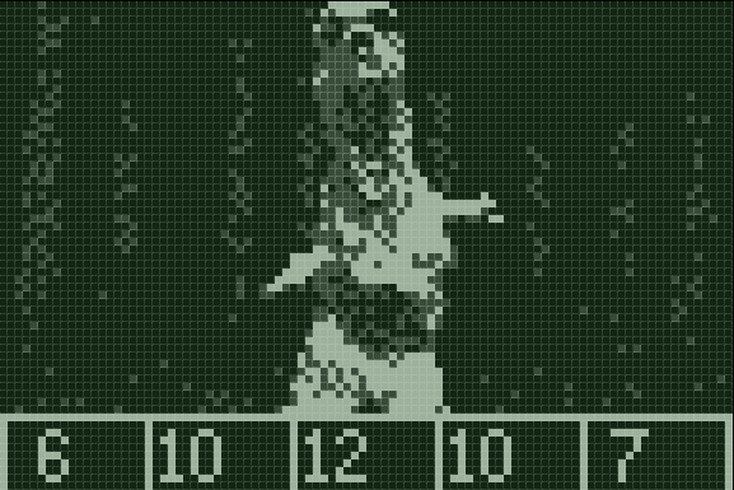 You start off in the party's camp where you can review their stats, review the camp's stats, see some character dialogue - this doesn't tell a grand narrative epic or anything, but it's some nice drops about the series's lore and the characters' backstories - and have characters perform jobs. Each of these jobs has a positive and a negative effect; your character's job, if successful, may raise your camp's safety but lower its food and possibly even find a useful item. If your characters are in bad shape, though, they may fail the job and have nothing but negative effects. There is a random chance of a monster encounter, affected by your camp's Safety stat, so you may go from job completion straight into a battle. The battle is really the main gameplay; each character has a unique attack and a "power" attack. Combat is turn based and, since it's Pokemon Mini, pretty simplistic, but it's more fun than I expected going into it. 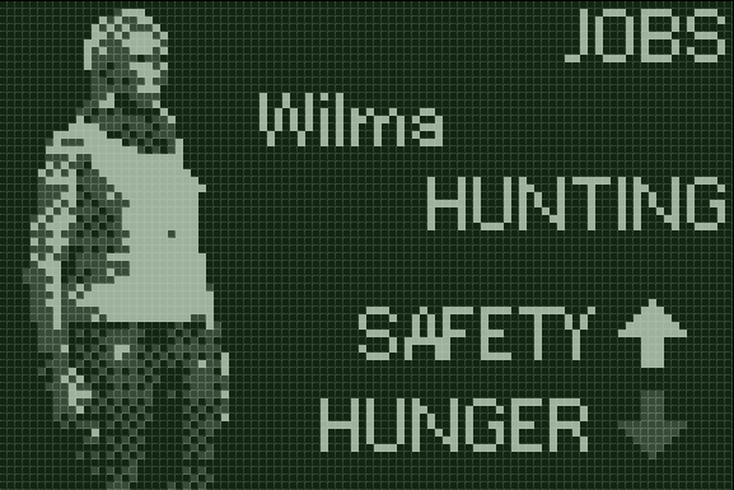 Silver Falls: Monsters in North Island is in an early build with future updates already planned. There's currently no sound in this build despite Jerrel's having made an entire soundtrack for the game, but that fix is coming soon. He also plans to add a save feature, improved visuals, more enemies, recruitable pets, mini games, Code Linker connectivity with other Silver Falls games. The current build may be a bit bare bones, but considering that the Pokemon Mini was basically nothing but minigame shovelware, this is a pretty impressive game for some seriously weak hardware. I can only judge it based on what's here at the moment, and that's pretty slim, but the foundation is here for a seriously surprisingly good time, and considering the platform, what's here is honestly a lot better than I expected. My Rating - C
Silver Falls: Survive was a Halloween 2023 surprise homebrew game that Sungrand Studios dropped to tease the expansion of their supported consoles. They've already got games on 3DS, Wii U, Switch, and Game Boy Color with plans to put games on Vita, Atari VCS, and PC in the near future. This very early build of a new Silver Falls game was our peek at what Sungrand is bringing to Sony's ill-fated but much beloved handheld. Jerrel, the sole man behind Sungrand, was clear, however, that this is absolutely not a finished product and very much a beta type of look; according to the Silver Falls website, this is version 0.1, so temper your expectations. I'll elaborate on that, but keep that in mind; this is an extremely early playable demo that he released to celebrate Halloween and build excitement for the future of Sungrand products, not to put a finished product out and call it a day. 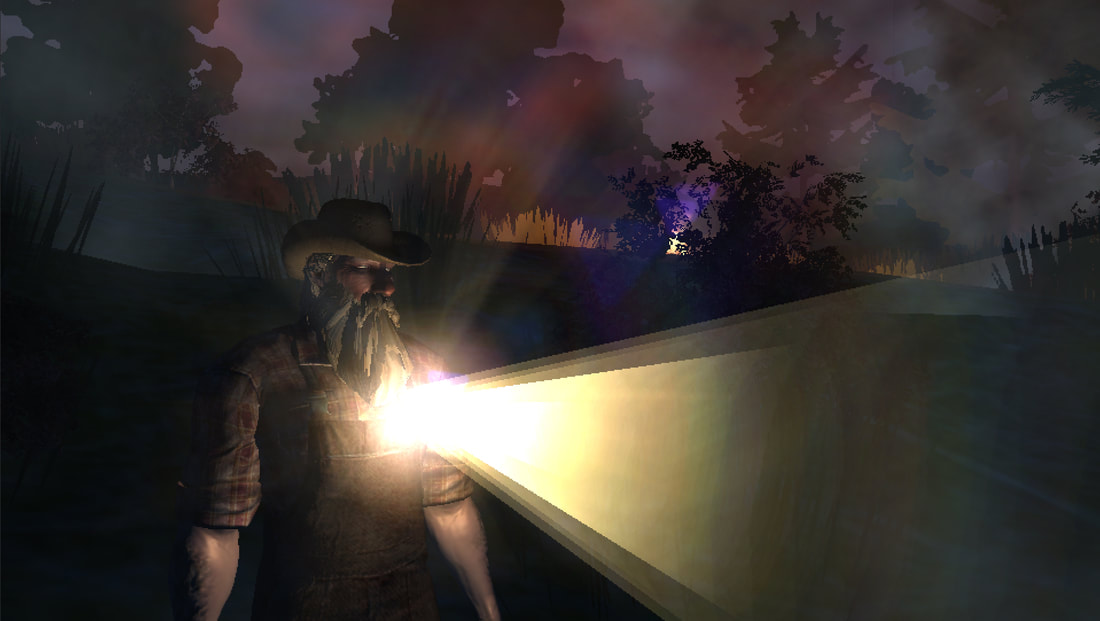 You play as a recently divorced man, still mourning his divorce while trying to focus on his opportunities as a single man rather than ruminate on the loss of his marriage. He's come to the cabin where the game starts in order to hike out into the forested mountains to scatter his late uncle's ashes. In the cabin, there are several characters you may recognize from previous Silver Falls game with whom you can talk. There are also weapons and food items around the cabin that you can - and definitely should - take with you. Equip whatever weapons you found and head out the door. That's where the real game starts. You step out of the cabin into a dark, foggy night. There's no waypoint, indication of where to go, or even an objective to accomplish. As I said, this is an extremely early build, and Sungrand is planning some major updates in the future. Unfortunately, as this is a free homebrew title, it's a fairly low priority compared to the commercial releases in the works, but what is here is more than enough to whet one's palate provided one is a fan of the Vita or PlayStation TV. Anyway, as you wander through the dark woods, you're randomly accosted by mysterious creatures. Hopefully you've got some good weapons because you've just found the aptly named game's sole objective in this build - survive. Survive until you inevitably die, and when you do, you respawn back in the cabin with new characters to talk to and new weapons and items to collect. Wash, rinse, repeat. 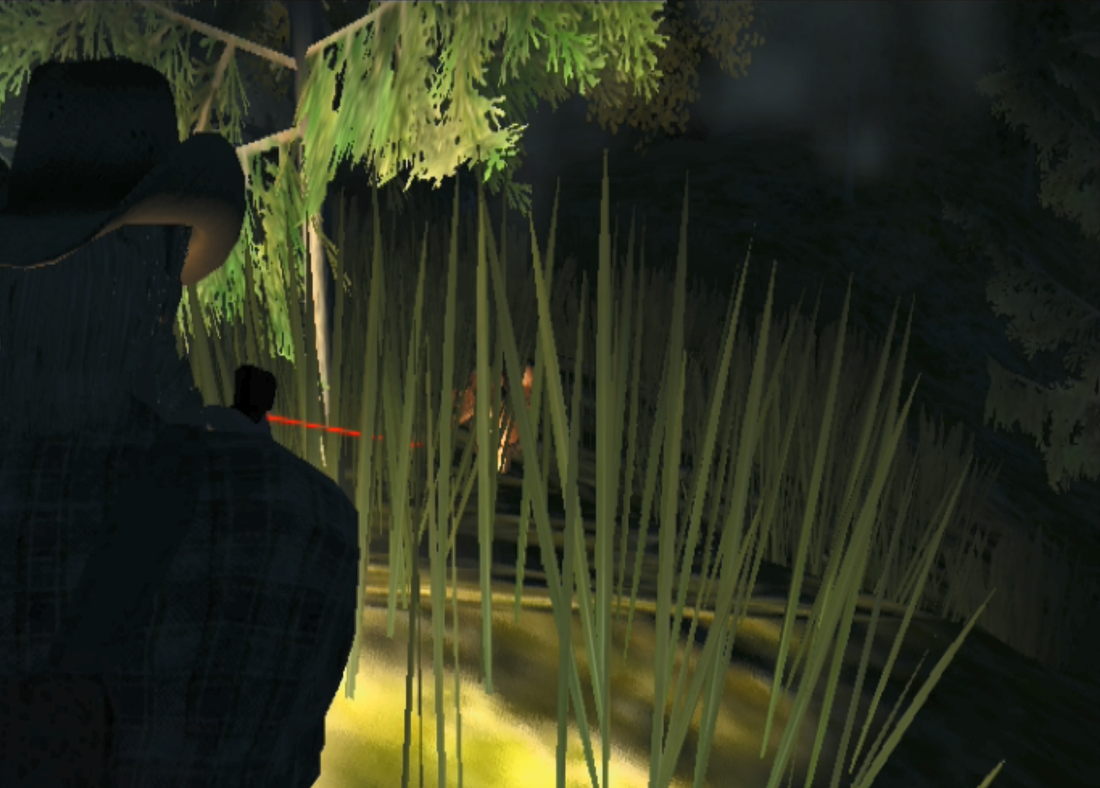 Right off the bat, one thing immediately jumps out at me - the atmosphere. I've played every game in the series start to finish, and while White Inside Its Umbra has an extremely tense and creepy vibe to it, Survive takes the cake. This is definitely the creepiest and most unsettling Silver Falls experience to date. The intense darkness, the rolling fog, the trees obscuring your vision - you can hear the enemies well before they're upon you, but you can't see them until it's almost too late. Even in this v0.1 build, it's a real Halloween vibe. There is some story in the game - your uncle's urn in your inventory and the dialogue with the characters who appear in the cabin, for example - but it's extremely bare bones in this build, although more story content is on the way in future updates. Likewise, there are going to be bugs given the early beta nature of this build. I didn't actually encounter any bugs myself, but I did find a funny element that hadn't been programmed yet. There's a lake I stumbled on, but when testing whether or not I could swim, I discovered that the water is only there in looks; I walked straight through it and along the bottom of the lake no problem. It's obviously a minor thing that just hadn't been programmed when this got dropped for Halloween, but it made me laugh. Other than that, the only performance issues I encountered were long load times - which seemed worse on PS TV than on my actual Vita, although that may just be my perception - and a lower-than-ideal frame rate. That's not to say the frame rate was abysmal, but it hung between 20 and 30 fps when I was playing. The game is intentionally pretty slow paced as it is to build the tension and unease, so that mitigates a lot of the frustration that sub-30 fps frame rates can often cause. 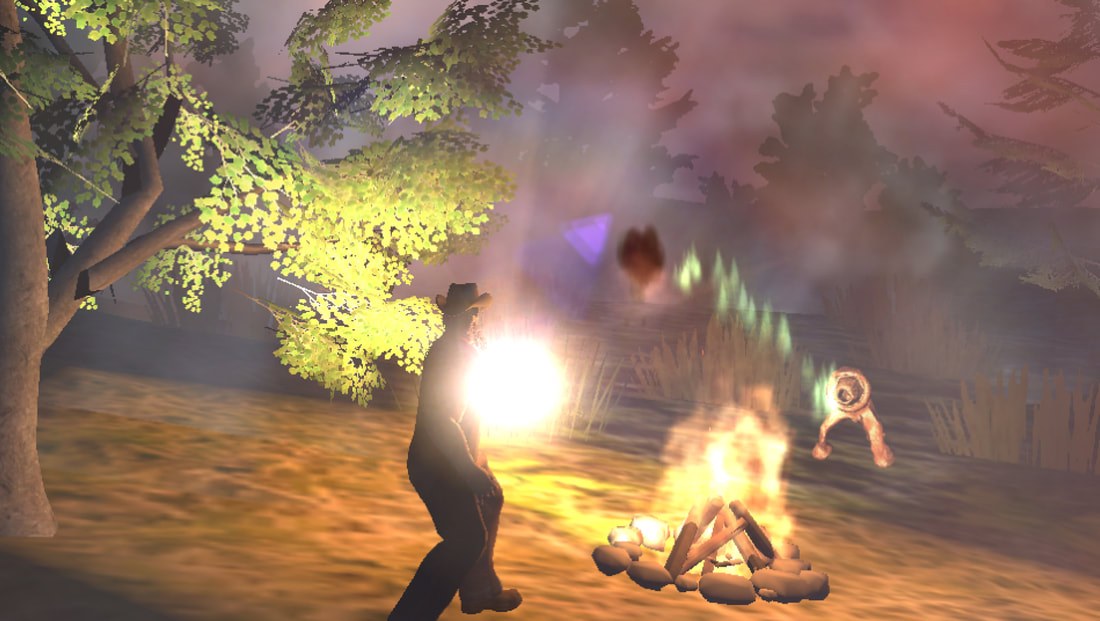 Silver Falls: Survive is a sneak peek at what's coming to Vita from Sungrand, not a full release, and that's important to keep in mind. It nails the horror atmosphere to a degree of perfection that no other Silver Falls game save for White Inside Its Umbra has, and that's even with being a relatively skeletal build content-wise. I'm quite excited to see the future updates to this game no matter how long coming they may be. I did struggle with how to rate this one, though. I was going to give it a D since it's just so bare bones, but just as I try to judge every game in the context of when it was released and the hardware capabilities, I have to judge this not as a PlayStation Vita release but as a very early build demo of a PlayStation Vita game. In that context, it's not going to win any awards, but it's definitely an enjoyable experience. I would have liked to see more actual locations to explore rather than just trees and a few bonfires (I've heard there might be another cabin, but I've never been able to find one), and the enemy encounters were few and far between. On the one hand, that does build the tension, never knowing when the next encounter was coming, but with so little to actually do in the game, I'd have preferred to see more. Regardless, I enjoyed my time with this playing both on my Vita and my PlayStation TV, and I definitely recommend that horror fans with a Vita or PS TV running CFW check it out. Or if you have a Vita emulator on your PC. It's not going give you a whole afternoon of entertainment, but it's a good way to spend half an hour here and there. My Rating - C Also available on 3DS
Silver Falls is an indie horror series made Sungrand, a one-man studio based in Australia, that focuses around the quaint little town of Silver Falls. This quaint little town isn't quite as normal as it looks, though; strange things keep happening, and strange creatures keep appearing. Each game in the series has a very distinct feel and style that matches the time period when the game takes place, and the fact that everything about the games from the visuals to the coding to the audio is all done by one person gives each entry a real labor-of-love feel that big studio AAA games just can't replicate. Not only that, but the series represents a wide array of genres, and it boasts an impressive number of entries considering that the first game, 3 Down Stars, was released only four years ago. That number is even more impressive if you include ports and remasters. This is one such remaster; Ghoul Busters was originally released in mid-2022 for the 3DS as part of Sungrand's last hurrah slew of 3DS and Wii U games, and it's actually the one that got me into the series. When the 3DS eShop closed, however, Ghoul Busters became unobtainable despite being an excellent game. As such, Sungrand made the decision to answer the prayers of fans and give the game a Switch remaster, now sporting HD visuals as well as a slew of visual effects and screen color schemes. 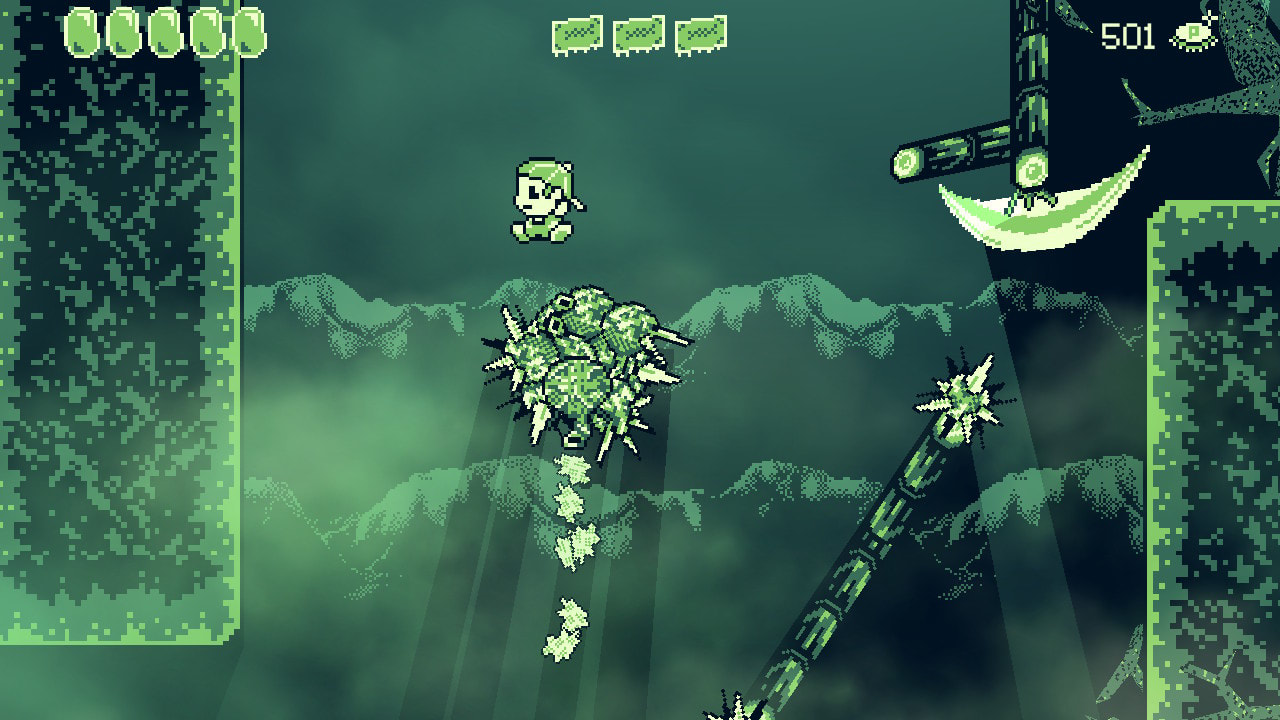 Ghoul Busters takes place in the early 1990s and, as such, has an aesthetic intentionally reminiscent of the original Game Boy (that's also why the game's initials are "GB"). It follows two young best friends forever, Starlin Allerdyce and Atticus Longdraw, on their adventure-turned-nightmare in the woods. The two boys had gone to the woods one night to play Ghoul Busters, pretending to be the heroes from their favorite television cartoon, but they quickly stumble upon real monsters lurking in the woods as well as adults from the town who seem to know more about the strange goings-on than they're willing to admit. Now their playtime has turned into a very literal fight for survival. Armed only with their toys, the two children have to use their wits, agility, and the luck and survivability that comes with being the main characters to make it to morning. 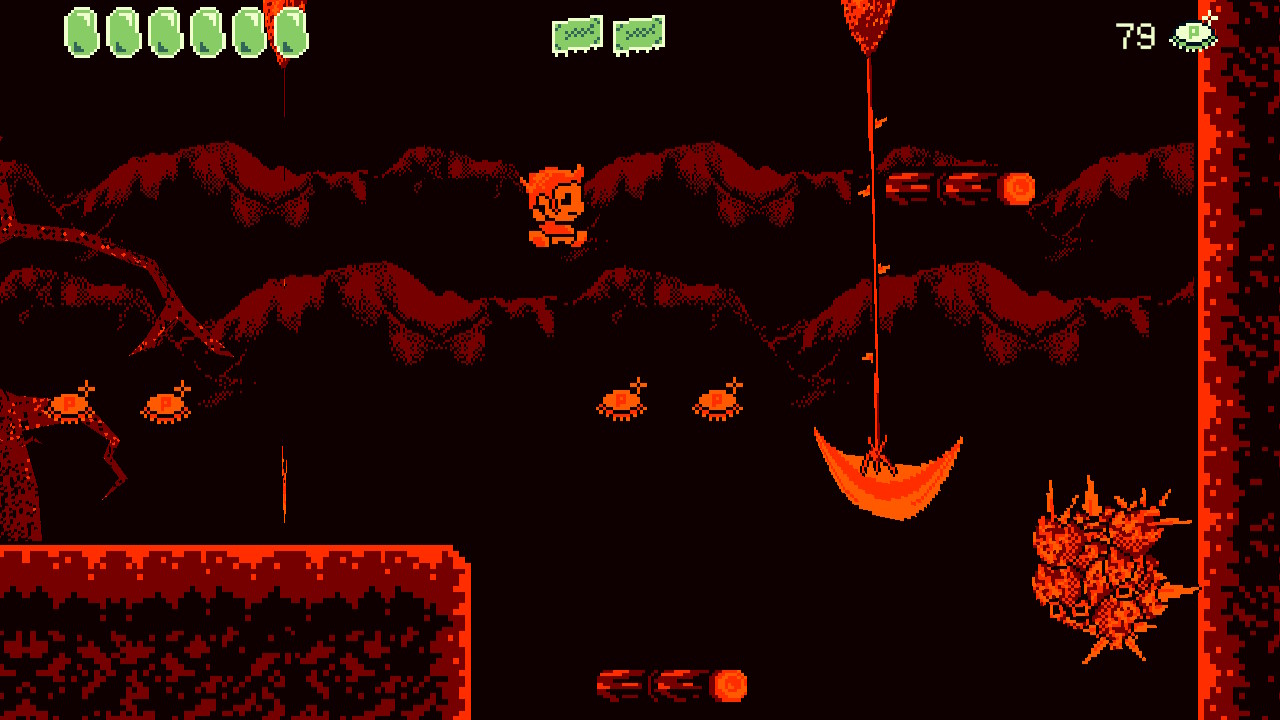 The game is a 2D platformer although one that was obviously designed with the 3DS's stereoscopic 3D in mind. As such, there's a little bit of a learning curve on Switch. There are obstacles and traps that swing back and forth between the foreground and the background, and there are platforms that spin around in circles so that you have to time your jumps for when the platforms are along the X axis and get off before they rotate to face along the Z axis. It's definitely doable - the high resolution graphics make it fairly easy to get a feel for the movement of these obstacles - but it's not as naturally intuitive as playing on 3DS with the 3D enabled. Each of the two characters - Starlin and Atticus - plays somewhat differently. Starlin is a bit slower in jumps, attacks with a hockey stick, and seems to deal a little more damage with more knockback. Atticus, on the other hand, moves much faster in the air, attacks with a slingshot, and trades some of that damage and knockback for attack range. Personally, I preferred playing as Atticus, although Starlin felt more useful to me in the last few levels. 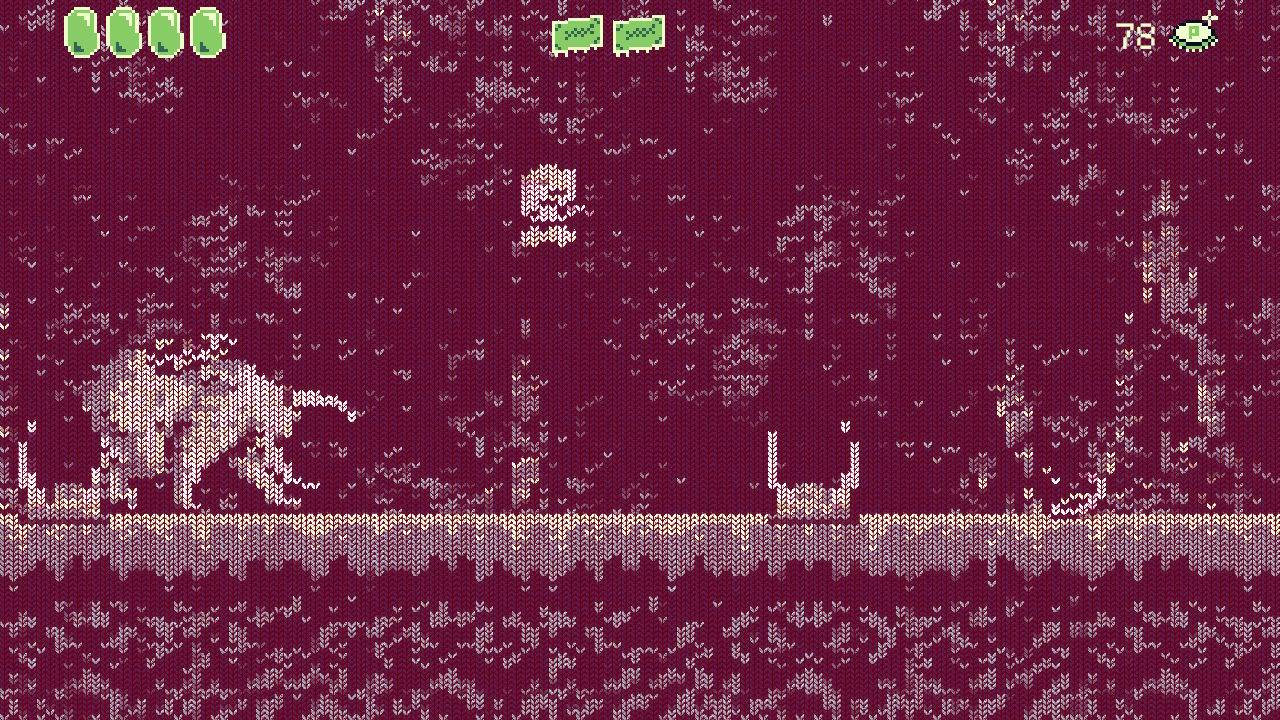 The game isn't very long, but what it lacks in length it makes up for in quality. There are nine levels and three bosses (one at the end of each three-level stage), and they are, as one might hope, increasingly challenging. On level 1-1, for example, I only died once; by level 3-3, you'd have thought I was playing Super Meat Boy. By the time I had cleared the final boss, I had died 421 times during my playthrough, and it would have been a lot more if I hadn't had items to use. Between levels, you get the chance to spend the bottle caps - the game's currency - you collected thus far to buy items for use later, and fortunately, you're able to go back and replay levels to grind more bottle caps if you find that you're in need of items but out of funds. There are box tops hidden throughout the levels, as well, and each level that you end with three box tops gives you a special item that you can't normally buy. 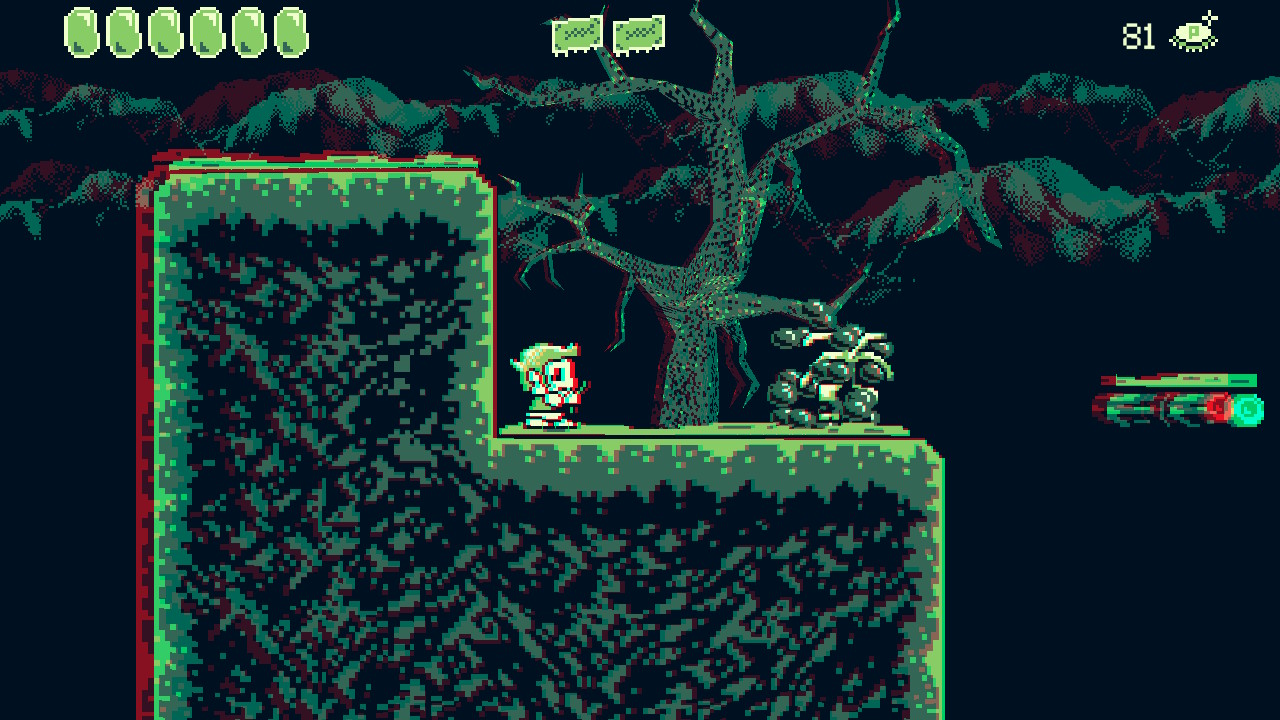 The best part about the game's transition from 3DS to Switch is the visual effect options. Some add to the atmosphere of the game, like the fog and rain effects, while others actually make it a little harder to see but are there simply because they look cool, like the wool and retro graphic effects. Others, like the old TV effect, don't enhance the horror vibe of the game but do add a distinct vibe of their own. My personal favorite, the old movie effect, simulates the anaglyph 3D effect by adding the blue and red effects. It's nowhere near as effective as the 3DS's stereoscopic screen, but it does give a subtle 3D effect to a non-3D screen. In addition to the visual effects, there are numerous color effects that you can enable. Don't like the green look of the original DMG Game Boy? Make it pink. Wish you were playing on a truly black and white screen like the Game Boy actually produces? There's a grey color. Wish you were playing this on a Virtual Boy? There's a red color. Want it to be generally radical? There's a neon blue color. Mixing and matching different screen colors and visual effects was one of my favorite parts about playing this remastered version of the game for the first time. 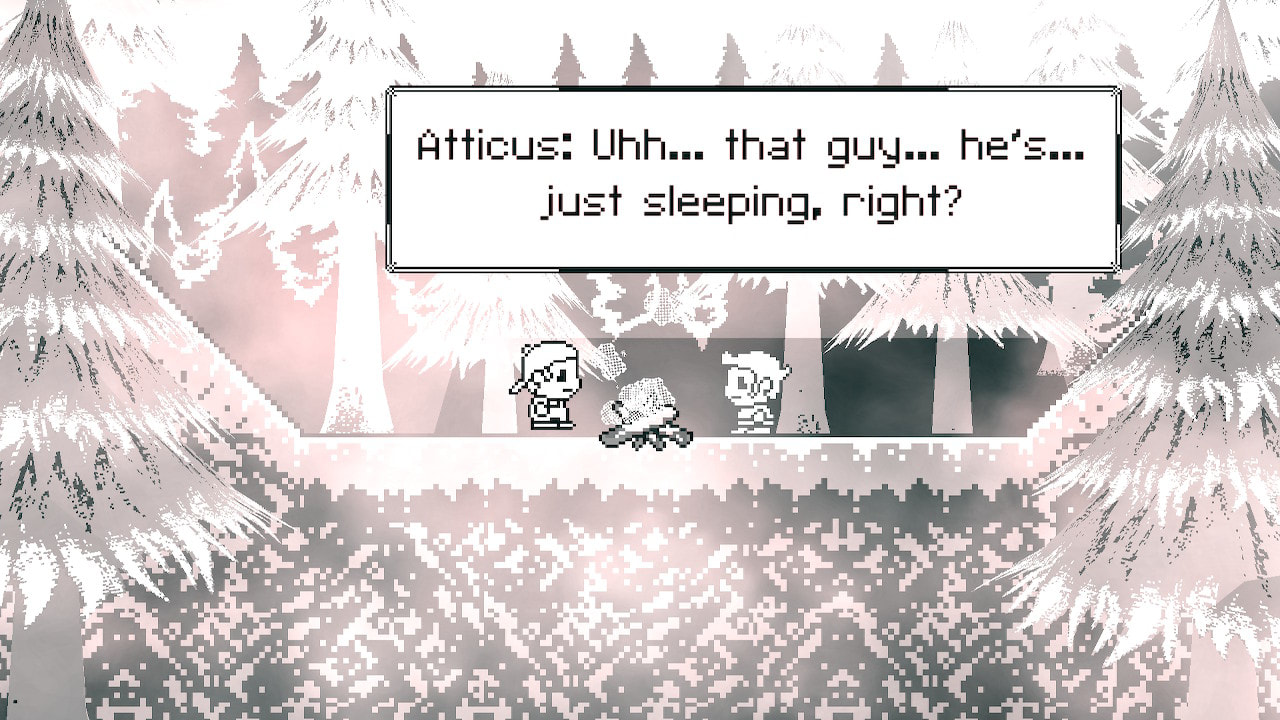 The coolest thing, in my opinion, about the Silver Falls series as a whole is the connectivity between games courtesy of the Code Linker system. Jerrel, the developer, really went out of his way to make sure that his games connect with each other in some way. The way it works is that one Silver Falls game - let's say Episode Prelude on Switch - gives you a blue code in its Code Linker menu. You then plug that blue code into the Code Linker menu in Ghoul Busters on 3DS, and it spits out a yellow key code. Plug that yellow code back into Episode Prelude, and a character from Ghoul Busters is now playable in Episode Prelude. That's just an example - I'm not sure if that particular example is actually viable - but that's the gist of how it works. Jerrel designed it to be like amiibo but without the need for an additional purchase and as a sort of bonus for buying the other games, although he's stressed multiple times that he actively encourages folks' sharing codes with friends who may not have all of the Silver Falls games; he just wants people to play and enjoy what he's made. Now that four games are unobtainable due to being on Wii U and 3DS with Jerrel adamant about never porting White Inside Its Umbra due to being designed specifically for the Wii U's control scheme, that encouragement to share code linker with other fans is important. 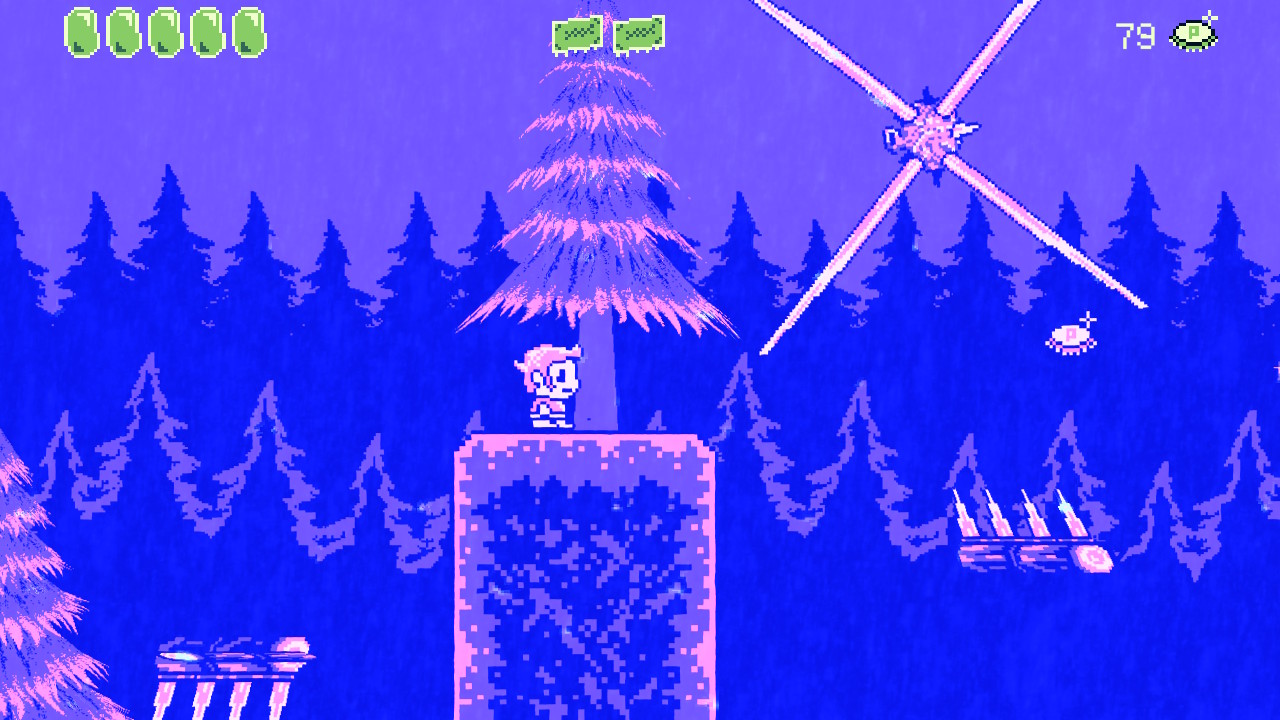 Silver Falls: Ghoul Busters is really an extraordinary platformer. It's short and extremely challenging at parts, but at no point does it ever stop being fun. It's got its moments where you can tell that you're being directly trolled by obstacle and enemy placements, but it's never to the point where you rage quit; it's always just reasonable enough to make you say, "One more try." There's also just this unexplainable magic that comes from a game made entirely by one guy who's genuinely super passionate about gaming and making games that people want to play. It's made in Unity, so it's got its unpredictable quirks, but those are significantly less common than in the 3DS original, and the game's got a good auto-save system just in case. The music is absolutely phenomenal, and while you'll hear the low-fi voice saying "Bummer!" every time you die in your nightmares, it's a wholly satisfying, enjoyable, and charming platformer from start to finish. I enjoyed this game more than any other indie platformer I've ever played and for reasons I can't quite put my finger on, but regardless of why, I honestly can't recommend this game highly enough. I'm thrilled that this game isn't trapped on the 3DS because it deserves to be played and enjoyed by as many people as possible. My Rating - A Also available on 3DS
Guardians and Metal Exterminators was one of the final games released for the 3DS when it launched (for good after some technical issues had it briefly delisted) back in January 2023. Another excellent entry in the Silver Falls series from one-man-show studio Sungrand, Guardians and Metal Exterminators has been given a breath of new life as it makes a remastered and expanded re-release on Switch, now sporting an "S" at the end of the title (for Switch, obviously). The bulk of the game is the same as on 3DS albeit prettier and with smoother performance, but there are some key additions and changes. 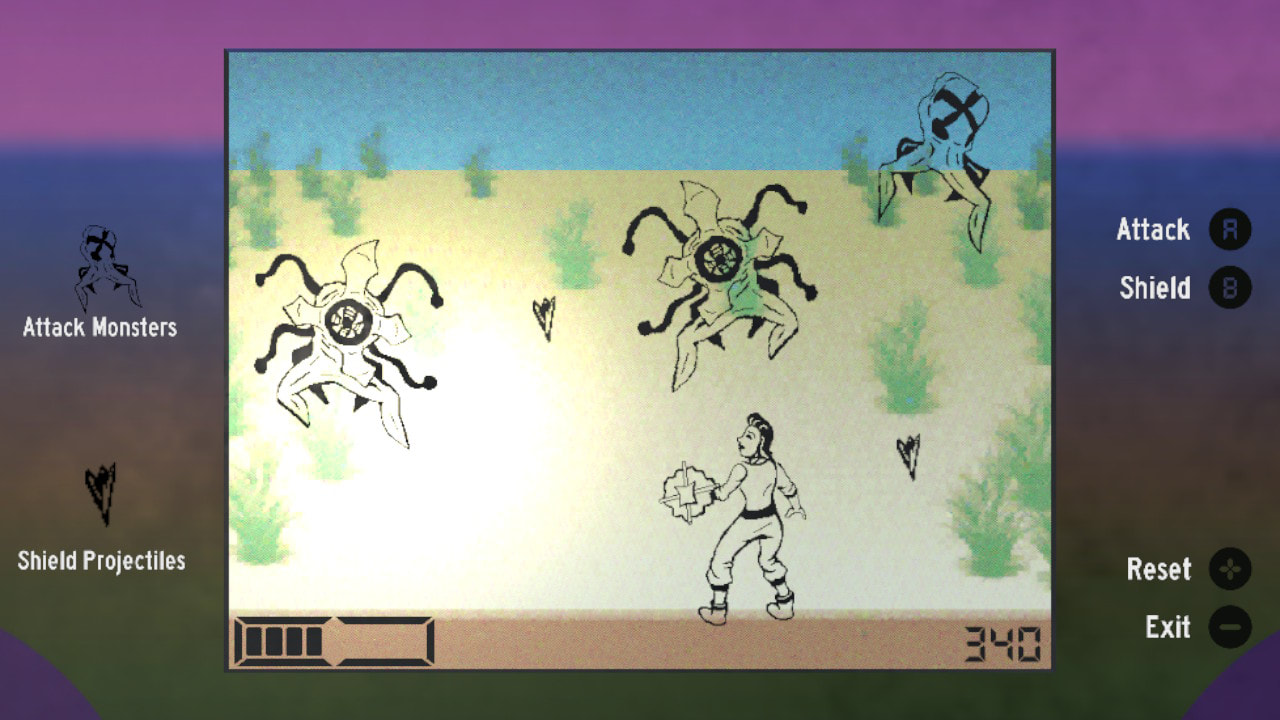 Guardians and Metal Exterminators is a bit of an odd duck in that the "main" game modes only make up like 5% of the content in the game. Game A and Game B are designed to emulate the old Tiger Electronics handheld LCD games. They're simple score chasers with shallow but addicting gameplay. Unless you're a serious score chaser, they're unlikely to hold your interest for more than five or ten minutes here or there. That said, that's part of the purpose of Guardians and Metal Exterminators; it's meant to be a game you can pick up and play for a few minutes when you have down time without needing to invest a lot of time in a long story mode or keep up with a lengthy narrative. It is, after all, stylized like old LCD games that one would rarely play for more than ten or fifteen minutes at a time. 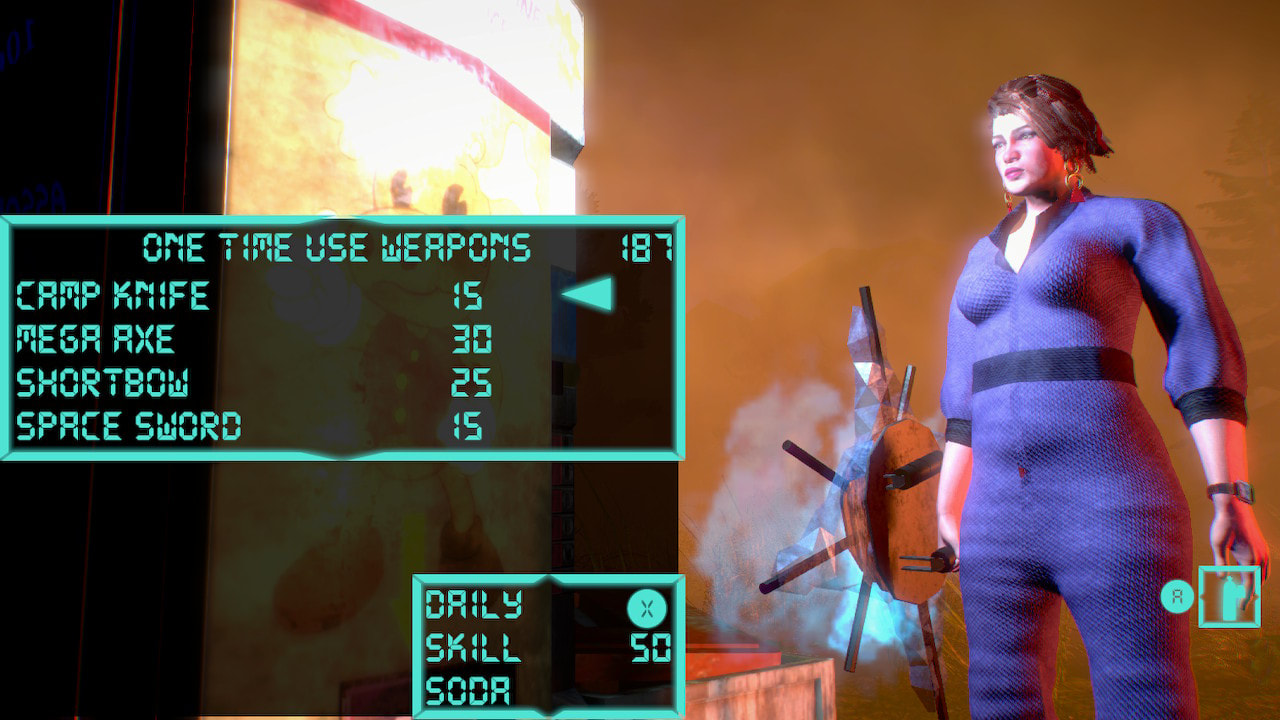 While Game A and Game B may not be a big draw or enough to make a purchase worthwhile on their own, Frontier Guardians, the game's ostensibly-extra content, is actually where the vast majority of the gameplay is. It's a mission-based RPG mode where you start off with two playable characters, Oxa and Gold, and play through set missions. This is also where the game's story and lore are shown. The premise is that Oxa Boscova, a local ranch hand, meets up with local carpenter Gold Prospector for a blind date near the Allerdyce farm where Oxa works. Unfortunately, their date is interrupted by a bright light in the sky and an explosion at the ranch. Oxa sprints towards the ranch to investigate and make sure things are okay while Gold, dazed and confused as to what the hell just happened and why this crazy lady is running TOWARDS danger instead of AWAY from it, follows haplessly. 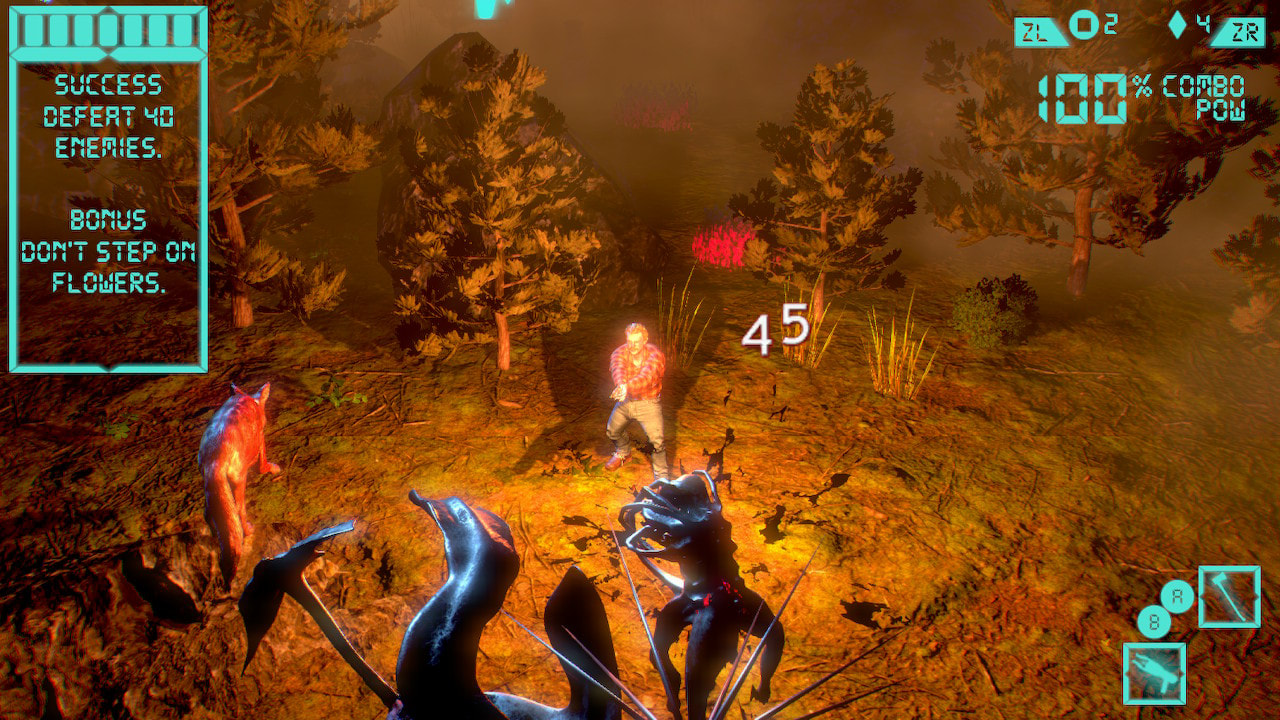 Don't let the mission objectives in Frontier Guardians fool you; the way you earn moose tokens to buy items and xp to upgrade your character is through killing enemies, not completing objectives. Completing the objective just gets you 100% of your earned rewards instead of the diminished reward you get from failing the mission; if you manage to complete the mission's optional objective, you get extra moose tokens and xp. What that means is that even if you complete a mission, if you didn't kill any monsters, you don't get any xp. That said, completing missions even if you're too weak to get kills is still worthwhile; completing a mission regardless of kills nets you a new secondary weapon to equip, and these can be both powerful on their as well as have powerful secondary effects. The missions involve your chosen character running around in an overhead view, killing enemies, and completing your objectives. In addition to the human denizens of Silver Falls, you can also play as the Metal Exterminators, too, but whereas every Guardian character has at least a few story scenes, none of the enemy characters do. Bummer. The way you see these story scenes is by upgrading your character, and you can see the story completion % on the character select menu, so you'll easily be able to tell what characters are complete and who still has unviewed story scenes. 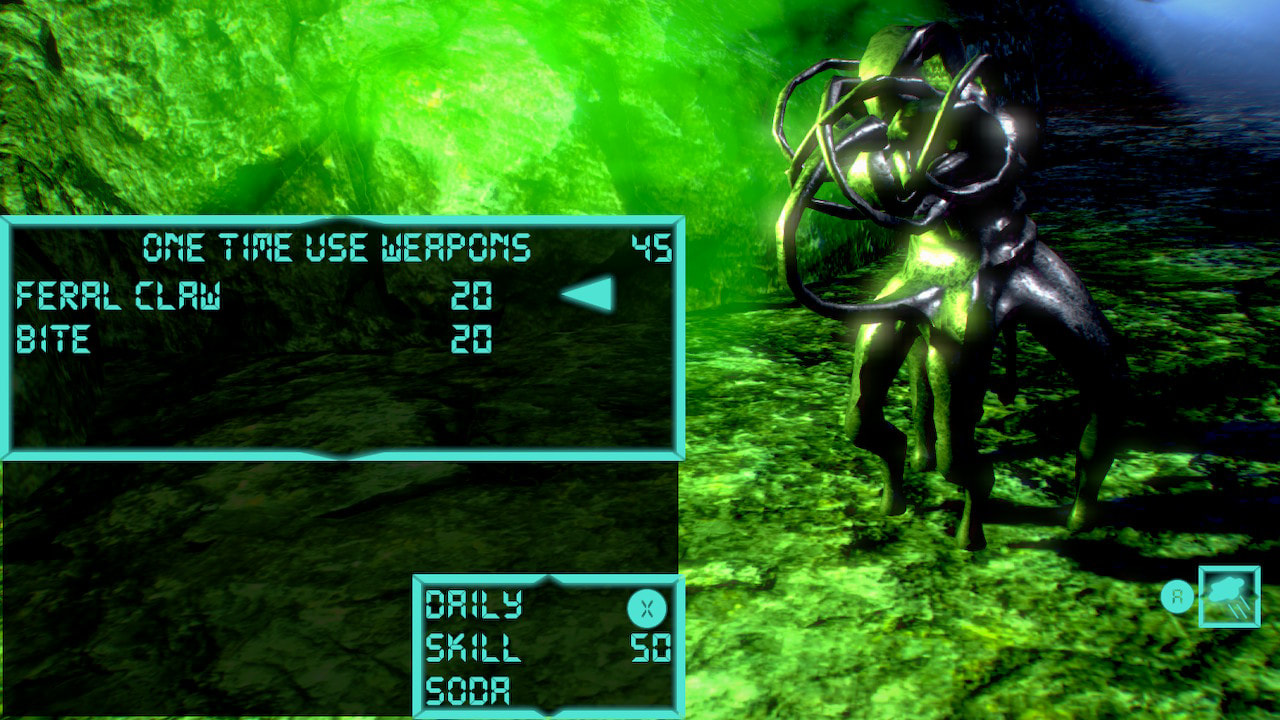 As you progress through the game, you'll unlock additional characters, and there are even more characters you can unlock by using the Code Linker functions and connecting with other Silver Falls titles. That doesn't just extend to current Silver Falls games; Jerrel, the man behind Sungrand, makes sure to keep these games relevant down the line by adding Code Linker content that will be unlocked by games planned for release years in the future; even if you 100% every character now and use code linker with every game so far, there will still be a reason to come back because every future release will unlock more content in this game. No paid DLC, no $5 or $10 per character unlock, and no one-and-done content dump. All of that content is free and trickled throughout future releases, and you don't even necessarily need to buy all of the games yourself; if you know someone who has a game you don't or who has a game that's no longer obtainable thanks to the Wii U and 3DS shutdowns (or ask nicely on the Silver Falls Discord), they can help you unlock Code Linker content using their game. Jerrel could have changed the system to require one unlock per purchase, but he intentionally kept it open for this so as to keep it accessible and pro-consumer; he is truly a man of the people. 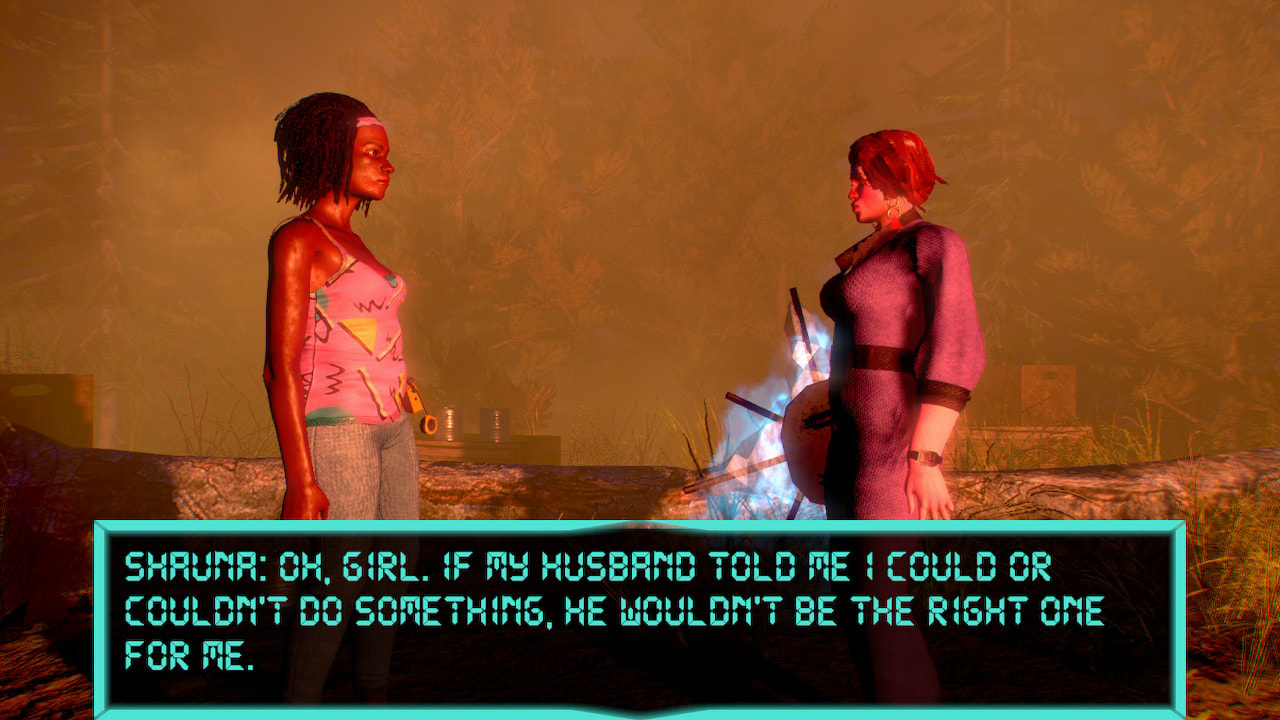 The highlight of Silver Falls: Guardians and Metal Exterminators S is definitely the character interactions. The LCD games are fun in short bursts, and they're good for high score contests - we've had a few on the Silver Falls Discord - but the real meat of the game and the reason to buy is Frontier Guardians and the storyline. Jerrel writes these characters brilliantly and in such a way that makes the world of Silver Falls feel connected from game to game not just through a shared setting but with consistency and growth from game to game. If you played Undertakers, you met Oxa about a decade before her appearance in this game, and if you play the games set in the 90s or 2000s, you'll see her a bit older, still the same person but realistically wiser and matured. The Code Linker system ensures that you continue to get your money's worth down the line as future Silver Falls titles release. This isn't a big budget AAA game made by a team of two hundred developers and artists; it's an indie game made 100% by a single man, and that shows. It doesn't look as sharp and detailed as Metroid Dread or Pikmin 4. It does, however, have a charm that only a truly dedicated developer who genuinely loves gaming can instill in a game, and Jerrel's passion to the medium and pride in his work show through in the game. That's something no Resident Evil or Dead Space game can replicate no matter how much money or manpower they dump in. Don't skip out on this game. It's a blast, it's got a great story with a genuine small-town feel, and it was crafted with a love and care you won't find in many other games. My Rating - A
Army Men is one of my all-time favorite series. It’s definitely a guilty pleasure series that I love for nostalgia more than anything else, but it was a huge part of my childhood. Army Men: Sarge’s Heroes and Army Men: Sarge’s Heroes 2 on N64 and Army Men II and Army Men: Toys in Space on PC were among my favorite games growing up. That’s why I decided to do a playthrough of every handheld game in the Army Men series several years back. I’ve decided to do the same with the console games for 2024. As I have previously played through and reviewed Army Men 3D on Playstation, I decided to start with the Playstation exclusive Army Men: World War. Technically, World War is also on PC, but they are completely different games. 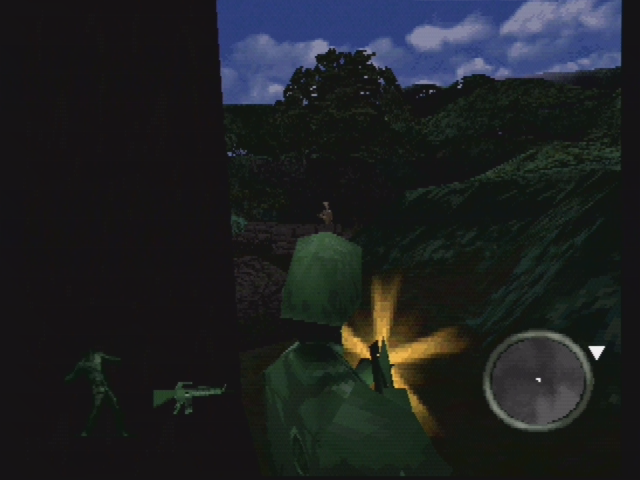 As far as narrative goes, it’s hard to place World War in the larger Army Men universe. Assuming you take it as a single cohesive universe at all. I, personally, place the World War games at the very beginning of the series before Army Men 3D (as well as Army Men and Army Men II on PC). The game’s cut scenes seem to imply that open military conflict between Tan and Green and its allies is a relatively recent thing. Between that and the lack of portals to our world, it seems pretty clear to me that this game takes place before the events of Army Men and Army Men II. As for the game’s narrative, it’s pretty bare bones. You play as a soldier - it may or may not be “Sarge” from the original PC games - as you fight your way through fairly random missions in three campaigns. Each of these campaigns symbolize the three main fronts of World War II - the Pacific theater, the Eastern European theater, and the Western European theater. That said, despite the allusions to World War II in the game’s story, setting, and theme, the characters stay true to the “source material” plastic toys that many of us played with as children with M16s and attack helicopters. 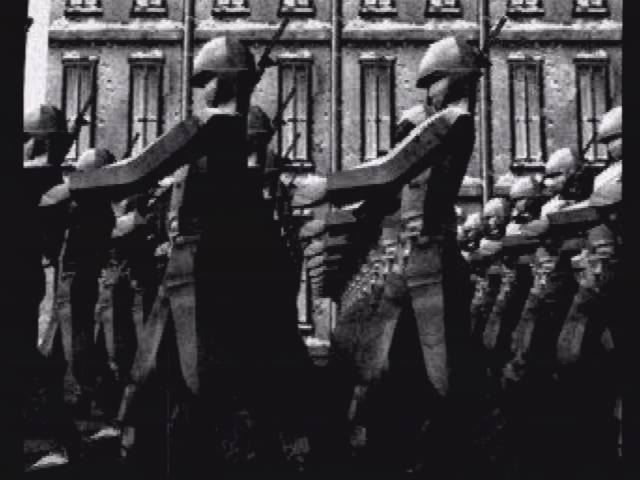 The missions feature a lot of objective variety. Sometimes you have to eliminate all of the Tan soldiers in an area, sometimes you have to break POWs out of a Tan prison camp, sometimes you have to hold off waves of Tan attacks to keep control of an area. The game may be rough by today’s standards, but for an early 3D game on the original Playstation, it’s actually pretty impressive and offers a lot of depth of gameplay. The game is pretty short and beatable in a few hours, but it definitely gets challenging. The challenge isn’t exactly a smooth scale - rather, it’s like a mountain range with spikes followed by a couple of easy missions that lead up to another spike - but as you play through and get a feel for the controls, aiming, and how the rudimentary AI behaves, you quickly become acclimated to the game’s mid 90s jank, jank which I personally consider part of its charm. There is one level where you man a cannon turret on a train that you are almost guaranteed to fail your first time through as there’s a train collision you have to avoid that gives you almost no warning, and that’s a really cheap death that is sure to frustrate you, but that’s the only part I can remember that essentially requires dying to learn that it’s there. 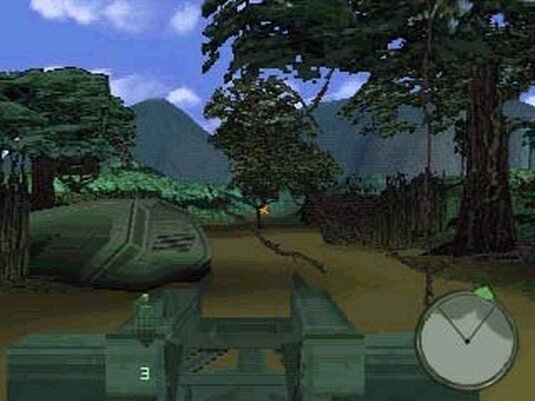 The game isn’t exactly beautiful, but most Playstation games are pretty ugly by today’s standards, and for an early 3D game on a console not known for its hardware prowess, it features some impressively detailed environments. Again, you have to take it in the context of a nearly 30 year old game, but taken with that perspective in mind, there’s a surprising amount to appreciate for a game in a series known for mediocrity and mid-budget releases. The sound design is a similar bag. It’s not going to blow anyone’s mind, but the sound effects are decent. The music, likewise, doesn’t hold a candle to classic soundtracks of the era like Final Fantasy VII and Super Mario 64, but it’s solid and does the job well. It doesn’t have any earworms that get stuck in your head, but you won’t be left questioning why the game sounds the way that it does. 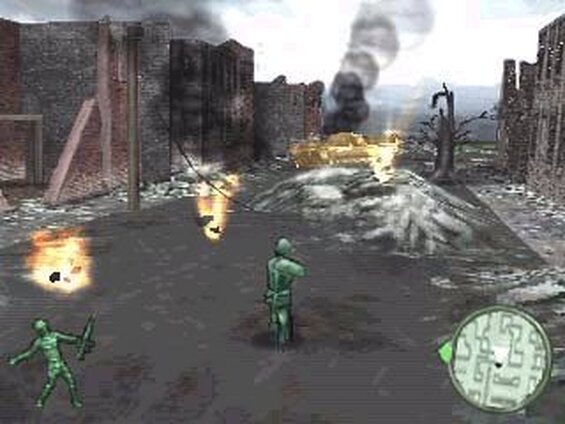 Army Men: World War has a lot of the same charms as well as a lot of the same drawbacks as Army Men 3D. It suffers from the typical early 3D visual problems, but it does somewhat make up for that with its surprisingly detailed environments. The mission variety is surprisingly solid and definitely outperforms Army Men 3D in that regard. The controls, however, are just as janky, and the story is bare bones and virtually non-existent aside from some occasional cutscenes and newspaper headlines that display between missions. In that regard, it falls short of Army Men 3D. Overall, it averages out to being a good companion to Army Men 3D that I don’t consider better or worse when taken as a whole package. If you enjoyed Army Men 3D, you’ll enjoy Army Men: World War. It’s not nearly as cartoony or polished as the more popular Sarge’s Heroes games, but it does provide a somewhat grittier plastic war that may be more appealing to some. My Rating - C Also available on PlayStation 2, Xbox, and PC 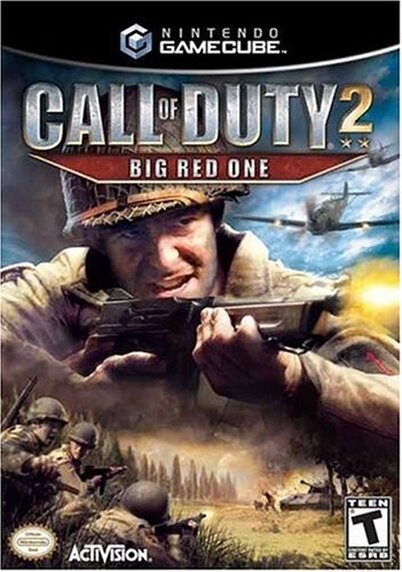 Back in the days of my youth before we got obsessed with killing brown people in desert countries to steal their oil, Call of Duty was about two things - explosions and Nazi killing. I’m honestly not sure why this has the “Call of Duty 2” title because it’s not Call of Duty 2. Call of Duty 2 released on Xbox 360 and Windows in November 2005; Call of Duty 2: Big Red One released on Xbox, Gamecube, Playstation 2, and PC in October 2005. This isn’t just a last gen release to make it cross gen at the 360’s launch; this is a totally different game. Despite being a side game, it’s every bit the equal of Call of Duty 2.  Big Red One follows the US Army 1st Infantry Division nicknamed “Big Red One” due to the large red 1 on their emblem. Unlike most Call of Duty games, you spend the vast majority of the game playing as one man, Roland Roger. There are a couple levels where you play as a different character in the US Army Air Corps running support missions, but you spend almost the whole game playing as a foot soldier. You play through most of the big moments America’s involvement in Europe - the North African campaign, the invasion of Sicily, Operation Overlord, and the liberation of France and push into Germany. It does focus exclusively on the European front, so if you’re hoping to fight the Japanese, you’ll be disappointed. That does mean, however, you’re looking at like eight hours of non-stop Nazi killing, and that’s always a good thing.  Graphically, the game is pretty impressive for 6th generation hardware. I haven’t personally played the PS2 version, but I’ve played the Xbox and Gamecube versions, and I’ve looked at a lot of visual comparisons. All three consoles look pretty similar, but Xbox is definitely the most visually impressive version, and that makes considering that the Xbox was by far the strongest of the four 6th generation consoles (RIP Dreamcast). I would rank Gamecube as the second best looking version, but I could see some argument between Gamecube and PS2. PS2’s visuals are sharper than Gamecube’s, but the Gamecube version seems to use some anti-aliasing that does give the game a slightly smudged look but hides the intense stair stepping and jagged textures seen on the PS2. At the end of the day, Gamecube vs PS2 is largely a personal preference, but I definitively rank Gamecube above PS2.  Presentation and sound design are top notch in Big Red One and absolutely the equal of the mainline games. Between most chapters, you have some Military Channel clips showing some of the actual World War II footage. I love this for two reasons. First and foremost, these clips make the game an actually pretty solid history lesson. As one who teaches high school history for a living, that’s a huge plus for me. The other advantage, though, is that it gives some narrative context to the battles you’re playing through. It gives a nice, short break between big levels, and I’m a fan of the mental breaks in games that cut scenes provide. 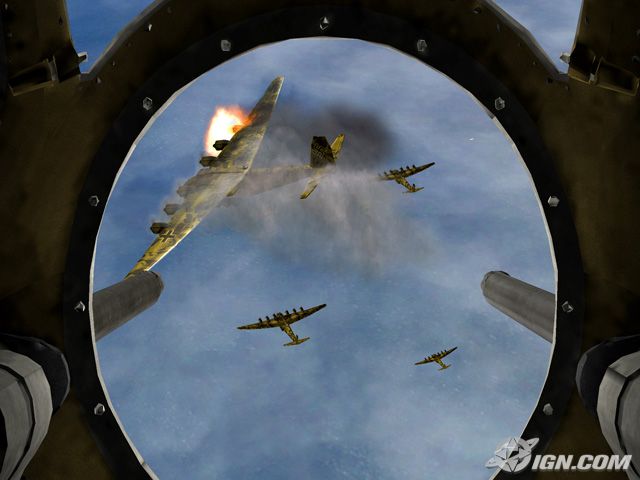 Call of Duty 2: Big Red One is a fantastic World War II experience. It may not be as nostalgic for most gamers as Call of Duty: World at War is, and it may not be as visually impressive as Call of Duty: WWII, but it is absolutely a great time. If you’re a fan of first person shooters and World War II games, then you definitely need to play this any way that you can. If you aren’t a fan of World War II games, then I’m going to assume you’re a Nazi sympathizer. If you don’t play this game, you love Nazis. I don’t make the rules. My Rating - A Also available on PlayStation 4, PlayStation 5, Xbox One, and Windows  Far Cry is a series that I’ve only played a bit of but always enjoyed when I did. I absolutely loved Far Cry 4, and it was Far Cry Primal that got me into the series. Far Cry: Blood Dragon is an absolute masterpiece of 80s parody, and I even enjoyed Far Cry: Vengeance on the Wii back when it came out. Far Cry 6 is no exception; the game is fantastic. My sole complaint is that I got burnt out about 2/3 of the way through and had to take a break. Some games are immersive enough to keep me hooked for 80 or 90 hours straight - Tears of the Kingdom, Fallout 4, Skyrim - but Far Cry 6 wasn’t one of them.  To be clear, Far Cry 6 is a great game with a good albeit familiar story. You play as a guerilla named Dani (regardless of whether you choose male or female) fighting to overthrow the dictatorial regime of Anton Castillo. It’s not at all subtle about basing the nation of Yara on Cuba, but for those familiar with the governmental history of Cuba and its relationship with the United States (the CIA plays a background role in the story), it’s an interesting basis. You go around Yara striking at Castillo’s army and centers of power while also convincing rival rebel groups to ally with you against the regime. There are side quests and a TON of collectibles. The collectibles are my biggest problem with the game; some are on the mini map and some are not. For someone with obsessive compulsive tendencies when it comes to objectives on maps, I have a compulsion to go after EVERYTHING on the map, but when that gets me to 87% complete in an area, the nearness to 100% bugs me. When all I have left are tiny collectibles hard to see in passing and not on the mini map, it frustrates me. 100% a me problem, but I know I’m not alone in that compulsion and frustration, so I figured it bears mentioning.  Visually, the game looks great. The big winner here is the sound design, though. Gun sound effects are satisfying, the squelch when you hit an enemy soldier in a car going 90 KPH is meaty and visceral, and most importantly, the sound track is BANGING. I played through a lot of the game with my BFF Grant, and we would routinely just be driving through Yara rocking out to this eclectic assortment of Latin Americans music. There’s one song that I’ve only heard a couple of times and have never been able to figure out the title or artist of that has part of the chorus that I swear to God sounds like Mexican Pinkie Pie. It remains my personal mission to figure out which song that is.  Another issue I had with the game - really more of a minor annoyance than anything else - is that while 99% of the game’s dialogue is English (unless you choose a different language in the settings menu, obviously), there are sporadic and seemingly random words that are consistently Spanish. The word guerilla, for example - I know the word is Spanish in origin, but it’s consistently the sole word pronounced as it is in Spanish in an otherwise fully English sentence. “Soldado” instead of soldier, “gasolina” instead of gasoline, “fascista” instead of fascist, and “comemierda” are the other ones that are consistent. It’s the juxtaposition that irks me; either have the dialogue be all Spanish and stick to subtitles for other languages, or have everything be in English. They’ve all got Latin American accents anyway, so it’s not like they sound like they’re from Chicago or something. Minor annoyance, I know, but I spent 84 hours being annoyed by it, so I had to mention it.  Far Cry 6 is a good game. A really good game, even. It’s just a little too long for what it is, in my opinion. There’s LOADS to do aside from the main quest line, but a lot of it feels like fluff, inconsequential padding. If you’re a fan of open world games where you shoot or mutilate with machete hundreds if not thousands of fascists, then absolutely check it out. Just be prepared for a 60+ hours experience. My Rating - B Also available on Super Nintendo, Wii, and Wii U (original version)  Super Mario RPG: Legend of the Seven Stars is one of the almost legendary Super Nintendo games, one of the games that always commands a high price and that every Super Nintendo enthusiast worth his salt would include on a Top 10 list. It’s been released on Virtual Console on Wii and Wii U as well as being included in the Super Nintendo Classic Edition, so even if you don’t have the fairly pricey Super Nintendo cartridge, it’s been pretty readily available. Still, fans have spent twenty years clamoring for a remake, and we finally got it in late 2023 - a full from-the-ground-up and extremely faithful remake for the Switch.  The premise is that Bowser kidnapped Peach (as usual), but as he was gloating his victory, a giant sword crashes into his castle. Mario, Peach, and Bowers are all ejected from the castle which is then overrun by minions of an unknown antagonist named Smithy. Mario begins to make his way through the world on his quest to find and then rescue Princess Peach. As he progresses, he assembles a team of four allies to help him - the cute and kind of pitiful Mallow, the iconic doll-possessed-by-a-star-spirit Geno, the Koopa king Bowser himself, and even Princess Peach. Over the course of Mario’s quest, the intention shifts from “rescue Peach” to “defeat Smithy and his army.” You’ll find enemies both familiar and foreign as you quest your way across the land.  Being an RPG, the purpose here is to win battles to get money to buy better equipment and to gain experience points to level up and improve your stats. There is some platforming, as it’s still Mario, but the platforming really takes a back seat to the RPG action. One of the cool aspects of the game that makes it a little more engaging than “press A to win” like a lot of turn based RPGs end up being is the chance to increase the damage of your attacks or totally nullify enemy attacks. If you press A just before your attack lands or just before an enemy attack lands, you’ll boost your damage or nullify any damage to you, respectively. The timing is different for each character, each weapon, and each enemy, but once you get a feel for it, you can really turn the tides of an otherwise difficult fight.  As far as RPGs go, Super Mario RPG is very short. The remake lets you choose between the normal difficulty and an easier difficulty, but even on normal, I cleared it in about 10 hours, and several of my friends have done it in 7 or 8 hours. Still, though, this game is a case of quality over quantity. It may not be the 40 to 60 hour JRPG a lot of us expect from the genre, but the hours it does last are endlessly charming and addictively fun. Another nice feature of the remake is the ability to switch on the fly between the original 16-bit music and the new modern renditions of the game’s music. I kept it on the modern music for the full remake feel, but it was definitely a nice nod to our collective nostalgia from the 1990s.  Super Mario RPG isn’t necessarily a perfect game, but it is devilishly fun, and I consider it a must-play for any Switch owner. If you’re not an RPG guy, this may be your exception to that rule, and if the family-friendly nature of the Mario franchise has never been your cup of tea, this might get you to reconsider. It’s not brutally difficult but still extremely engaging, and it’s just an all around fun and charming experience that’s uniquely ‘90s now brought into the 2020s with all of the care and polish you’d expect from a modern game. My Rating - A  As amazing as 3D Mario games are - and they are truly amazing - I’ve always been partial to the 2D Mario games. Some of that is definitely nostalgia for the Super Mario Bros and Super Mario Bros 3 I grew up with, but a good portion of it is that 2D platformers have a different feel to them than 3D platformers. When everyone was going “3D > 2D,” I was the voice of dissent. Fortunately, with the DS, Nintendo brought back classic 2D Mario with the “New Super Mario Bros” sub-series. While Super Mario Bros Wonder abandoned the “New” part of the naming convention (it’s been almost 20 years; it’s really not that “new” anymore), it definitely follows the spirit of that sub-series with a gloriously tight and responsive 2D Mario experience.  Wonder breaks from the norm of “Bowser kidnapped Peach.” This time, Bowser stole a neighboring kingdom’s entire castle. Then he fused his body with the castle. So now he is the castle. Even by Mario standards, this is kind of weird, but I applaud the novelty. Mario then adventures through the flower kingdom alongside its useless but likable enough prince. To free the castle from Bowser’s control, you have to collect six Royal Seeds, one of which in each of the kingdom’s realms. These are your six worlds. In each level, there are between one and three Wonder Seeds to collect, and you’ll need a certain number from each world to pass checkpoints in that world. Once you get all six Royal Seeds, you’ll play a few levels in a Bowser mini-world. There is also a special world with challenge levels.  In addition to the return of the classic Super Mushroom, Fire Flower, Power Star, and Ice Flower, there are a handful of really cool new power-ups in Wonder. You’ve got an Elephant Fruit which turns you into...a bipedal elephant. You’re a little slower, but you can swing your trunk as a powerful melee attack. There’s also a Bubble Flower that turns you purple and lets you throw bubbles that can encapsulate and kill enemies. Then there’s the Drill Mushroom that causes a drill to sprout from your head and lets you tunnel into the ceiling or the floor. Lastly - and not really a power up - is the Wonder Flower. If you find it, it totally transforms the world and sometimes your character and lets you find a hidden Wonder Seed in each stage.  Super Mario Bros games have always been known for excellent music and tight controls, and Wonder is no exception. The music is as amazing as ever, and the controls are some of the tightest and most responsive of the series. Visually, the game is absolutely outstanding. It’s got all the graphical prowess of Super Mario Odyssey in a 2D format. It’s stunning, genuinely. The best part of the game, though, are the multiplayer options. the array of characters has some character to suit most player’s preferences. Obviously, you can play as Mario and Luigi, but you can also choose Peach, Daisy, Yellow Toad, Blue Toad, Toadette, Yoshi, Red Yoshi, Yellow Yoshi, Light Blue Yoshi, or Nabbit. Mario, Peach, Daisy, and the Toads all play standard, but the Yoshis and Nabbit are like “easy” mode; Yoshis don’t take damage and flutter jump but do flinch when touching an enemy or obstacle, and Nabbit takes no damage and doesn’t flinch when touching an enemy or obstacle. Local multiplayer allows up to four players, and you can actually help each other somewhat instead of just hilariously hindering like the older New Super Mario Bros games; if you die, you’ll have five seconds as a ghost to find an ally, and if an ally touches you within those five seconds, you’ll respawn on them without losing a life. There’s also online functionality that can match you either with your friends privately or with random players from all over the world playing the same level as you. If you die, your online allies can revive you just like in local multiplayer. Players can also drop standees that can revive you if you touch them as a ghost.  Super Mario Bros Wonder is honestly my favorite 2D Mario game if I look past my rose-tinted nostalgia glasses for Super Mario Bros 3. It’s the perfect modern 2D platformer - seriously fun local multiplayer, seamless and useful online multiplayer, and flawless single player fun. Couple that with amazing music and stunning visuals, and this game is an absolute masterpiece. There’s no other way to describe it. This is an absolute must-play for Switch owners right alongside Super Mario Odyssey. My Rating - S Also available on PlayStation 4, Xbox One, Xbox Series X, and Windows 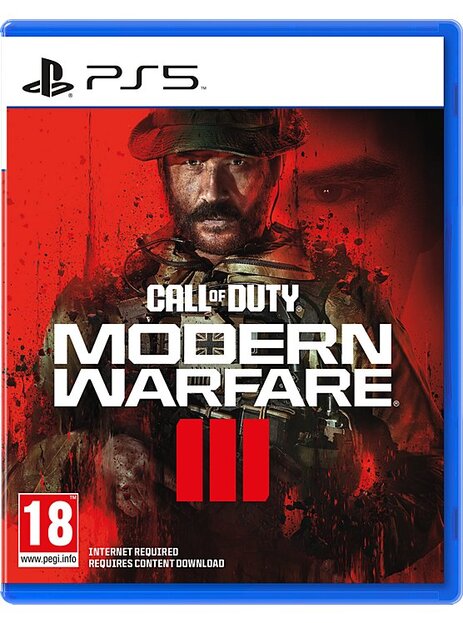 2023’s Modern Warfare III is a somewhat controversial entry in the series among fans. It concludes the Modern Warfare reboot trilogy (assuming they don’t make it a tetralogy), but a lot of us felt there was a lot left to be desired. It’s not so much that it does a lot wrong, per se, but there also isn’t a great deal that it does particularly right. It’s probably the most okay Call of Duty in recent years. 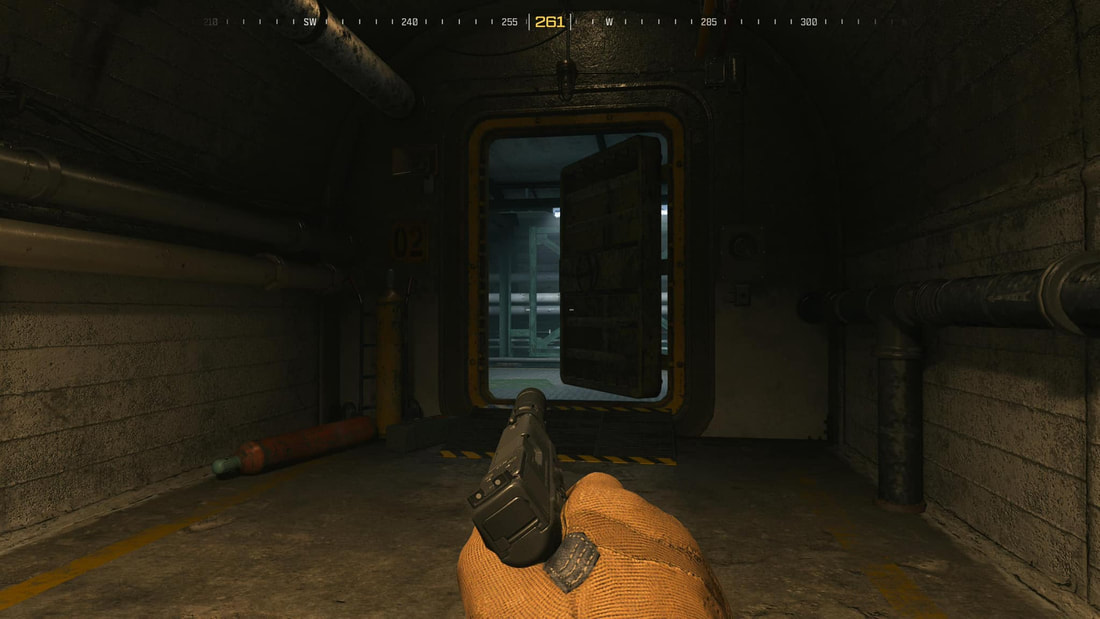 Activision initially announced that 2023 wouldn’t be getting a new Call of Duty game. Honestly, they should have stuck with that as Modern Warfare III just feels rushed all around. The campaign, my main focus, saw a steep drop in writing quality. Again, it’s not bad, but it’s definitely not good. It’s just meh. This is the most disappointed I’ve been in a main series Call of Duty campaign since Ghosts. Truthfully, it’s probably my third least second least favorite campaign of the massive series behind only Ghosts and Call of Duty 3. 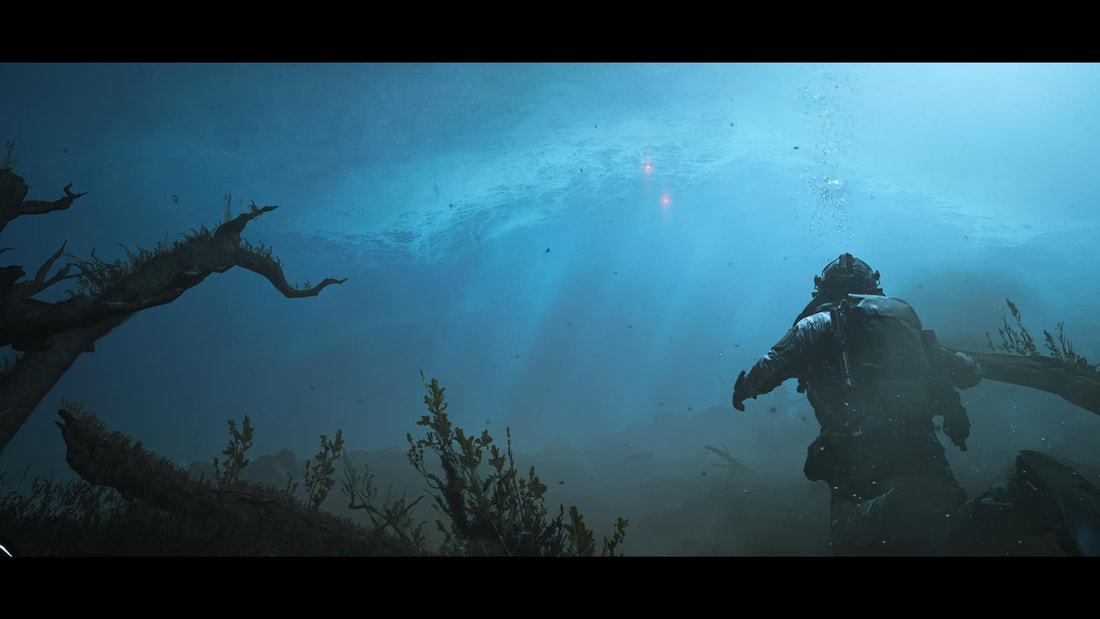 That’s not to say the campaign does nothing right. There are a few “Open Combat” missions that give you a set of objectives in a large non-linear map, and those are a lot of fun. I definitely hope those come back in future entries. That’s honestly all the campaign does especially right, though, and those are only like a third of the campaign; the rest of the missions are traditional linear missions. 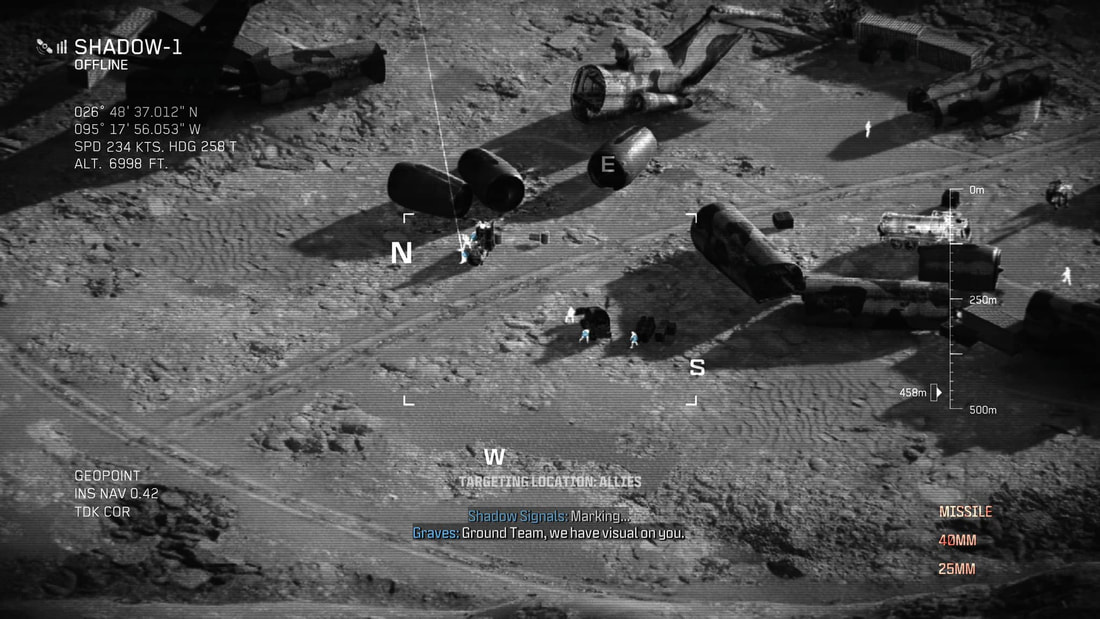 As for the multiplayer, it’s Call of Duty multiplayer. It hardly ever changes in any meaningful way. This one, though, does have some disappointing aspects that point to lazy development (or, more likely, a horrendously rushed deadline from Activision executives). There are no original maps; the only maps you have to play on are remastered maps with most being from the 2009 Modern Warfare 2. All of this starts to make sense when you consider that Sledgehammer only had a year and a half to make this game - half the normal Call of Duty development time. According to some reports I’ve seen floating around, part of the reason that it feels more like an expansion to Modern Warfare 2 is because that’s exactly what it was supposed to be; apparently even the development team thought they were working on a MW2 expansion until pretty far into development when they were told it was going to be a full release.  Modern Warfare 3 is, all around, a bit of a shit show. It’s not a bad game, but it’s a bad sequel, and it’s a rip off to the consumer to charge $70 for what should have been a $30 or $40 expansion. The game is fun, but it’s just not what fans deserved and not what would justify the price it commands. Hopefully Microsoft will bring to Activision the kind of quality control they’ve brought to Bethesda (although you can’t take the bugs out of Bugthesda) because this is Activision bullshit at its most egregious. I had high hopes with how impressed I was with the past few Call of Duty entries, but Modern Warfare 3 fails to live up to any of my expectations. My Rating - C  My first introduction to Insomniac’s Spiderman games wasn’t until I got the version of Miles Morales on PS5 that included the PS5 remaster of the PS4 game. I’m not a fan of Marvel or superhero stuff in general, so it was always a “eh, I’ll play it eventually” on PS4. When I did finally play it, though, I was immediately sucked in and felt compelled to 100% both Spiderman and Miles Morales. When Spiderman 2 was announced, I knew it would be an immediate pre-order; with how good the two previous games were, I knew I’d have to play this one at or near launch.  One of the coolest parts about this sequel is that you’ve got two protagonists; you switch between playing as Peter Parker and Miles Morales over the course of the game’s main story. They each have their own unique powers and skill trees in addition to a shared skill tree. There are also side quests that are unique to each character, although most side objectives can be completed by either. As someone who’s never read a single Marvel comic, cares absolutely nothing for the MCU, and had no experience with Spiderman since the Toby McGuire movies until these games, I absolutely loved the story of the game. I don’t know how much was common to the source material and how much was creative liberty, but it was enthralling regardless.  The combat feels very familiar but with the changes you’d expect from a sequel; there’s not as much emphasis on stealth this time outside of a couple missions, and you get an opportunity to parry enemy attacks and throw them off balance in addition to simply dodging out of the way. There are also new abilities and gadgets to make beating up bad guys more entertaining. The boss battles, too, felt more dramatic and in a couple of instances more challenging than in the previous games. You still have the option of stealth in a lot of cases, and with some enemies - which appear in a greater variety here than in the first game - that’s the smarter way to approach some fights. There are also a few missions where you play as MJ with a stun gun instead of superpowers. A lot of folks online seem to despise the MJ missions, but I, personally, loved them. They broke up the flow of the missions in a way that added variety but didn’t break the feel of the game.  There are two visual modes to choose from here - Fidelity and Performance. Fidelity keeps the traditional 30 fps cap in favor of dynamic resolution that sticks pretty close to 2160p as well as impressive shadow effects and ray tracing. Performance - my preferred way to play - ups the cap to 60 fps with very few dips below that and even then, only a few frames. To maintain this, the resolution drops from 2160p to 1440p, but ray tracing is still present in Performance albeit reduced from Fidelity.  I consider Spiderman 2 to be a perfect sequel. The story is better than the first game and on par with Miles Morales in my opinion, and the improvements to the Performance visual mode are fantastic. Combat is improved and diversified, and having two and a half protagonists to play as (I’m counting MJ as a half because of how small a percentage of the game you play as her) ensures that you never get stuck in a rut. A massive variety to suits keeps cosmetics interesting, and the array of side missions and mini-game sequences give players a lot to do aside from the main missions. My Rating - S Also available on PlayStation 4, Xbox One, Xbox Series X, and Windows  Devil in Me is the most recent of the Dark Pictures Anthology games and the end of their “season one” games. It actually introduces some minor gameplay changes over the previous three Dark Pictures Anthology games, but it’s still pretty much the same general gameplay as the others. That’s not necessarily a bad thing - “if it ain’t broke, don’t fix it,” after all - but playing them back to back to back does start to feel a bit stale despite having totally different stories, settings, and characters. Still, though, Devil in Me offers an interesting story with some really compelling choices the player has to make. It’s the story I found least interesting of the Dark Pictures Anthology games, but it’s got the choices that left me second guessing myself the most.  You play as the film crew for a small production studio that’s making a TV series documentary episode about H. H. Holmes, often considered to be America’s first major serial killer. During a meeting to watch a cut of the episode, Charles, the owner of the studio, gets a phone call from a mysterious man who claims to have inherited from his uncle a recreation of Holmes’s infamous “murder castle” and a lot of original Holmes artifacts. Charles convinces the other four members of his team to spend the weekend at the man’s island hotel and shoot new footage to really improve the episode. When they get there, though, things go from odd to weird to downright suspicious when a figure dressed as Holmes starts appearing.  The big gameplay change here is that each character has an equipment ability that only that character can use. Charles can use a card to unlock drawers, Jamie can fix electrical equipment, Erin has a gizmo to hear distant sounds and conversations, etc. If a character dies too early, you may not be able to use the equipment needed to perform some task later on which could put other characters in peril. It’s a fantastic element that wasn’t present in the other games, but it unfortunately isn’t enough to keep the game itself feeling fresh. I can’t even put my finger on what specifically is holding it back. It looks great. Voice acting is fine. The story itself is interesting, and the premise’s roots in the 1893 World’s Fair is fascinating to an American history teacher like me. I guess the kicker for me is that there’s nothing supernatural about this story unlike the others, and the characters are less interesting to me than in the other three games. On paper, this should be a smash hit, but in execution, it just feels so-so.  Devil in Me wasn’t exactly a high note to end the first season of the Dark Pictures Anthology on, but by no means does that make it a bad game; it’s just the least good of the four. If it were the first Dark Pictures Anthology game you played, you’d probably leave with a much better opinion of it than I have. I’m glad I played it, I’m glad it’s on my PS5 shelf, and I can readily recommend it to those who enjoy choice-driven horror games and haven’t played this one before, but I’ll definitely not be going back to this for another playthrough any time soon if at all. My Rating - B Also available on PlayStation 4, Xbox One, Xbox Series X, and Windows  House of Ashes is the third game in Supermassive’s Dark Pictures Anthology series. It plays almost exactly like Until Dawn, Man in Medan, and Little Hope before it. It does make a couple of changes to the gameplay that makes it feel distinct from the previous two games, but it’s still solidly Dark Pictures Anthology.  House of Ashes takes place in 2003 in US occupied Iraq. After the fall of Baghdad and the defeat of Saddam Hussein’s army, the United States Marine Corps is combing the country in search of Saddam’s mythical chemical weapons that President Bush SWORE to the American people and to the world existed. Thinking that his fancy satellite system found an underground silo, Colonel Cucksworth or whatever his name is orders a Marine battle group to attack the village above the suspected silo and secure the weapons. After a firefight with the remnants of Saddam’s Republican Guard, it turns out that it wasn’t a silo but a massive subterranean ruin that the satellite detected, and now two US Marines, two CIA agents, and an Iraqi soldier are trapped there.  I’m rather torn on House of Ashes. On the one hand, the game is steeped in ancient Sumerian mythology, and as a history teacher, I absolutely love that. I also love the references to the political issues surrounding the American invasion and occupation of Iraq. On the other hand, having battle hardened soldiers be the protagonists of a horror game can be tough to pull off. It’s certainly not impossible, but it takes some careful world building and atmosphere maintenance to keep it scary knowing that you’re an elite trained soldier with an automatic assault rifle. That aspect does, however, introduce the mild gameplay change - there are numerous sequences where time slows and you have to aim the crosshair over an enemy to attack. Failing that can, like the regular quick time events, cause characters to die. It’s a nice change to the standard formula, but it doesn’t quite revolutionize the experience. 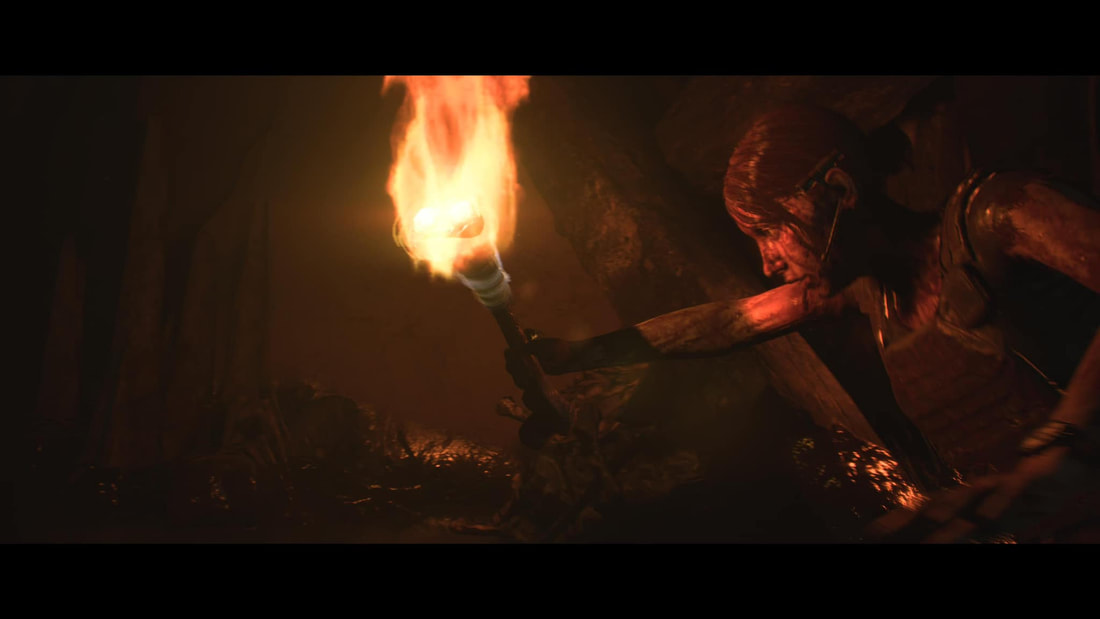 House of Ashes is a low point for Supermassive’s games in my opinion, but don’t take that to mean that it’s a bad game. I still enjoyed it quite a bit, but I must confess that it dragged a bit for me. I wouldn’t say I had to force myself to finish it, but it didn’t grasp me like Man in Medan or Little Hope did. It’s definitely worth a playthrough, but I’m not sure if I’ll do any subsequent playthroughs of this one. My Rating - B Also available on Switch, PlayStation 4, Xbox One, Xbox Series X, and Windows  If you’ve played any games by Supermassive, known most for their incredible work on Until Dawn, then you know basically how all of the games in their Dark Pictures Anthology series work. I played Man in Medan last October for Halloween, but I’ve since collected the other three games in the series, so this year, I decided I’d go through the remaining three starting with Little Hope. 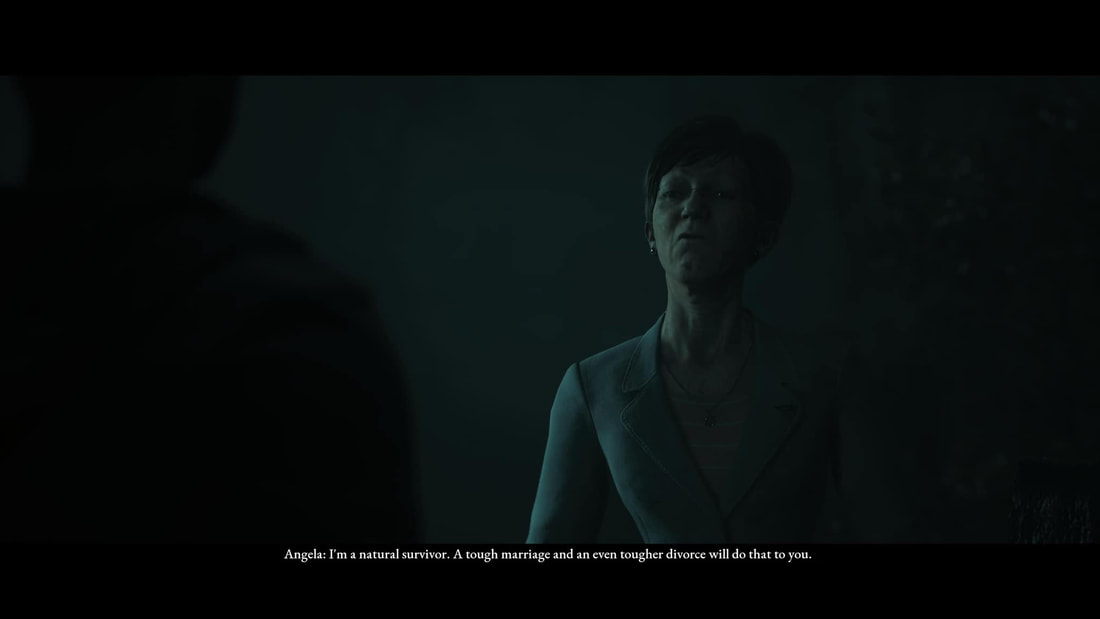 Little Hope takes place in the northeastern ghost town of Little Hope, long abandoned after the closure of the textile factory that kept the town’s economy afloat. As is hinted at in the beginning and revealed bit by bit over the course of the game, the town has a dark history relating to witchcraft and the occult. You play as a group of five people - a college professor and his four students - as you find yourselves stranded in Little Hope after a bus crash. As you try to survive the night and the pursuit of supernatural creatures, you piece together the mystery of the strange goings on in the abandoned town. Its strongly character driven and choice based approach isn’t going to be everyone’s cup of tea when it comes to horror, but it perfectly fits what I look for in a horror experience. 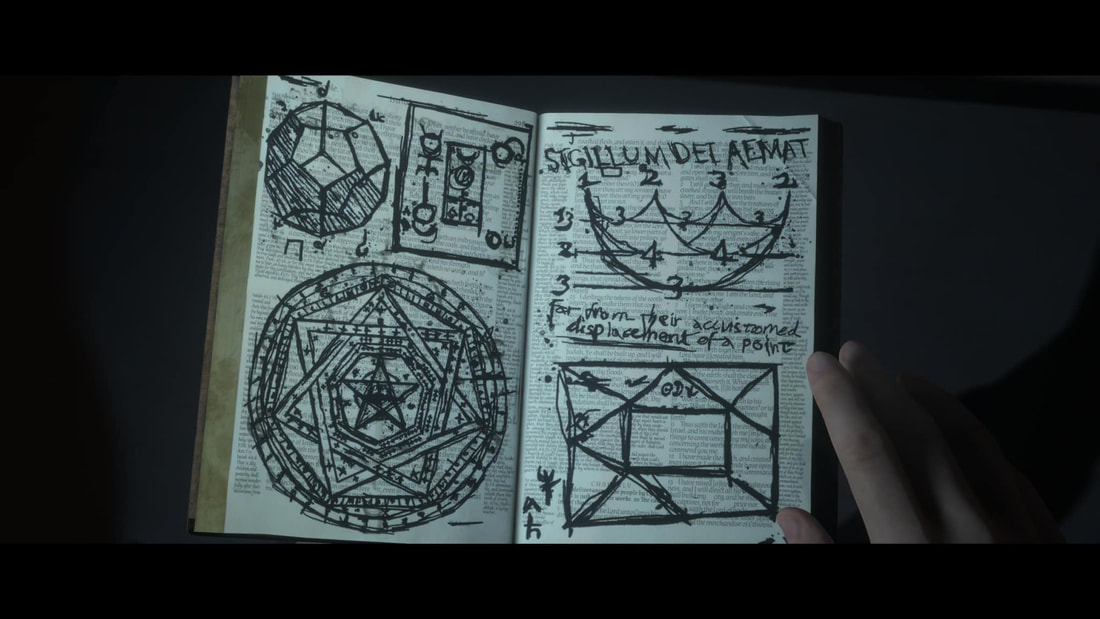 The game’s atmosphere and general aesthetic is very reminiscent of Silent Hill as both towns are abandoned, haunted by supernatural monsters and bad memories, and blanketed in a thick layer of eerie fog. The character models are absolutely fantastic, and the game’s sound design adds to the creepy ambiance and the overall vibe of the experience. Compared to the previous Dark Pictures Anthology game, Man in Medan, I found the environment of the town to be a bit less ensnaring than the abandoned ship and the characters less interesting, but the overall story and ending was better in my opinion.  If you want a thrilling horror experience like Dino Crisis or Resident Evil 4, then Little Hope probably isn’t for you. If you liked TellTale’s games, though, especially their Walking Dead games, then this is definitely going to appeal to you. I adore Supermassive’s games, even the ones that most critics are lukewarm on, and this is one of those lukewarm ones; it’s got a 71 on Metacritic. It’s definitely not a masterpiece, but I thoroughly enjoyed it from start to finish and have no problem recommending it to others. My Rating - A Also available on PlayStation 4, Xbox One, Xbox Series X, and Windows  Supermassive Games is a studio of which I'm quite fond. Until Dawn is one of my favorite horror games because of its intensely character and choice driven cinematic focus matched only by TellTale's games. Their Dark Pictures Anthology tetralogy was met with mixed reviews although I enjoyed it, but they broke free from that label with The Quarry in an attempt to recapture the magic of Until Dawn. Did they succeed? Well...yes and no.  Critics have been pretty hard on The Quarry, but I quite enjoyed the game. The character models are extremely impressive, and the voice acting and sound design is excellent. I enjoyed the story, although it did feel a lot like "Until Dawn again." On the one hand, that's not necessarily a bad thing if you haven't played Until Dawn, but it can take a bit of the wind out of your sails if you have played Until Dawn. You play as some camp counselors on the night after the deep-in-the-woods camp ends. Sort of Friday 13th vibes minus the serial killer. Being a Supermassive game, the antagonist is obviously something supernatural, not just a serial killer, and as is par for the course for their games, your choices and response to quick time events determines which characters live, which characters die, and how the story ends.  The only real negative about the game is that the camera is complete garbage in a few places. Most of the time, it's perfectly fine, but there are a few angles where the camera adamantly refuses to cooperate. The quick time events are also much simpler here than in past games which makes them a little less tense. The story takes its sweet time really picking up after a prologue, but I personally didn't mind the slow build-up of tension.  There are a few minor glitches here and there, and the camera can be obnoxious, but overall, I thoroughly enjoyed the game. The models look fantastic, the story is fairly generic but nonetheless enjoyable, and the characters are a fun cast. It's not quite as good as Until Dawn, but it's probably my second favorite Supermassive game. My Rating - A |
I'm a teacher.And I like to play video games. I like to collect video games. I like to talk about video games, and I like to write about video games. During the day, I teach high school history; during the night, I spend my spare time gaming. Then I write about it. Archives
April 2024
|
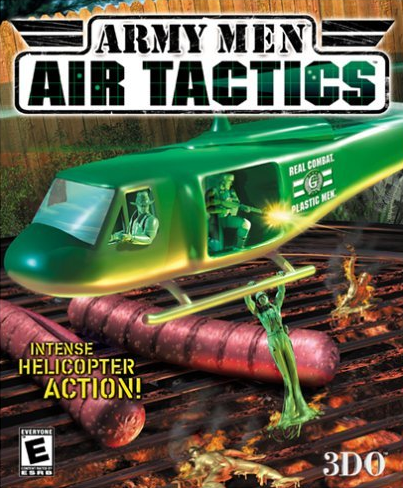
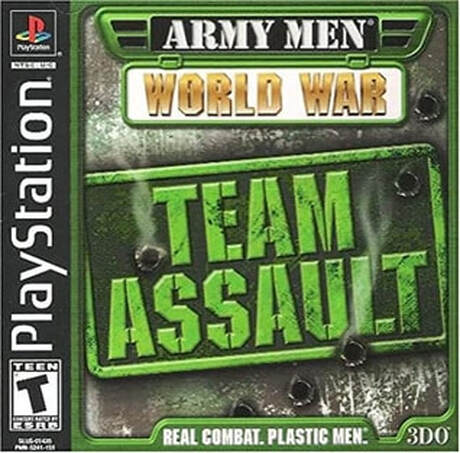
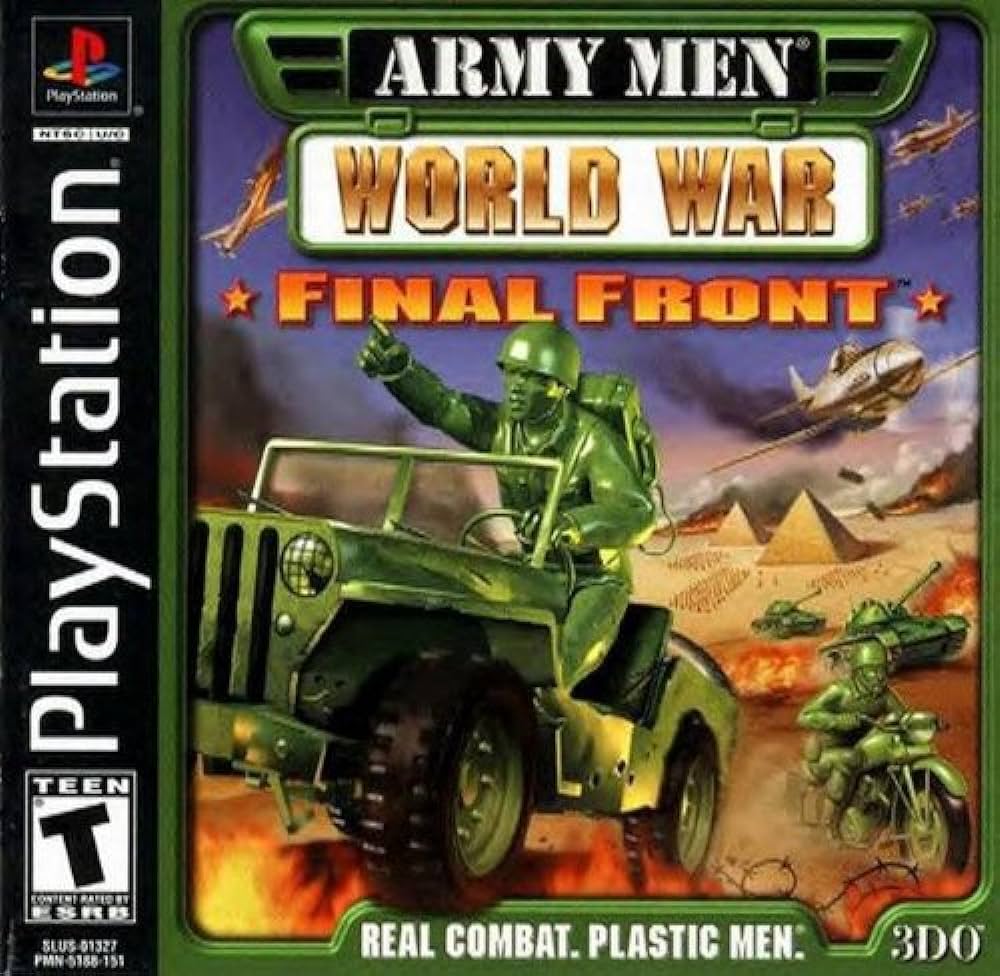
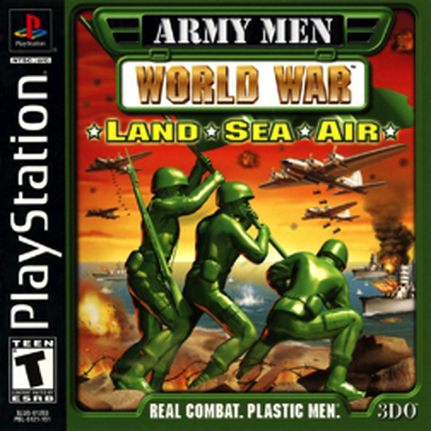
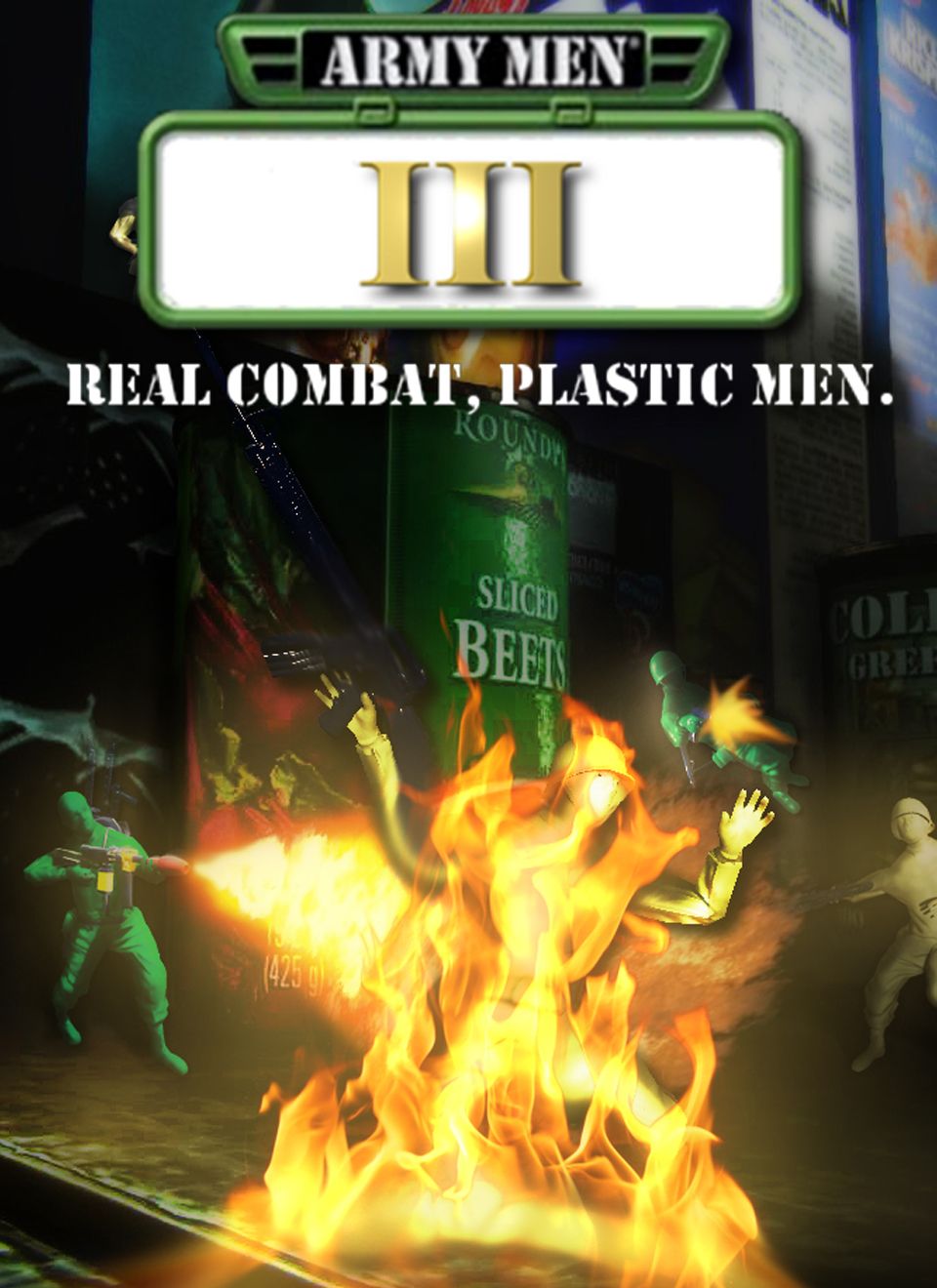
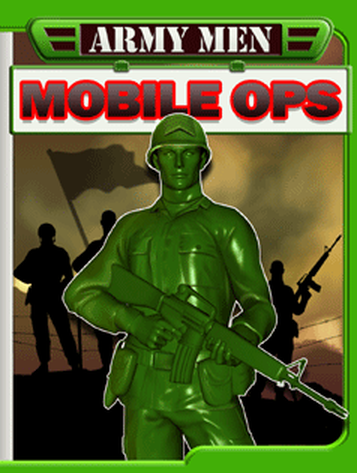
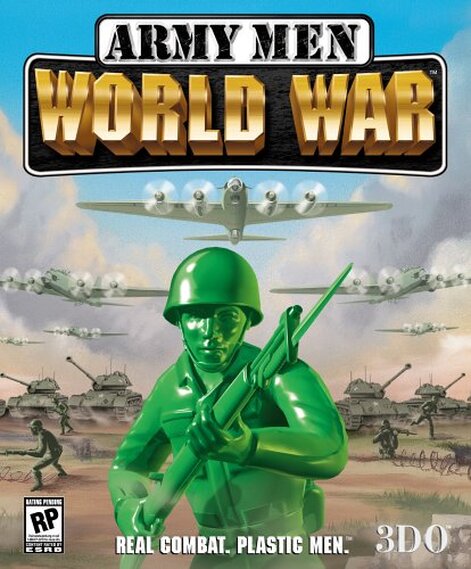
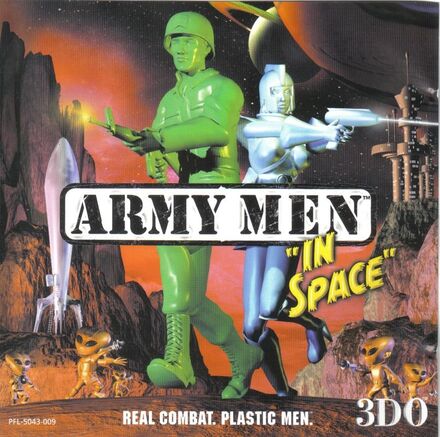
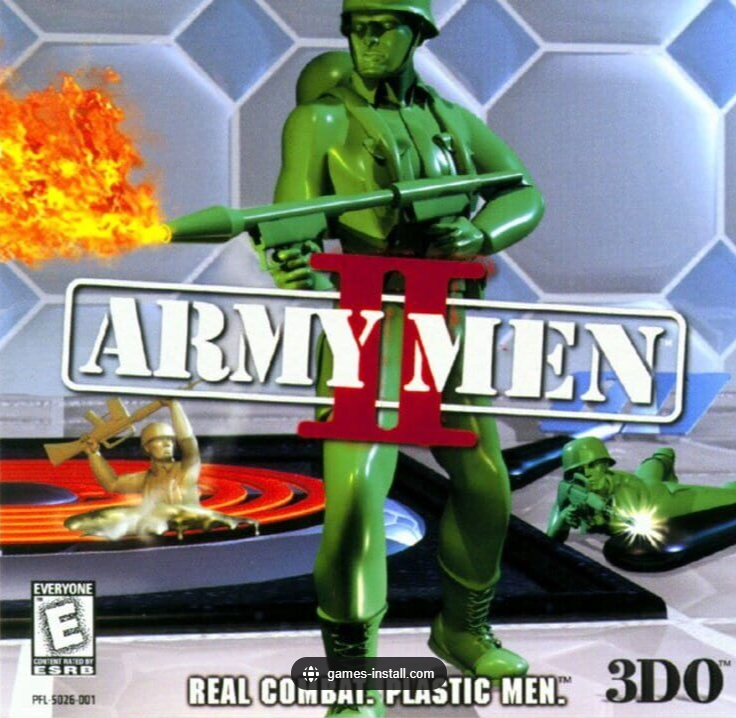
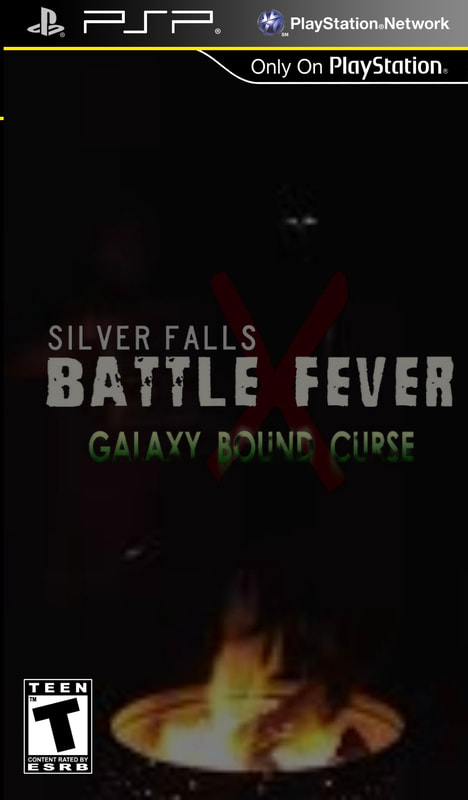
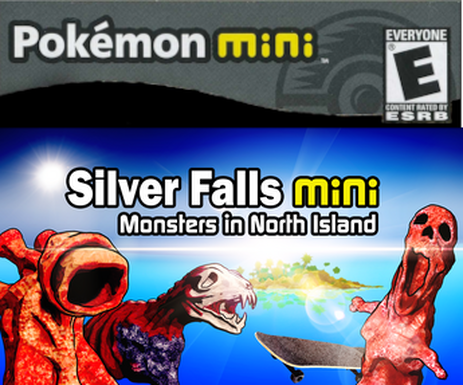
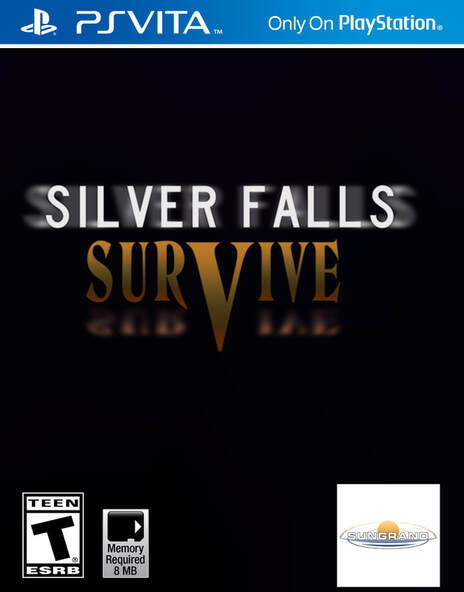
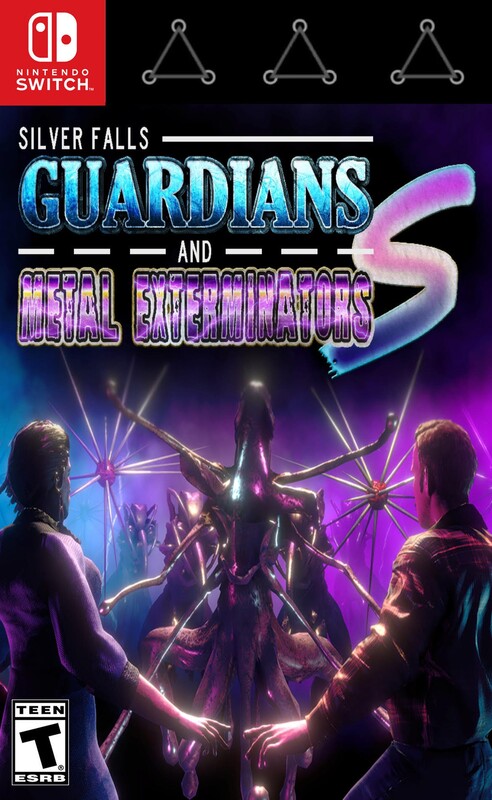
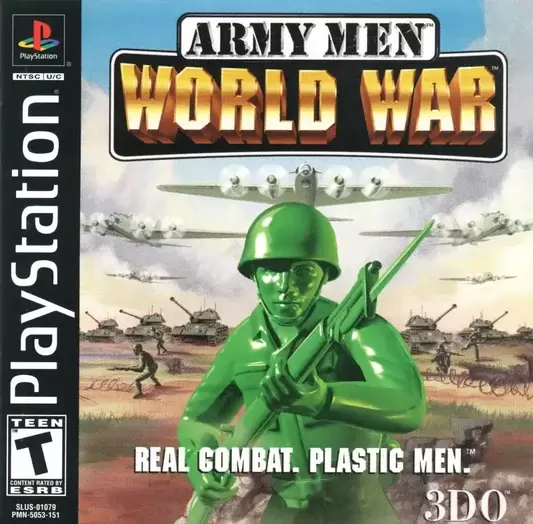
 RSS Feed
